
Grandstream WP836 Tanzania
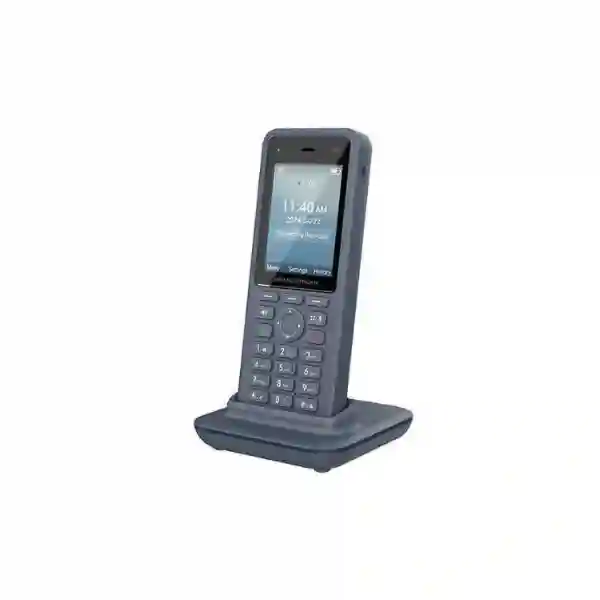
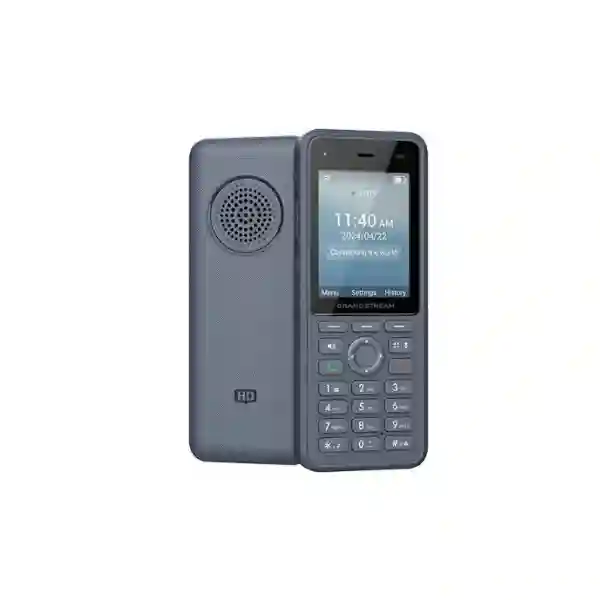
The Grandstream WP836 is a rugged cordless Wi‑Fi 6 IP phone built for employees who need business-grade voice while moving through demanding workplaces. It combines dual-band 802.11a/b/g/n/ac/ax Wi‑Fi, advanced roaming support, three SIP accounts and three lines, four-way voice conferencing, Bluetooth, USB-C charging, configurable push-to-talk, HD voice, dual microphones, acoustic echo cancellation, Noise Shield technology and AI-based noise reduction. A rechargeable 3000mAh battery is rated for up to 10 hours of talk time and 240 hours of standby under laboratory conditions, while its IP67-rated housing is designed to resist water and dust and tolerate cleaning chemicals. For operations teams, healthcare staff, retail personnel, warehouse supervisors, security teams and mobile office users, the WP836 provides a practical alternative to a fixed desk phone when users need to remain reachable across a Wi‑Fi-covered site.
Quick fit: mobile SIP users in offices, logistics, healthcare, retail, hospitality, security and operational environments.
Network prerequisite: dependable business Wi‑Fi with appropriate roaming, voice QoS, security and PBX/SIP compatibility.
What the Grandstream WP836 is designed to solve
A fixed desk phone is effective when the user stays at one workstation, but many jobs are mobile by nature. Warehouse staff move between receiving, storage and dispatch areas. Healthcare personnel move between rooms and service points. Retail supervisors circulate across a shop floor. Security teams patrol a facility. Hospitality employees move between front-of-house and operational areas. The Grandstream WP836 addresses this mobility gap by registering to a SIP voice platform over business Wi‑Fi, allowing the user to carry a dedicated enterprise voice endpoint instead of relying on a stationary handset.
Because it is a Wi‑Fi phone, deployment quality depends on the wireless network as much as on the handset itself. Signal coverage, capacity, roaming behaviour, access-point placement, VLAN configuration, Quality of Service, authentication, internet stability and PBX reachability all affect the real calling experience. Buyers should therefore treat the WP836 as part of a complete voice-and-wireless environment. FourTeck Tanzania can discuss the handset together with business IP telephony and Wi‑Fi planning in Tanzania, rather than treating the endpoint as an isolated purchase.
Wi‑Fi 6 mobility
Dual-band Wi‑Fi 6 with 802.11k/r/v roaming support helps the phone move between suitably designed wireless coverage zones while remaining connected to the voice environment.
Rugged construction
IP67-rated protection, chemical-resistant construction and a rugged design make the handset better suited to operational spaces than a typical office-only cordless device.
Business voice features
Three SIP accounts, three lines, four-way conferencing, HD audio features, Bluetooth and push-to-talk support give mobile staff a dedicated enterprise communications tool.
Verified Grandstream WP836 feature highlights
| Voice accounts | 3 SIP accounts, 3 lines, 4-way voice conferencing |
| Wireless | Dual-band Wi‑Fi 6, 802.11a/b/g/n/ac/ax; 802.11k/r/v roaming support |
| Audio | HD voice, dual microphones, AEC, Noise Shield and AI-based noise reduction; Opus codec support |
| Connectivity | Integrated Bluetooth and USB Type-C charging |
| Battery | Rechargeable 3000mAh lithium-ion battery; up to 10 hours talk time and 240 hours standby under laboratory conditions |
| Rugged rating | IP67-rated water and dust protection, cleaning-chemical-resistant and antibacterial casing; 2.0 m drop-safe rating in current Grandstream user documentation |
| Safety & operations | Configurable push-to-talk and alarm functions including push-button, man-down, no-movement, running and ambient-sound options |
| Provisioning | Supports Grandstream Device Management System (GDMS), TR-069 and encrypted XML provisioning methods |
Deployment, compatibility and buying guidance
Before ordering WP836 handsets, confirm the SIP platform, extension count, Wi‑Fi architecture and staff workflow. A Wi‑Fi phone is not a DECT handset and it does not require a dedicated DECT base station; instead, it connects to the existing wireless LAN and registers to a compatible SIP service or PBX. This makes it attractive for sites that already have managed Wi‑Fi coverage, but it also means voice quality depends on radio design, network policy and roaming behaviour. For larger deployments, a predictive or on-site wireless assessment can identify weak zones, interference, channel overlap and handoff problems before phones are rolled out.
Network segmentation is another practical consideration. Many organizations place voice devices in a dedicated VLAN, apply QoS markings, control access to management interfaces and limit unnecessary traffic. The WP836 supports enterprise networking and security functions including 802.1X, TLS and SRTP capabilities, but the exact security profile should match the PBX, WLAN and organizational policy. If your project also requires access points, switching or LAN work, review FourTeck Tanzania’s IT, networking and deployment services and business technology shop categories to plan the surrounding infrastructure.
For multi-country organizations, FourTeck’s regional network can also help procurement teams align related voice and IT requirements. See FourTeck Uganda for Uganda communication projects, FourTeck Kenya for Kenya VoIP and networking requirements, FourTeck Ghana for business telephony and infrastructure, and FourTeck Nigeria for regional IT and communication needs.
Grandstream WP836 Tanzania
For organizations evaluating the Grandstream WP836 in Tanzania, the strongest use case is a workforce that must remain reachable while moving through a building, campus, warehouse, healthcare environment, hospitality site or secured operational area. The handset uses the organization’s wireless LAN rather than tying the user to a desk. That can simplify extension mobility where managed Wi‑Fi already covers the working area, but the buying decision should begin with radio coverage and the PBX design. Tanzania deployments can vary widely: a compact professional office may have a few access points and predictable movement, while a warehouse or production site may include high shelving, machinery, concrete walls, outdoor transitions and large open areas. Those conditions affect Wi‑Fi propagation and should be considered before deciding how many WP836 units to deploy.
Procurement teams should confirm the number of mobile users, charging locations, shift duration, call volume, headset requirements and whether push-to-talk or alarm functions are part of the workflow. The 3000mAh battery is rated by Grandstream for up to 10 hours of talk time and 240 hours standby under laboratory conditions, but real runtime varies with call activity, radio conditions, screen use and configuration. For continuous shift work, charging discipline and spare-device planning may be just as important as the published battery figures. If users wear gloves, carry other tools or work in noisy areas, the physical handling, belt-clip use and audio workflow should be tested in context.
Tanzania buyers should also validate SIP trunk or PBX compatibility, WLAN security, voice VLAN policy, QoS and roaming between access points. The WP836 supports Wi‑Fi 6 and common enterprise roaming mechanisms, but the surrounding network must be designed to use them effectively. Where a business is replacing analog cordless phones or basic mobile handsets, the migration plan should include extension mapping, voicemail, call groups, emergency calling policy, firmware management and user training. A successful WP836 rollout therefore combines the handset with reliable wireless coverage and disciplined voice configuration.
When requesting a quotation in Tanzania, include handset quantity, city, PBX platform, access-point brand/model, expected deployment area, headset preference and whether provisioning or installation assistance is required. This gives the supplier enough context to distinguish a simple hardware request from a complete mobility project. FourTeck Tanzania can use these details to prepare a more useful quotation and identify any network prerequisites before equipment is committed.
Grandstream WP836 Dar es Salaam
Dar es Salaam businesses considering the Grandstream WP836 often operate across multi-room offices, warehouses, logistics facilities, retail environments, hospitality properties and mixed commercial sites where staff need to communicate without returning to a fixed desk. In these settings, the practical value of a Wi‑Fi SIP handset is continuity: a supervisor can move between operational zones while keeping the same extension and business calling workflow. The WP836’s rugged build, Wi‑Fi 6 radio, Bluetooth headset support, push-to-talk capability and noise-reduction features make it particularly relevant where mobile employees need a dedicated voice device rather than a personal smartphone.
For a Dar es Salaam rollout, map the places where calls actually happen. Loading bays, storage aisles, stairwells, corridors, lift lobbies, back offices, kitchens, service areas and parking boundaries can expose weak Wi‑Fi zones that a normal desk-based network survey may miss. If voice users roam while speaking, access-point handoff behaviour is important. The network should be tested at walking speed while a call is active, not only with a static signal-strength check. Channel planning, transmit power, 5 GHz coverage, interference and backhaul stability can all influence call quality.
Businesses should also think about device operations. Decide who is responsible for charging, firmware updates, extension assignment and lost-device handling. In busy sites, labeling each handset and charger can make inventory control easier. If alarms such as man-down or no-movement are being considered, treat them as workflow features that require configuration and operational testing; do not assume they replace a certified life-safety or emergency response system. Similarly, push-to-talk can improve fast team coordination, but staff should understand when to use it versus a standard SIP call.
A Dar es Salaam quotation request is more useful when it includes floor plans or approximate coverage areas, current Wi‑Fi equipment, PBX or hosted SIP platform, handset quantity, shift pattern and any Bluetooth headset requirement. Those details help determine whether the purchase is primarily an endpoint refresh or a wider wireless-voice project. The objective should be to deploy a mobile phone system that performs consistently in the real work areas where staff spend their day.
Grandstream WP836 Mwanza
The Grandstream WP836 can suit Mwanza organizations that need mobile SIP communication across offices, stores, warehouses, healthcare spaces, hospitality operations or facilities where employees are not permanently seated. A rugged Wi‑Fi handset is especially relevant when the same employee must answer calls while walking between departments or operational zones. Rather than extending copper telephone wiring to every point, the phone uses a suitably designed wireless network and registers to the organization’s SIP platform. That can reduce dependency on fixed extensions in mobile workflows, provided the Wi‑Fi network has been engineered for voice.
Mwanza buyers should review building materials and site layout before assuming existing Wi‑Fi is voice-ready. Thick walls, metal shelving, equipment rooms and long corridors can produce dead zones even when data users consider the wireless service acceptable. Voice is less tolerant of interruptions than casual web browsing because packet loss or roaming delays are immediately audible. For this reason, a site may need access-point repositioning, additional coverage or tuning before multiple WP836 phones are introduced. Where the handset will move between indoor and semi-outdoor areas, test the transition points as well as the main rooms.
Operational planning is equally important. Grandstream rates the handset for up to 10 hours talk time and 240 hours standby under laboratory conditions, but teams working long shifts should establish a predictable charging routine. Charging locations should be secure, powered and convenient at shift change. If multiple users share devices, extension assignment and cleaning procedures should be documented. The antibacterial casing and chemical-resistant design support demanding environments, but organizations should still follow appropriate cleaning guidance for electronics.
When sourcing a WP836 in Mwanza, ask for confirmation of the exact model, included accessories and current commercial terms rather than assuming stock, price or delivery. Provide the number of users, PBX details, WLAN environment and intended application. A supplier can then advise whether the existing network appears suitable and whether additional access points, switching, VLAN work or provisioning should be considered alongside the handsets.
Grandstream WP836 Arusha
In Arusha, the Grandstream WP836 is relevant for organizations that combine customer-facing service with mobile operational teams. Hospitality properties, tour operators, medical facilities, schools, retail operations, logistics sites and general businesses may all have employees who need to move between rooms or activity zones while staying connected to the corporate telephone system. A Wi‑Fi SIP handset keeps the user on a managed business extension and can reduce reliance on personal mobile phones for internal coordination.
Hospitality and service environments should pay close attention to roaming. Staff may walk from reception to back offices, guest-service areas, stores, maintenance spaces and outdoor-adjacent zones. The WP836 supports modern roaming mechanisms, but the access-point system must provide overlapping coverage and sensible RF settings. Simply seeing full bars in one location does not guarantee that a live call will remain clear while moving. Testing should include real call paths and peak-usage conditions, especially if the same Wi‑Fi network also supports guest internet, point-of-sale devices, cameras or collaboration traffic.
The handset’s ruggedness can be valuable in environments where devices are carried throughout a shift. IP67 protection and a 2.0 m drop-safe rating in current Grandstream documentation provide a stronger physical specification than a typical office cordless phone. Even so, procurement teams should plan protective operating practices, secure charging and inventory management. Bluetooth can support compatible headsets for hands-free workflows, while push-to-talk can serve teams that need quick, short voice coordination. Alarm functions such as man-down or no-movement should be configured and tested carefully if they are used within an operational safety procedure.
For an Arusha quotation, share the user groups and working zones rather than only the handset quantity. A hotel engineering team has different call patterns from a school administrator or warehouse supervisor. Describing the environment enables a more accurate review of wireless coverage, headset options, extension configuration and charging needs. The best purchase decision is therefore based on workflow and network readiness, not only on the fact that the WP836 is rugged and cordless.
Grandstream WP836 Dodoma
Organizations in Dodoma evaluating the Grandstream WP836 may include offices, institutions, healthcare sites, education facilities, warehouses, security teams and growing businesses that need employees to remain reachable while away from a desk. The handset can extend a SIP-based phone system across a managed Wi‑Fi environment, giving users a dedicated business device for extension calling, transfers, conference functions and team communication. This can be useful where departments occupy multiple rooms, floors or buildings and where a fixed handset does not match the user’s daily movement.
The first technical question should be whether the intended areas have reliable wireless coverage. Voice over Wi‑Fi depends on consistent radio performance and low network disruption. A business may have acceptable coverage for laptops and messaging but still experience call-quality problems in corridors, staircases, storage spaces or remote offices. Before a larger purchase, pilot a small number of handsets and walk the common routes while making live calls. This reveals whether access points hand off smoothly and whether any site-specific RF adjustments are needed.
PBX planning should be addressed at the same time. Confirm SIP registration requirements, extension numbering, call groups, voicemail, directory access, codec policy and security settings. The WP836 supports encrypted voice and provisioning capabilities, but administrators should align them with the rest of the platform. For multi-site organizations, consistent configuration templates and GDMS-based management can make it easier to maintain several devices without handling each handset manually.
Dodoma procurement teams should ask for a quotation that separates hardware from optional configuration, wireless assessment, installation or support. Include the number of phones, expected user roles, current PBX, wireless infrastructure, any headset needs and the physical area to be covered. This makes commercial comparisons clearer and reduces the risk of purchasing endpoints before verifying the network dependencies that determine day-to-day performance.
Grandstream WP836 UAE
For UAE businesses, the Grandstream WP836 is a strong fit for mobile operational roles across warehouses, healthcare facilities, retail chains, hospitality properties, facilities management, security operations and multi-floor corporate sites. These environments often already use managed wireless networks, making a Wi‑Fi SIP handset a natural extension of the voice platform. The key advantage is that employees can remain on a business extension while moving, without relying on a fixed desktop phone or a consumer mobile device for internal calling.
Large UAE facilities should approach the rollout as a wireless voice project. Distribution centres and logistics environments can have challenging radio conditions because metal racking, moving inventory and large open spaces alter signal behaviour. Hospitality sites can have dense guest Wi‑Fi usage that competes for airtime. Healthcare environments may have segmentation and security requirements. In each case, access-point density, channel planning, roaming, QoS and VLAN design should be reviewed before large handset quantities are commissioned.
The WP836’s IP67 rugged rating, chemical-resistant construction and operational alarm options can support demanding teams, but the exact workflow should be designed rather than assumed. A facilities team may prioritize push-to-talk and Bluetooth. A healthcare user may prioritize cleanability and controlled device assignment. A warehouse supervisor may prioritize roaming and long standby time. Security teams may value the configurable alarm functions. These differences affect configuration and accessory choices even when everyone uses the same model.
UAE buyers comparing quotations should verify the exact handset model, package contents, warranty terms, current availability and any configuration services. Avoid basing a decision only on unit price because voice deployments may also require wireless adjustments, PBX provisioning, accessories or centralized management. For organizations with branches in Tanzania and the UAE, standardizing on compatible SIP endpoints and repeatable configuration practices can simplify support across both regions.
Grandstream WP836 Uganda
The Grandstream WP836 is suitable for Uganda organizations that need business calling for employees who move around offices, warehouses, medical facilities, schools, hospitality sites, retail locations or security environments. Because the phone operates over Wi‑Fi and SIP, it can extend an existing IP PBX or compatible hosted voice system into areas where users need cordless mobility. The model’s three SIP accounts, three lines, Bluetooth, push-to-talk and rugged construction make it more operationally focused than a standard desk handset.
A Uganda deployment should start by reviewing Wi‑Fi coverage and power resilience. The handset itself is battery powered, but calls still depend on access points, switches, firewall equipment and the PBX or internet path. If those network components lose power, the phone may remain on but service will be unavailable. For business-critical communication, consider UPS protection for core switching, WLAN infrastructure and PBX components. Where internet-based SIP service is used, assess link resilience as part of the voice design.
Wireless roaming deserves practical testing. Staff should be able to move through the common work paths while maintaining call quality. If buildings have multiple wings or detached structures, it may be better to design coverage in zones and confirm whether continuous roaming is actually required between them. Over-engineering can add cost, while under-engineering creates call drops. The right balance comes from understanding how people work.
Uganda buyers can prepare a stronger quotation request by listing user count, location, PBX or SIP platform, wireless network make/model, required coverage areas and optional headset needs. If the organization operates multiple branches, include whether devices should use a standardized configuration template. This can help simplify provisioning, naming, extension assignment and future support. FourTeck Uganda can be referenced for broader country-level communication and networking requirements alongside the handset procurement plan.
Grandstream WP836 Kampala
Kampala businesses with multi-floor offices, retail sites, healthcare operations, hotels, warehouses or security teams can use the Grandstream WP836 to give mobile staff a dedicated SIP phone that follows them around a Wi‑Fi-covered facility. The handset is especially useful when employees need to transfer calls, reach departments, use business extensions or coordinate internally without returning to a workstation. Bluetooth connectivity can support compatible headsets, while push-to-talk offers a fast communications option for operational teams.
In dense urban offices, Wi‑Fi interference can be as important as basic coverage. Multiple nearby wireless networks may compete for channels, and high client density can reduce available airtime. A voice rollout should therefore consider radio utilization as well as signal strength. The WP836 supports dual-band Wi‑Fi 6, allowing the WLAN design to use modern wireless capabilities, but access-point configuration and client distribution remain critical. Voice VLAN and QoS policies can help protect call traffic from large downloads, backups or congested guest networks.
Kampala organizations should also plan how devices are managed. Grandstream’s GDMS platform can support centralized endpoint management, which is helpful when several phones need consistent firmware and provisioning. Administrators should define naming conventions, extension ownership, secure credentials and replacement procedures. If a handset is shared between shifts, establish a clear process for charging, sign-out and cleaning. Operational discipline reduces support problems that are often mistakenly blamed on the phone itself.
For purchasing, request a quote based on actual workflow. State how many users need dedicated phones, whether the phones stay inside one building, whether staff roam between floors, which PBX is in use and whether the wireless network has already been surveyed. These details allow a supplier to identify hidden dependencies before the order is finalized. The goal is a reliable mobile voice experience, not simply the acquisition of a rugged handset.
Grandstream WP836 Arua
For organizations in Arua, the Grandstream WP836 can provide cordless SIP calling where staff move between offices, service areas, storage locations, clinics, educational facilities, hospitality operations or security posts. The device is designed for enterprise mobility and can connect through an existing managed Wi‑Fi network instead of depending on a dedicated analog cordless base. That makes it flexible for organizations already investing in IP networking, provided wireless coverage is reliable across the areas where calls must continue.
Arua deployments should pay close attention to infrastructure continuity. In smaller or distributed sites, the wireless network may have been designed mainly for basic internet access rather than real-time voice. The WP836 can expose weak coverage or overloaded access points because voice conversations are sensitive to delay and packet loss. A practical pilot can test real call routes before larger quantities are ordered. If the site has multiple buildings, determine whether calls must roam seamlessly between them or whether separate coverage areas are acceptable.
Battery and charging practices are important for mobile staff. The published battery figures are useful for planning, but actual runtime depends on usage. If employees spend long shifts making frequent calls, provide accessible charging points and consider how spare units are handled. The charger base can be located at a central operations point, supervisor desk or secure equipment area depending on workflow. Device labels and clear extension ownership can help prevent confusion where multiple handsets are deployed.
When requesting pricing in Arua, include the intended business use, handset count, current PBX or SIP service, existing Wi‑Fi equipment and any requirement for configuration support. Ask separately about delivery scope and commercial terms rather than assuming they are included. A well-prepared request allows the supplier to assess compatibility and propose the necessary supporting work, if any, without adding irrelevant equipment to the project.
Grandstream WP836 Mbarara
The Grandstream WP836 can support Mbarara businesses and institutions that need mobile voice communication across operational spaces. Warehouses, healthcare sites, educational campuses, retail businesses, hotels and larger offices often have employees who spend more time moving than sitting at a desk. In these environments, a cordless SIP phone lets the user retain a corporate extension and access familiar call functions while walking through areas covered by the business Wi‑Fi network.
Mbarara buyers should treat Wi‑Fi planning as a prerequisite. The WP836 supports Wi‑Fi 6 and advanced roaming features, but these capabilities do not compensate for dead zones or poor access-point placement. Conduct tests in corridors, stairwells, storerooms and service areas that may not have been prioritized in the original wireless design. If voice calls are critical, consider traffic prioritization and verify that uplinks, firewall policies and the PBX path do not introduce unnecessary latency or congestion.
Rugged design is another reason organizations may select the WP836. Its IP67 rating and drop-safe specification make it more suitable for active work environments than many standard cordless phones. Still, it should be handled as business equipment: users need training on charging, carrying and cleaning, and administrators need a plan for firmware and security updates. Where Bluetooth headsets are used, confirm headset compatibility and whether users can safely operate them in the relevant work environment.
A clear Mbarara procurement brief should identify whether the project is a replacement for existing cordless phones, an extension of a new IP PBX, or part of a broader wireless upgrade. State the expected quantity, user roles, coverage area, PBX vendor, access-point platform and support requirement. These details help produce a quotation that reflects the complete deployment instead of just the handset unit price.
Grandstream WP836 Gulu
Gulu organizations can consider the Grandstream WP836 when staff require enterprise calling while moving through work areas rather than staying at fixed desks. The phone’s SIP capability, Wi‑Fi 6 connectivity, rugged enclosure, Bluetooth and push-to-talk features can fit operational teams in healthcare, education, warehousing, hospitality, retail and security. It is especially useful when an organization already operates a managed IP network and wants voice mobility without installing a separate DECT system.
The wireless network should be reviewed before scale deployment. A laptop user may tolerate a short reconnection without noticing, but a voice call can be interrupted by poor roaming or weak coverage. Walk-test the actual employee routes, paying attention to transitions between rooms, courtyards, corridors or floors. If access points use different vendors or inconsistent configurations, roaming behaviour may be unpredictable. Standardizing WLAN settings and documenting the voice SSID can make support easier over time.
For organizations with constrained support resources, centralized management is valuable. GDMS can help administrators maintain configuration and firmware across multiple Grandstream endpoints. Establish secure administrator credentials, maintain a device inventory and record which extension belongs to each phone. If the WP836’s alarm functions are used, document exactly how alerts are handled and test them periodically. They can support operational workflows, but they should not be treated as substitutes for purpose-built emergency systems unless the organization has independently validated such use.
Gulu buyers should request confirmed pricing and availability for the exact model and quantity needed. Include information about the PBX, internet/SIP environment, access points and any required headset or deployment service. If the site is part of a broader Uganda branch network, consistent handset and configuration standards can reduce training and support complexity across locations.
Grandstream WP836 Kenya
Kenya enterprises can use the Grandstream WP836 for mobile business communication in logistics, healthcare, retail, hospitality, facilities management, manufacturing, security and office environments. The model is designed for users who must carry a SIP endpoint throughout a site, giving them access to business extension calling over the corporate Wi‑Fi network. With dual-band Wi‑Fi 6, three SIP accounts, Bluetooth, push-to-talk and a rugged IP67 housing, it addresses a different requirement from a conventional desk phone.
Large warehouses and campuses in Kenya should validate Wi‑Fi coverage before procurement. Metal structures, wide aisles, high ceilings and moving stock can change radio performance. A good deployment may require more than adding access points; channel planning, antenna placement, transmit-power tuning and wired backhaul capacity all matter. Because voice traffic is real-time, the network should prioritize consistency and low latency rather than headline throughput alone.
Businesses running Grandstream or other SIP PBX systems should confirm interoperability at the feature level. Basic registration may work while advanced directory, codec, provisioning or security settings require specific configuration. A small proof-of-concept can validate the key call flows, roaming behaviour, voicemail access, transfer workflow and headset operation. For multi-site deployments, centralized templates can accelerate rollout and keep user settings consistent.
Kenya procurement teams should compare more than the handset unit cost. Ask what is included in the box, whether configuration is included, which warranty applies, and how delivery or installation is handled. If the existing Wi‑Fi needs upgrades, separate those costs clearly from phone supply. This makes competing quotations easier to evaluate and helps the business understand the full cost of achieving reliable mobile voice. FourTeck Kenya can support broader VoIP and networking conversations when the requirement extends beyond the WP836 itself.
Grandstream WP836 Kuwait
The Grandstream WP836 can serve Kuwait organizations that need rugged mobile SIP communications across warehouses, hospitals, hospitality operations, retail properties, security sites, facilities-management teams and large offices. Employees in these settings frequently move between work zones and need to remain reachable on a business extension. A Wi‑Fi handset can integrate into the corporate voice environment while giving the user mobility that a desk phone cannot provide.
Kuwait sites should pay attention to indoor wireless design and environmental transitions. Warehouses may have challenging RF reflections from metal racking; hospitality properties may have dense guest networks; healthcare facilities may have segmented WLANs and strict security rules. The WP836 supports modern Wi‑Fi and enterprise security features, but the network must be configured appropriately. Dedicated voice SSIDs or VLANs, QoS and controlled authentication policies can make the environment easier to manage and troubleshoot.
The rugged IP67 design can be useful for operational teams, but buyers should match the model to actual conditions. Extreme outdoor heat is not a reason to assume suitability beyond Grandstream’s published operating temperature range of 0°C to 45°C. If the phone will be used outdoors or in non-conditioned spaces, verify that expected temperatures remain within the supported range and provide shaded, appropriate charging/storage locations. This is especially important in Gulf climates where direct sun can raise equipment temperatures significantly.
When requesting a Kuwait quotation, include handset count, expected environment, PBX/SIP platform, access-point system and whether devices are indoor-only. Clarify warranty, configuration and delivery scope separately. If the deployment is large, consider an initial pilot that tests call quality and roaming across representative work zones before full rollout. This approach helps ensure the procurement decision is based on real performance at the site.
Grandstream WP836 Ghana
Ghana businesses can deploy the Grandstream WP836 where teams need cordless access to a SIP phone system while moving around offices, warehouses, healthcare facilities, hospitality sites, retail floors or security environments. The handset provides a dedicated business voice endpoint with Wi‑Fi 6, Bluetooth, push-to-talk and rugged construction, helping organizations maintain a consistent extension-based calling workflow for users who are rarely seated.
The most important deployment question is network readiness. The phone depends on reliable WLAN coverage and the underlying IP infrastructure, so signal strength, roaming, access-point capacity, switching and internet/PBX reachability should be assessed together. In sites where the wireless network has grown organically over time, different access-point models and inconsistent settings can create roaming problems. A standard configuration and documented voice network can reduce these issues.
For warehouse or operations teams, the WP836’s battery life, belt clip, rugged enclosure and push-to-talk may be attractive. For healthcare or hospitality, cleanability and mobility may be more important. For office-based users, Bluetooth headset support and extension mobility can be priorities. These different use cases should influence how devices are configured and where chargers are placed. The same handset can support several roles, but a single generic configuration may not suit every department.
Ghana procurement teams should provide user quantity, site type, PBX platform, Wi‑Fi system and expected support scope when asking for a quote. Confirm commercial terms, warranty and current availability at the time of purchase rather than relying on generic web listings. If the requirement expands into switching, WLAN upgrades or broader telephony design, FourTeck Ghana can support a more complete business communication and infrastructure discussion.
Grandstream WP836 Nigeria
Nigeria organizations with warehouses, hospitals, hospitality properties, retail chains, security operations and multi-floor offices can use the Grandstream WP836 to keep mobile employees connected to an enterprise SIP calling environment. The device is purpose-built for mobility over Wi‑Fi and offers a combination of business telephony, rugged construction and operational features that a standard smartphone may not provide in a controlled corporate voice deployment.
Power and network resilience should be part of the design. Although the handset has its own battery, the supporting Wi‑Fi access points, switches, firewall, PBX and possibly internet connection need reliable power. Organizations that depend heavily on voice should identify which network components require UPS or backup power. A handset remaining powered is not enough if the WLAN or PBX path is unavailable. This systems-level view is important when estimating the real reliability of mobile voice.
Radio planning is equally important, especially in large or busy sites. Wi‑Fi coverage for laptops does not automatically mean the network is optimized for real-time roaming. Test with actual phones during normal operating hours, when the WLAN is under load. If guest traffic, CCTV backhaul or large file transfers share parts of the network, use segmentation and QoS so voice is not competing unnecessarily with bulk traffic.
Nigeria buyers should ask suppliers to distinguish hardware supply from configuration, wireless assessment, installation and ongoing support. Provide the handset quantity, deployment city, site type, PBX details and existing access-point environment. This lets the quotation reflect the actual work needed. For organizations planning multiple Nigerian branches, standardized WP836 profiles and naming can make deployments more repeatable and simplify future troubleshooting across locations.
Grandstream WP836 Seychelles
In Seychelles, the Grandstream WP836 is particularly relevant to hospitality, resort operations, facilities teams, healthcare, retail and other businesses where staff move across a property while remaining responsible for guest, customer or internal calls. A rugged Wi‑Fi SIP handset can keep the same business extension with the user as they move between reception, service areas, stores, engineering spaces and administrative zones, reducing the need to return to a fixed telephone.
Property layout can make wireless design challenging. Multi-building resorts, outdoor-adjacent walkways, thick walls and landscaped areas may require carefully planned access-point placement. The WP836 is a Wi‑Fi phone, so continuous call coverage exists only where the WLAN provides suitable radio performance. If staff move between buildings, organizations should decide whether seamless handoff is required across the entire property or whether calls can be limited to specific operational zones. This decision affects WLAN design and project cost.
The handset’s IP67 rating can be valuable in humid or service-oriented environments, but it should not be interpreted as permission for use beyond the manufacturer’s published environmental limits. Charging stations should be placed indoors in secure, ventilated areas, and users should follow appropriate device-handling practices. Bluetooth headsets can support hands-free work, but staff operating near machinery or public areas may have different safety and privacy needs.
Seychelles buyers should request a project-oriented quote that includes device quantity, property layout, PBX platform, WLAN vendor and operational roles. If the site has several buildings, a basic floor or site map can help identify where network assessment is necessary. By combining endpoint selection with wireless readiness, organizations can avoid the common problem of purchasing capable phones that later perform poorly because the supporting network was not designed for voice mobility.
Industries and practical use cases
Warehousing & logistics
Supervisors, receiving teams and floor staff can carry extensions through warehouse zones. Wi‑Fi coverage should be tested around racking, loading areas and dispatch points where RF conditions can vary.
Healthcare
Mobile staff may value a dedicated SIP device with rugged construction and chemical-resistant casing. Network segmentation, cleaning procedure and device assignment should be managed as part of the deployment.
Hospitality
Engineering, housekeeping, operations and guest-service teams can remain reachable across Wi‑Fi-covered areas. Separate guest and staff networks may be useful for performance and security.
Retail & security
Floor managers and security staff can use SIP calling and push-to-talk features for fast coordination. Alarm features should be integrated into documented procedures if they are enabled.
Grandstream WP836 FAQs
Does the WP836 need a DECT base station?
No. The WP836 is a Wi‑Fi SIP phone. It connects to a compatible wireless LAN and registers to a SIP/PBX platform. A dedicated DECT base is not required.
How many SIP accounts does the WP836 support?
Grandstream lists three SIP accounts and three lines, with four-way voice conferencing in current product and user documentation.
What is the WP836 battery life?
The 3000mAh lithium-ion battery is rated for up to 10 hours of talk time and 240 hours of standby under laboratory conditions. Actual runtime depends on use and configuration.
Is the Grandstream WP836 waterproof?
Grandstream currently documents the phone as IP67 rated for water and dust resistance, with a cleaning-chemical-resistant antibacterial casing. Use within the published operating and environmental limits.
Does the WP836 support Bluetooth headsets?
Yes. The WP836 includes integrated Bluetooth for compatible headsets. Confirm headset compatibility for the exact model you intend to deploy.
Can the WP836 roam between Wi‑Fi access points?
The handset supports advanced roaming and 802.11k/r/v capabilities. Seamless call performance still depends on the access-point infrastructure, overlapping coverage, channel planning and WLAN configuration.
Can WP836 phones be centrally managed?
Yes. Grandstream supports centralized management and mass provisioning through GDMS and other supported provisioning methods, which is useful for larger fleets.
Quotation checklist for Grandstream WP836
To receive a useful quotation rather than only a unit price, provide enough information to validate compatibility and scope. This is especially important for Wi‑Fi voice because endpoint performance depends on the surrounding infrastructure.
Decision recap
Choose the Grandstream WP836 when you need a rugged, business-focused Wi‑Fi SIP handset for users who move through a properly covered wireless environment. Its strongest value comes from the combination of Wi‑Fi 6 mobility, SIP telephony, Bluetooth, HD audio features, push-to-talk, safety-oriented alarms, a long-standby 3000mAh battery and IP67-rated construction. It is not a substitute for good WLAN design: roaming, QoS, security, PBX integration and charging operations must be planned for the final system to perform well.
For procurement, compare complete deployment assumptions rather than only device price. Verify current availability, warranty, delivery scope and any configuration or installation services at quotation time. A short pilot is recommended for larger or mission-critical sites so the organization can test live call paths, roaming and user workflow before committing to full scale.
Talk to FourTeck about WP836 planning
If you are evaluating the Grandstream WP836 for Tanzania or a regional branch deployment, share your handset quantity, location, existing PBX and Wi‑Fi environment. FourTeck can use that information to prepare a business-focused quotation and identify whether the requirement is simply endpoint supply or whether wireless, switching, configuration or voice-platform work should be considered at the same time.



Reviews
There are no reviews yet.