
Industrial video surveillance · Tanzania buying guide
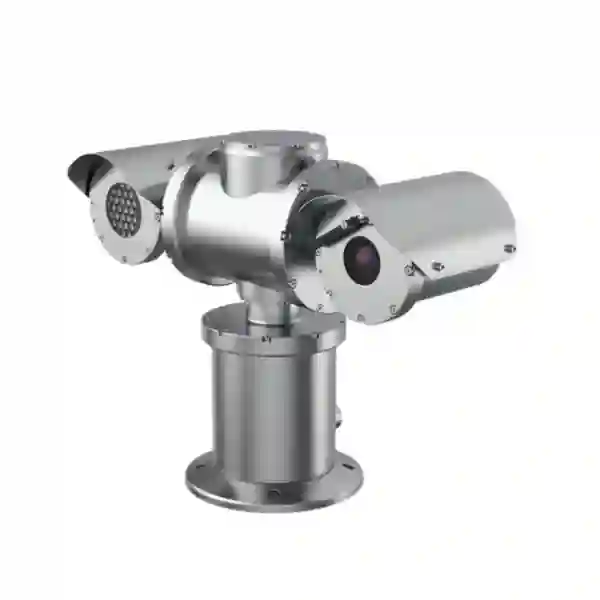
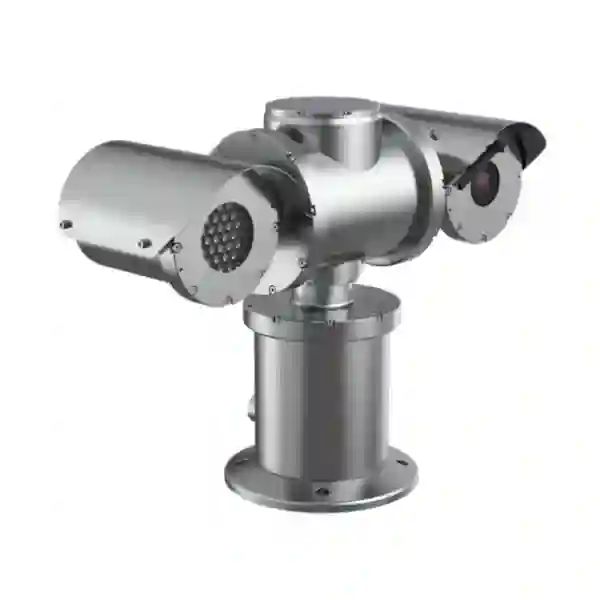
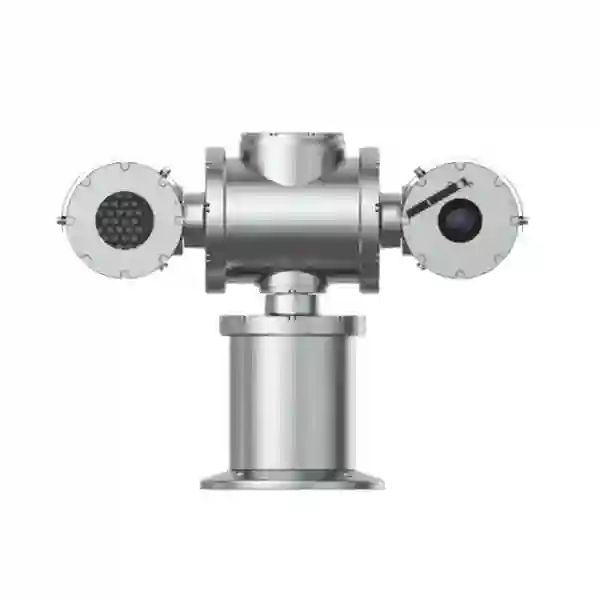
Hanwha TNU-6324ER Explosion-Proof IR PTZ Camera
Need flexible video surveillance in a classified industrial area? The Hanwha TNU-6324ER brings Full-HD PTZ viewing, 32x optical zoom and built-in infrared illumination into an explosion-protected camera designed for demanding environments. It is a candidate for industrial sites that require directed video inspection, provided the exact certification, installation method and operating conditions fit the approved project design.
Start with the site’s area classification and viewing objectives. Then confirm the model-specific certificates, power and mounting arrangement, VMS or recorder integration and the full scope of installation. Request a specification-based quotation rather than assuming every application or local approval is covered by a product label.
At a glance: 2 MP Full HD · 32x optical zoom · Up to 200 m IR · Stainless steel 316L · IP67 / IK10
Key features for specification review
- 2 MP (1920 × 1080) network video, with manufacturer-listed H.265/H.264 frame-rate options up to 60 fps.
- 32x optical zoom with a published 4.44–142.6 mm focal-length range.
- Endless 360-degree pan movement, 180-degree tilt range and up to 300 preset positions.
- Integrated IR illumination with a manufacturer-rated viewing distance up to 200 m.
- Stainless steel 316L housing, built-in wiper, IP67 and IK10 ratings.
- Manufacturer-listed IECEx and ATEX explosion-protection certifications; exact site suitability must be verified.
- ONVIF Profiles S/G/T, H.265/H.264/MJPEG compression, WiseStream II and 120 dB WDR.
Technical specification snapshot
| Model | Hanwha Vision TNU-6324ER |
|---|---|
| Product type | Explosion-protected network PTZ with integrated IR illumination |
| Image | 1/2.8-inch CMOS; up to 1920 × 1080 (2 MP) |
| Lens | 4.44–142.6 mm; 32x optical zoom |
| PTZ | 360° endless pan; 180° tilt; presets |
| Infrared | Integrated IR; manufacturer-rated viewing distance up to 200 m |
| Image functions | Auto day/night (ICR), WDR 120 dB, image stabilisation, defog |
| Video / integration | H.265, H.264, MJPEG; ONVIF S/G/T; SUNAPI |
| Construction | Stainless steel 316L; built-in wiper; IP67; IK10 |
| Electrical | Manufacturer lists 110 VAC / 220 VAC input and up to 120 W; verify supplied revision |
| Operating temperature | Manufacturer-published -40 °C to +60 °C; check installation conditions |
| Certification reference | Manufacturer lists IECEx, ATEX and other marks; verify current certificates |
Specifications are a selection guide, not installation approval. Confirm the current exact-model datasheet, certificate conditions and delivered configuration before ordering.
What the camera is designed to do
The Hanwha TNU-6324ER is an industrial network PTZ camera for surveillance projects where ordinary camera housings may not be appropriate. It combines full-HD imaging, a motorised 32x optical zoom, integrated infrared illumination and an explosion-protected enclosure. The important purchasing question is not simply whether the picture is sharp. It is whether the exact camera, accessories, installation arrangement and certification documents match the hazardous-area classification and monitoring objectives at the proposed site. A specification-based review before quotation can avoid an unsuitable mounting position, incorrect electrical design or a mismatch between what operators expect to see and what one moving camera can capture.
For a security manager, the principal value is being able to examine different points across a defined industrial view without placing personnel close to equipment merely to investigate an alarm. For an engineer, the value lies in a product family designed around harsh surroundings, with manufacturer-published explosion-protection markings, corrosion-resistant housing material and network integration features. For a purchasing team, it is a specialist capital item that needs a complete scope: camera, certified accessories where required, mounting, power, networking, recording, commissioning and maintenance. Those elements should be evaluated together rather than comparing the camera body alone with ordinary outdoor PTZ prices.
The Hanwha TNU-6324ER is best shortlisted when the project requires both hazardous-area suitability and movable visible-light surveillance, particularly where long-range viewing and darkness are important. It is not a universal replacement for fixed cameras, thermal imagers, process instrumentation or emergency shutdown systems. A PTZ can look in one chosen direction at a time, and its video analytics do not establish that a plant is safe. The page below explains the technical strengths, design boundaries and quotation information so Tanzanian industrial buyers can make a documented, site-specific decision.
Understand explosion-protection before choosing equipment
The term explosion-proof describes a specific approach to protecting electrical equipment in environments where an explosive atmosphere could occur. It does not mean that a camera prevents an explosion or that every installation in every hazardous zone is permissible. Hanwha lists IECEx and ATEX explosion-protection information for this model, together with other certification families. An engineering review should start with the site’s formal area-classification drawings and the actual certificate, including its conditions of use, rather than treating a general marketing description as installation approval. The area classification, gas or dust group, temperature class, ambient limits and applicable national rules must all be considered.
The manufacturer’s published markings include Ex db IIC T6 Gb for relevant gas environments and Ex tb IIIC T80°C Db for relevant dust environments. Those codes have precise technical meaning. They should be interpreted by a competent hazardous-area professional against the site’s classification and the certificate revision delivered with the equipment. A buyer should request the exact certificate and associated schedule, check any limitations for cable entries and accessories, and confirm that the nameplate corresponds to the supplied unit. An IECEx or ATEX statement by itself is not proof of any additional Tanzania-specific registration, approval or permission.
A certified camera enclosure is only one part of a compliant installation. Cable glands, conduit or cable entries, sealing, bonding, earthing, support equipment and installation methods must also be appropriate for the classified location. The camera cannot compensate for an incorrect gland, an unsupported modification or a noncompliant electrical connection. Before procurement, confirm who is responsible for area classification, hazardous-area electrical design, product selection, installation inspection and handover evidence. This prevents the common mistake of buying a certified device while leaving the connections and surrounding installation outside the intended protection concept.
Full-HD imaging and practical image detail
The camera uses a 1/2.8-inch CMOS image sensor and offers a maximum resolution of 1920 by 1080 pixels, commonly called 2 MP or Full HD. Manufacturer information states up to 60 frames per second in supported H.265 or H.264 configurations, with actual settings depending on mains frequency and stream profiles. Full HD can be a useful balance when operators need live assessment, responsive movement and manageable network recordings. It should not be presented as equivalent to higher-resolution 4K imaging. What matters on site is the size and visibility of the target inside the image after lens position, zoom and lighting are considered.
For a broad equipment yard, 1080p can show the layout, movement of vehicles and general activity. For a distant valve, gauge or identification task, the camera may need optical zoom and a deliberately selected viewpoint. The usable detail also depends on focus, atmospheric haze, vibration and whether the subject is moving. Asking for a single number such as maximum recognition distance can be misleading. Instead define what must be detected, observed, recognised or identified, at which locations, in daylight and at night. Test those requirements against lens framing and a representative installation height.
An operator-friendly design separates overview from inspection. One preset can show the broad scene while other presets focus on specific entrances, storage areas, access routes or equipment clusters. Full-HD recording of those views provides useful evidence when positioning and lighting are right, but does not guarantee readable plates, faces or instrument labels at arbitrary distances. If continuous overview is a security requirement, pair the PTZ with fixed cameras instead of assuming the PTZ can provide an uninterrupted record of every direction while it is zoomed into one target.
32x optical zoom for targeted inspection
The lens offers a published 4.44 to 142.6 mm focal-length range, equivalent to 32x optical zoom. Unlike simply enlarging pixels digitally, optical zoom changes the lens’s field of view and can deliver a more useful close view of a distant object within the physical limits of the camera and atmosphere. This makes the product relevant when the operator must move from an overview to an equipment face, access road or distant activity. At high zoom, however, the visible scene becomes narrow, so a small change in aim, wind vibration or subject movement may matter much more than it does at a wide setting.
Zoom selection should be driven by monitoring tasks rather than the maximum zoom number. Write down the location of each important target, its expected size, the distance from the proposed camera position and the minimum image detail needed for a decision. A system designer can then check image geometry and lens settings instead of guaranteeing that a faraway object will always be identifiable. Heat shimmer, fog, airborne dust, rain and poor contrast can reduce usable detail even when the focal length is sufficient. A site survey or image mock-up is valuable before choosing a pole, tower or building position.
At the wide end, the operator can orient themselves and follow larger movements; at the telephoto end, they can inspect particular details if conditions permit. Presets should be assigned meaningful names rather than arbitrary numbers. For example, a maintenance team may prefer ‘loading gate’ and ‘pump approach’ over ‘preset 12’ and ‘preset 19’. Exact views, speed and operator privileges should be agreed during commissioning. Optical zoom is especially valuable as a workflow capability, not as a promise of universal long-distance identification.
Pan, tilt and how coverage actually works
Hanwha specifies endless 360-degree panning and a 180-degree tilt range for the PTZ mechanism, plus a substantial list of movement and sequencing functions. The device can be steered by an authorised operator or directed to configured positions, making it useful for inspecting multiple monitoring points. The camera supports up to 300 preset positions in manufacturer information, although only the presets genuinely useful to the site should be configured. A smaller, well-designed set can be more reliable operationally than a large collection of overlapping views with unclear names or poor focus.
Endless pan does not mean the camera records all 360 degrees simultaneously. When it is turned toward a distant event, it is not recording an equally detailed view behind itself. This distinction is vital when designing coverage of perimeters, hazardous process equipment and access routes. Fixed overview cameras can maintain continuous visual history while the PTZ follows an alarm or operator instruction. An appropriate recording and event-management design should also show where the PTZ was looking at a given time, so investigators understand the limits of the available evidence.
Preset tours, schedules and alarm-triggered movements can reduce routine manual effort, but they need priority rules. Decide what happens if a scheduled tour is running when a security operator takes control, whether an analytics event can interrupt manual inspection and how long the camera remains on an alarm view. Agree any safe limits or privacy restrictions before commissioning. Where the camera is used by several teams, define ownership and handover rules. A practical control strategy often matters more than the maximum advertised rotation speed.
Infrared viewing after dark
The TNU-6324ER incorporates infrared illumination, and Hanwha publishes an IR viewable distance of up to 200 metres. This is a valuable distinction from the closely related non-IR TNU-6324E. It helps a project planner consider locations where installing separate illuminators would add equipment, wiring and hazardous-area engineering work. The 200-metre figure is a manufacturer-rated illumination capability, not a guaranteed distance for identification, recognition or a perfectly exposed image in every environment. The final usable view is affected by zoom position, the target, atmospheric conditions and the system’s image settings.
Infrared video is still reflected-light imaging. It is not the same as thermal imaging, which visualises infrared energy related to surface temperature. The integrated IR can assist after dark when visible illumination is limited, but it does not by itself measure temperatures, detect gas leaks or establish fire detection performance. This distinction is important for industrial buyers who may be comparing a night-vision PTZ with a thermal camera. If the use case is temperature anomaly detection or an engineered fire-and-gas system, evaluate a dedicated and appropriately approved sensing solution instead.
At night, review reflective surfaces, dust, moisture, rain and nearby structures that could influence infrared image quality. Strong reflections may wash out part of a frame, and objects at different distances may require different exposure or illumination settings. Test the wide and zoomed views, not only the default overview. Also check the impact of artificial lighting that switches on and off during shifts. A documented nighttime acceptance test is more useful than assuming one advertised range answers every question about dark-scene performance.
Contrast, day/night switching and clarity
Real industrial scenes commonly combine deep shade, bright security lights, shiny pipework and open sky. Hanwha lists a 120 dB wide dynamic range function alongside day/night switching using an automatic IR-cut filter. These features can help preserve usable information across demanding lighting conditions, although the result depends on scene composition and configuration. At a gate facing a bright background, for example, a properly configured high-contrast image can be more useful than a nominally high-resolution image that loses the subject in shadow.
The manufacturer also lists digital noise reduction, defog and digital image stabilisation functions. Each can be useful when correctly chosen, but none should be treated as a guarantee that difficult weather or severe vibration will disappear. Noise reduction can influence fine moving detail; defog algorithms cannot see through an opaque dust cloud; stabilisation does not repair an unstable supporting structure. Commissioning should therefore include image checks in representative light and weather where practical, with adjustments recorded so they can be maintained after servicing or a firmware change.
The camera supports different compression formats, image profiles and exposure-related settings. A deployment should define an approved baseline for each important view, including resolution, frame rate, shutter settings, image orientation, zoom and any analytics areas. When a complaint arises that a view is too dark or blurred, technicians can compare it with the baseline instead of making unrecorded changes. This is especially relevant where image evidence must support an incident review, not just an operator’s immediate observation.
Stainless-steel construction and outdoor protection
Hanwha identifies stainless steel 316L as the camera housing material and lists IP67 ingress protection and IK10 impact-resistance ratings. Those attributes make the model a stronger candidate for demanding industrial surroundings than a camera designed only for mild indoor use. The integrated wiper is another practical feature for clearing certain deposits or water from the viewing window. Nevertheless, the site’s actual corrosion mechanisms, chemical exposure, dust, cleaning regime, wind loading and maintenance access should still be assessed by the engineering team.
IP67 addresses specified protection against dust ingress and temporary water immersion under the relevant test standard. IK10 addresses a defined impact-resistance test. Neither rating means an installed system is immune to every jet-cleaning process, corrosive chemical, collision or mechanical failure. Installation details are equally important: joints, glands, fixing points and cable routing must retain the integrity intended by the manufacturer. If washdowns or chemical splashes are expected, compare the cleaning method and substances with the maker’s current installation and maintenance instructions.
The built-in wiper can support visibility in wet or dirty conditions, but it is not a substitute for cleaning and inspection. Maintenance teams should review the condition of the viewing window, seals, cable entries, earthing and mounting bolts according to site rules and the manufacturer’s guidance. Even high-grade stainless steel benefits from an appropriate inspection regime in severe environments. Plan safe physical access for maintenance from the start; a difficult-to-reach installation can result in poor image quality or avoidable downtime despite good camera specifications.
Analytics, alarms and event response
Manufacturer information lists camera analytics including motion detection, tampering, fog detection, face detection and several virtual-area and virtual-line events. These capabilities can support operational awareness when a scene and a defined task are suitable. For example, a virtual line might provide a supplementary notification about movement across a designated access path, while a tamper event may alert operators that the view has been obstructed or moved. Analytics should be tested against the exact firmware, viewpoint and recording system to determine which alerts are available and how they behave.
Do not confuse a listed analytics function with guaranteed detection of every intrusion, hazard or safety event. Rain, insects, reflections, moving vegetation, steam, darkness and camera movement can cause nuisance alarms or missed events. PTZ scenes are particularly sensitive because the viewpoint changes. Decide where events are meaningful, whether analysis takes place at a preset view and how alarms will be verified. Critical process safety, emergency response or legally mandated monitoring should rely on appropriately engineered systems, not solely on a camera’s general-purpose video analytics.
A useful event workflow specifies who receives an alert, what image or recording is retained, whether the camera moves to a preset, and how an operator confirms the event. Hanwha lists alarm input and output interfaces and event functions; their suitability depends on system design and supported integration. The project team should document trigger logic, acknowledgement and fallback behaviour if networking or recording is interrupted. This makes analytics an operational tool with known limitations rather than an impressive but unmaintained feature list.
Network video and recording-system integration
The camera is an IP video device and Hanwha specifies an RJ-45 10/100BASE-T network interface. Supported video compression includes H.265, H.264 and MJPEG, with WiseStream II named as a smart-compression function. The manufacturer also lists ONVIF Profiles S, G and T and the SUNAPI interface. These are useful starting points when planning integration with network video recorders, video management systems and operator workstations. However, the presence of a protocol on a data sheet does not prove that every third-party software feature, PTZ control or event mapping will work without testing.
Before ordering, check the selected VMS or recorder’s current device-compatibility information for the exact camera model and firmware. Confirm the ability to discover the device, display live and recorded video, move the PTZ, use presets, receive alarms and manage credentials. If a project requires a specific ONVIF feature, demonstrate that feature rather than assuming all features are covered by the profile label. A proof-of-concept or written integration confirmation may be appropriate for complex industrial control rooms or mixed-brand sites.
Network design should consider peak video traffic, management access, switching, optical-fibre or copper distance limitations, redundancy and cyber-segmentation. Compression can reduce required bandwidth compared with less efficient profiles, but the result depends on motion, detail, lighting and encoding parameters. Recorder capacity should be calculated from measured or specified bit rates, number of streams, retention period and any redundancy allowance. A long-distance site connection also needs an appropriate design for environmental exposure and any hazardous-area boundaries crossed by cabling.
Check whether the recorder supports the frame rates and stream combinations the project intends to use. Live-view quality, evidence recording and mobile viewing may need different profiles, but configurations must remain manageable. An operator viewing many cameras simultaneously may use lower-rate streams while evidence recording uses a higher-quality stream. Document these choices and test peak conditions. The goal is predictable video that remains useful during incidents without imposing unexpected loads on the network or recording infrastructure.
Cybersecurity and access management
Hanwha’s listed security features include HTTPS communication, encrypted firmware, user authentication, IEEE 802.1X network authentication, IP-based access control and audit logging. These controls can support a security architecture, but they are not a substitute for device-management policy. An industrial installation should begin with a controlled commissioning process, approved credentials, defined administrator ownership and a record of the camera’s model, serial number and firmware version. Default or shared passwords should not remain in operational use.
Where possible, place surveillance equipment on a managed and appropriately segmented network with access limited to authorised management and recording systems. Determine how firmware updates are approved, downloaded, tested and applied without disrupting operations. If remote viewing is needed, establish an approved secure access route rather than exposing a camera’s administration interface directly to the public internet. Network teams should also consider time synchronisation, logging, device certificates where supported and how credentials are changed after contractors complete the installation.
Cybersecurity responsibilities should be explicit in the handover. Who maintains passwords, validates backups, reviews alerts, checks firmware advisories and revokes user access when staff change roles? An industrial PTZ may remain in service for years, so maintainability matters more than a one-time secure configuration. If the system is part of a wider operational technology environment, align its network and maintenance procedures with the site’s own control requirements. Avoid assuming that a camera is allowed on a plant control network merely because its video protocols are standard.
Power, cabling and electrical design
Manufacturer specifications identify AC mains input options of 110 VAC and 220 VAC, with maximum power consumption listed at 120 W. The exact electrical connection details should be confirmed from the current model-specific manual, nameplate and supplied configuration. This is not a camera that should be assumed to run from ordinary PoE simply because it has an Ethernet port. Power and communication are separate engineering questions, particularly where the camera is installed in a hazardous area or on an exposed structure.
The electrical design should assess supply voltage, circuit protection, isolation, earthing and any required backup supply. If the site expects surveillance during a power interruption, include the camera load and other essential network or recording equipment in the backup-power calculation. Verify cable sizes, run lengths, entry fittings and local installation rules. The design should be reviewed by qualified personnel who understand the location classification and the manufacturer’s installation requirements. Do not decide gland types or termination methods from a marketing image.
Plan the network route and power route together so that installation teams understand where certified boundaries, cabinets and termination points are located. A camera may be on a pole several hundred metres from a control room, requiring more than a simple patch cable. Environmental protection, lightning risk, surge management and any metallic support structure need site-specific engineering decisions. The procurement package should include these enabling works and test documentation; otherwise, the camera purchase price can be an incomplete measure of the real project cost.
Mounting, mechanical support and access
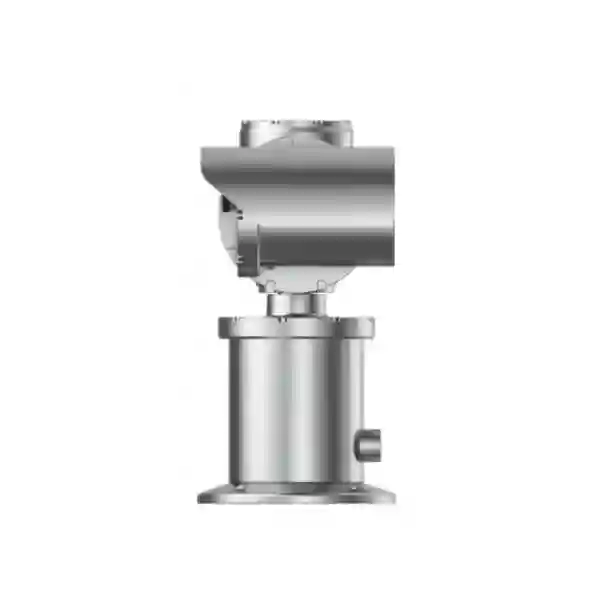
The published product dimensions are approximately 611 mm wide, 438 mm high and 235 mm deep, and the manufacturer’s online specification lists a substantial unit weight. Mounting design should therefore be based on current certified drawings, the actual delivered product and the proposed accessories, not an assumption that it is comparable with a lightweight commercial PTZ. The structure must support static weight as well as relevant wind, vibration and maintenance loads. Access for safely lifting, mounting and servicing the camera needs to be planned.
The installer should verify the manufacturer-approved mount type, the orientation of the enclosure and all required fasteners. If the project includes a pole, wall, corner or pedestal arrangement, obtain drawings and confirm the accessory selection before fabrication. Do not substitute brackets without checking mechanical and, where applicable, hazardous-area requirements. The mounting location should give the lens a usable view while avoiding excessive vibration, obstruction by structural members and unwanted infrared reflections from nearby surfaces.
A good site survey includes photographs of the proposed position, estimated viewing distances, target locations, support condition, cable route, maintenance access and safe work arrangements. It also identifies who can isolate power and who is authorised to work in the classified area. During acceptance, check pan-and-tilt clearance throughout the required range without cable or structural interference. Recording this information helps the buyer compare quotations on an equal basis and gives maintenance staff a more reliable starting point after the installation has been handed over.
Recording capacity and evidence expectations
Storage requirements depend more on actual encoding behaviour and retention policy than on a camera’s megapixel number alone. Frame rate, compression, picture complexity, movement, day/night transitions and recording schedule all change the bit rate. A wide, mostly static scene may compress differently from rain, moving machinery or a zoomed view with fine detail. Ask the recorder integrator to provide a transparent capacity calculation for the selected settings and retention duration rather than quoting a generic number of days that might not hold once the system is in service.
Decide whether recording is continuous, event-based or a combination. Event-only recording may save storage but can miss the lead-up to an incident if an alert fails or the camera is looking elsewhere. Continuous recording offers context but demands more capacity. When security evidence is important, define time synchronisation, user permissions, export formats, audit history and retention ownership. A moving PTZ also needs a documented record of its preset tours and operator control practices so a missing view is not wrongly interpreted as missing activity.
Test retrieval, not just recording. Operators should be able to find a defined time window, export footage with the expected image quality and demonstrate the required playback workflow. Confirm that network interruptions and restored connections are handled acceptably by the chosen recorder. If remote facilities use intermittent backhaul, review where recording occurs and which functions depend on the link. These are system-level outcomes, not promises made by the camera’s encoder alone, and should be written into acceptance criteria.
Tanzania-focused industrial project considerations
For a Tanzania-based industrial procurement, the most useful first document is a site-specific requirement, not a generic catalogue request. Describe the plant or facility, whether hazardous gases or combustible dust are relevant, which area classifications are documented and what activity must be seen. Typical evaluation contexts can include fuel-handling facilities, industrial processing areas, bulk materials and other demanding infrastructure; naming a context does not establish that a particular installation is permitted there. The selected camera and accessory arrangement must match the site’s actual engineering and compliance review.
Climate and operating conditions should be considered without assuming that every location faces the same exposure. A coastal installation may raise different questions about salt contamination from an inland industrial yard, while heavy rain, dust, heat, vibration and cleaning chemicals may create their own challenges. Hanwha publishes an operating temperature range of minus 40 to plus 60 degrees Celsius for the model, subject to the current manual’s applicable conditions. That rating should be checked alongside the specific site’s ambient, sunlight exposure, mounting and maintenance requirements.
Commercial details should be confirmed for the exact Tanzania quotation. Ask about the supplied revision, current availability, lead time, included accessories, warranty terms, commissioning scope, documentation and after-sales responsibilities. None of those terms can be inferred merely from a product brochure. Where certification acceptance or import documentation is relevant, obtain advice from the appropriate local parties and project professionals. FourTeck Tanzania can be approached for a quotation and configuration discussion, but pricing, stock, delivery and installation coverage must be explicitly confirmed rather than presumed.
Compare the right alternative before buying
A conventional outdoor PTZ can be cost-effective in ordinary, non-classified locations, but it is not necessarily acceptable in a hazardous area. A fixed explosion-protected camera can provide persistent coverage of one chosen scene, while an explosion-protected PTZ is valuable for directed inspection across different views. The selection should reflect how operators actually use video. If the critical requirement is a continuous record of a gate while an operator simultaneously tracks activity elsewhere, a single PTZ may not be enough.
The TNU-6324ER should also be distinguished from the TNU-6324E: the ER model is listed with integrated infrared illumination, while the E model is listed as an explosion-protected camera without that ER infrared feature. Verify the exact model on quotes, datasheets, packaging and labels because similar model names can lead to unintended substitutions. If longer-range nighttime viewing is central to the scope, confirming the IR-equipped model is particularly important. The additional infrared capability does not remove the need to assess lighting, camera position and image objectives.
A thermal imager answers a different question from a visible-light IR PTZ. Thermal sensing can be relevant to temperature-related viewing or other specially designed applications; the TNU-6324ER records conventional video with infrared illumination rather than generating a thermal image. Similarly, an industrial process sensor or a certified fire-and-gas detection system performs a purpose that ordinary video analytics cannot replace. A careful comparison identifies which problem each device solves and avoids paying for a feature that does not meet the underlying safety, inspection or evidence need.
Request a specification-based quotation
To request a meaningful proposal, provide the exact model Hanwha TNU-6324ER, the number of proposed camera positions and the project’s stated visual objectives. Include available hazardous-area classification documents and identify the engineering representative who can validate certificate applicability. Share target distances, expected lighting, intended mounting structure and any requirements for continuous overview cameras. If there is an existing recorder or video management system, identify its software version, capacity and camera-licence position where known. This information helps the quotation address the complete solution rather than only the camera.
The request should also specify the expected electrical supply, proposed network architecture, recording retention period, required alert workflow, and site requirements for cybersecurity and installation records. Ask for clarification of which accessories are included, which are optional and which need additional technical review. A clear bill of materials can separate camera hardware, mounts, glands, cabling, power infrastructure, network devices, recording, configuration, training and maintenance. This makes bids easier to evaluate and reduces the likelihood of missing work appearing after an order is placed.
Before authorising purchase, ask for the exact current manufacturer datasheet, relevant certification package and installation manual for the supplied revision. Confirm commercial terms directly in the quotation, including taxes or logistics only where the supplier is able to state them. If local acceptance or specialist installation sign-off is required, assign those responsibilities explicitly. A well-defined procurement request produces a more useful answer to ‘is this the right camera?’ than a simple price comparison and supports a safer, more predictable project.
Commissioning and ongoing inspection
Commissioning should begin with evidence that the model and serial numbers match the approved scope and that the physical installation follows the design and manufacturer instructions. Verify electrical isolation and earthing records, cable entries, network addressing and required documentation before live functional testing. Confirm the camera appears correctly in the selected recorder or VMS and that authorised users can access it. Keep a signed record of the installed firmware and approved configuration so later changes can be traced to a defined baseline.
Functional acceptance should demonstrate the exact monitoring tasks. Test representative day and night scenes, a wide view and telephoto views, PTZ presets, any programmed tour, the wiper and relevant alarm behaviours. Confirm image recording, playback and export at agreed settings. Where analytics are enabled, simulate meaningful events and document their strengths and known false-alarm triggers. Conduct the work within site-approved procedures; a functional camera test must not bypass hazardous-area electrical or plant safety rules.
After handover, schedule checks for image obstruction, mount integrity, environmental seals, network errors, storage health and operator access. Review incidents and false alarms to refine preset schedules or analytics zones in a controlled way. Keep firmware and support documentation under change management rather than allowing unreviewed modifications. The practical life of an industrial surveillance investment depends on people, procedures and service access as much as on the enclosure and imaging specifications. A maintenance plan should therefore be part of the buying decision.
Frequently asked questions
Is the TNU-6324ER a thermal camera?
No. It is a Full-HD visible-light network PTZ camera with integrated infrared illumination for low-light viewing. Its infrared feature helps illuminate a scene for conventional imaging; it does not provide thermal temperature imagery or replace a dedicated temperature-monitoring or fire-and-gas safety system.
Can the camera be used in any hazardous zone?
No blanket approval can be inferred. The exact certificate and marking must be matched to the site’s documented gas or dust area classification, equipment group, temperature limits and applicable installation rules by appropriately qualified personnel. Connection methods and accessories are part of the assessment.
What is the resolution and optical zoom?
Hanwha specifies a maximum 1920 x 1080 image resolution and a 32x optical zoom lens with a 4.44–142.6 mm focal-length range. Whether a particular object can be identified depends on its apparent image size, camera positioning, lighting, weather and recording settings.
Does the 200 m IR rating guarantee identification at that distance?
No. The published up-to-200-metre figure describes infrared viewing capability under the manufacturer’s conditions. A project-specific nighttime test is needed to confirm whether a particular target can be detected, recognised or identified at the planned distance and zoom setting.
Does it provide permanent 360-degree coverage?
It supports endless 360-degree pan movement, but one PTZ camera views one direction at a time. For an uninterrupted record of several directions simultaneously, consider adding suitable fixed cameras or a separate overview system to the project design.
Is the unit powered over Ethernet?
Do not assume PoE support. The manufacturer lists AC mains input options and a separate Ethernet network interface for this model. Confirm the current electrical specification and installation manual before designing the supply, protection and backup-power arrangements.
Will it work with an existing VMS or NVR?
The camera lists ONVIF Profiles S, G and T, SUNAPI and common IP video compression formats. Actual integration, PTZ features, analytics and recording operation must still be checked against the chosen recorder or VMS version and the camera’s firmware.
Does IECEx or ATEX certification prove Tanzania regulatory approval?
No. Those are manufacturer-listed explosion-protection certification frameworks, not an automatic statement about every national or project-specific requirement. Ask the responsible engineers and local project authorities which certificates, inspection documents and approvals are needed.
What should be sent for a quotation?
Provide the model, camera quantity, site area classification, intended views and distances, electrical supply, mounting environment, VMS or NVR details, recording retention needs and proposed installation scope. Request confirmation of exact accessories, commercial terms, documentation and availability in the written quotation.
How should the camera be maintained?
Follow the current manufacturer maintenance instructions and your site’s hazardous-area procedures. A practical plan includes checks of the viewing window, wiper, mounting, cable entries, seals, logs, recorder health, access credentials and approved firmware revisions, with safe access provided for qualified staff.
Request a Hanwha TNU-6324ER quotation
Tell FourTeck Tanzania what must be seen, the site classification, planned mounting position, available AC power and the recording system in use. Ask for the current certification package, complete accessory list, installation scope and written commercial terms for the exact equipment offered.
Request a model-specific industrial camera quote and technical configuration review.




Reviews
There are no reviews yet.