
YEASTAR TG SERIES • BUSINESS MOBILE TRUNKING • TANZANIA
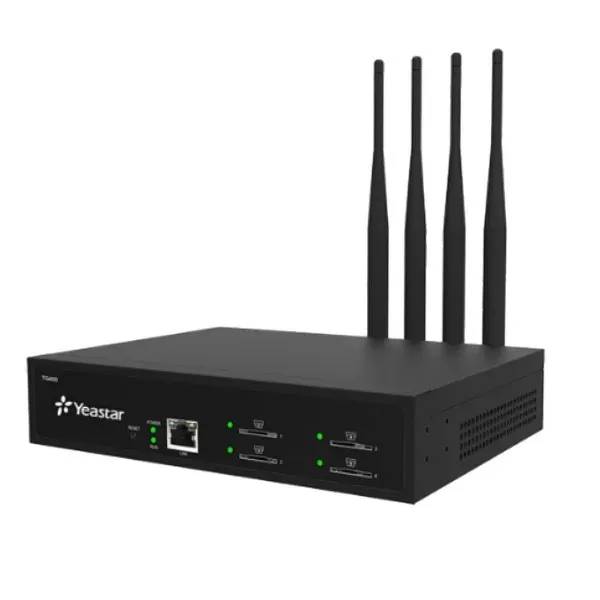
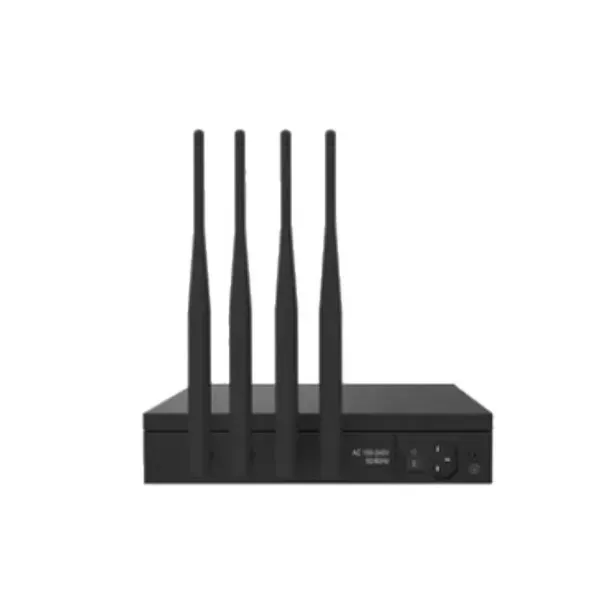
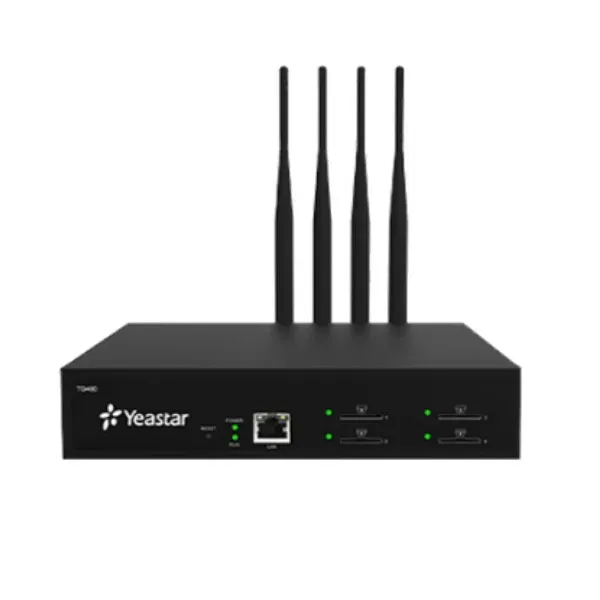
Yeastar TG400 VoIP 4G Gateway
Yeastar TG400 is the four-port model in Yeastar’s TG VoIP 4G Gateway family. It is designed to bridge 3G/4G mobile networks and IP telephony so a compatible PBX, softswitch or SIP environment can route calls through mobile trunks and receive mobile-network calls into the VoIP system. For organisations that need controlled mobile trunking, branch connectivity, backup calling paths or SMS workflows, the TG400 provides a focused gateway layer rather than forcing mobile services and PBX logic into separate, manually managed processes.
What the Yeastar TG400 solves
A business may already have an IP PBX with extensions, IVR, queues and call routing, yet still need calls to enter or leave through mobile networks. TG400 fills that boundary role. Yeastar publishes support for four ports on TG400, SIP and IAX2 signalling, UDP/TCP/TLS/SRTP transport options, common voice codecs, inbound and outbound routing, mobile trunk grouping and web-based configuration. The gateway can therefore be positioned between the mobile network and the organisation’s IP voice platform while the PBX continues to manage users and call flows.
The most important buying point is compatibility. Yeastar states that 4G LTE band support depends on the module type, so an order should not be based only on the model name. The required mobile operator, SIM technology, network bands, voice service and local regulatory or carrier conditions should be confirmed for the exact hardware variant before purchase. FourTeck can use that information, together with the PBX brand and intended call flow, to prepare a more accurate quotation request.
Four mobile channels
TG400 provides four ports, allowing several mobile trunks to be presented to a compatible IP voice system. Capacity planning should consider concurrent call demand rather than only the number of staff.
Two-way calling
Yeastar documents both termination from VoIP to 3G/4G and origination from 3G/4G to VoIP, giving administrators flexibility to build inbound and outbound routes.
SIP integration
The gateway supports SIP and IAX2 and is designed to work with IP PBX, softswitch and SIP environments. Yeastar also publishes integration guidance for its P-Series and for 3CX.
SMS operations
The TG family includes sending and receiving SMS, an SMS centre, bulk messaging functions and an API for SMS/USSD workflows, subject to configuration and carrier support.
Verified technical highlights
| Model | Yeastar TG400 |
| Number of ports | 4 |
| VoIP protocols | SIP, IAX2 |
| Transport | UDP, TCP, TLS, SRTP |
| Voice codecs | G.711 a-law/u-law, G.726, G.729A, GSM, ADPCM, Speex |
| DTMF | RFC2833, SIP Info, In-band |
| Network functions | DHCP, DDNS, firewall, OpenVPN, static IP, QoS, static route, VLAN |
| LTE compatibility | Depends on module type; confirm supported bands and operator before ordering. |
Integration and deployment guidance
Yeastar publishes a peer-trunk procedure for connecting TG400 to a P-Series Appliance Edition and an account-trunk procedure for P-Series Cloud Edition. In both cases, the gateway extends mobile trunks into the PBX so administrators can route outbound calls through a designated mobile trunk and direct inbound mobile calls to chosen destinations. This demonstrates the gateway’s intended integration role, but a production deployment should use the exact procedure and firmware guidance for the installed platform rather than copying example addresses or credentials.
Before deployment, define which SIM belongs to which port, which destinations may use each trunk, what caller-ID behaviour is expected, whether incoming calls should reach an IVR, queue, extension or other destination, and how failover should behave if a trunk is unavailable. Network administrators should also document addressing, VLAN placement, firewall rules, time synchronisation, firmware maintenance and backup of the gateway configuration. Where TLS or SRTP is required, confirm end-to-end support on the connected PBX and surrounding infrastructure.
Related FourTeck Tanzania resources
For broader voice-system planning, review the FourTeck Tanzania technology overview, which explains how IP telephony fits with networking, security and infrastructure. The FourTeck Tanzania shop is useful when the gateway is being sourced alongside IP phones, PBX hardware, switching or other business equipment. Organisations that need implementation help can review FourTeck Tanzania services, while company context is available on the About FourTeck Tanzania page.
A TG400 depends on a stable LAN and appropriate security. The FortiAP F Series Tanzania page illustrates managed wireless infrastructure that may form part of a wider office network, while FortiAP FAP-221K Tanzania provides an example of a specific business access-point product. For organisations designing central security monitoring around their broader infrastructure, FortiAnalyzer FAZ-1000G Tanzania shows the separate security-analytics layer. These are complementary infrastructure references, not TG400 substitutes.
Yeastar TG400 VoIP 4G Gateway Tanzania
In Tanzania, interest in the Yeastar TG400 usually starts with a practical requirement: connect an existing IP PBX to mobile-network calling without abandoning the PBX features that users already depend on. A four-port mobile gateway can be relevant to offices that receive calls on mobile numbers, teams that make a significant volume of calls to mobile destinations, sites that need an alternate communications path, or organisations that want SMS capability integrated into a managed telecom environment. The TG400 should be treated as part of a complete voice design, not as a standalone box. The PBX, SIM plans, mobile coverage, network design, routing policy and user requirements all affect whether the solution performs as expected.
For a Tanzania quotation, the most useful information includes the PBX brand and version, number of simultaneous mobile calls required, preferred mobile operators, expected inbound and outbound call flows, SMS requirements and whether the deployment is at one site or across branches. Because Yeastar publishes LTE support as module-dependent, the requested operator and service technology should be validated against the exact TG400 variant before an order is confirmed. Buyers should also clarify whether the request is hardware supply only or includes configuration, testing, routing and handover. This distinction prevents a product quotation from being mistaken for a complete implementation proposal.
Tanzania businesses planning a wider communications refresh can align TG400 with IP phones, PoE switching, VLAN design, UPS protection and an IP PBX. Voice quality is affected by network congestion, packet loss and configuration, so the gateway belongs on a managed network with documented addressing and security. A quotation should also identify antennas, power accessories, rack or shelf placement and any other items required for the selected installation. FourTeck’s Tanzania site provides broader business technology planning guidance, and the verified Tanzania contact page is the correct starting point for current availability and commercial scope.
Yeastar TG400 VoIP 4G Gateway Dar es Salaam
Dar es Salaam organisations often combine head-office telephony, customer-facing teams, logistics operations and multiple mobile-dependent workflows. In that environment, TG400 can be evaluated as a controlled bridge between a business IP PBX and mobile networks. Reception or service teams can keep PBX features such as extensions, queues and routing while selected calls use mobile trunks. A four-port design is particularly relevant when a company wants more than one mobile path but does not need the larger eight- or sixteen-port TG models. The correct capacity still depends on concurrent calls: four ports should be compared with real busy-hour demand rather than total employee count.
A Dar es Salaam deployment should begin with mobile network and building conditions. Signal strength at the equipment location, antenna placement, rack position and electrical protection can influence reliability. If the gateway is installed in a server room, confirm that antenna positioning and cable routing will not undermine mobile reception. Administrators should also decide whether each SIM is dedicated to a carrier, department or routing rule. This makes least-cost or policy-based routing easier to understand and maintain. Incoming calls can then be mapped to the PBX call flow instead of being managed manually at individual mobile devices.
Procurement teams in Dar es Salaam should ask suppliers to separate verified hardware specifications from implementation scope. The TG400 itself provides the mobile/VoIP bridge, while successful deployment may additionally require PBX configuration, SIP trunk creation, network changes, firewall rules, testing and documentation. If the project involves several offices, include a simple diagram showing where the PBX and gateway will reside and how remote sites reach them. For UAE-related projects or regional technical sourcing, buyers may also review FourTeck’s regional IT and telecom portfolio alongside the Tanzania requirement.
Yeastar TG400 VoIP 4G Gateway Mwanza
Businesses in Mwanza may consider TG400 when branch communications rely heavily on mobile calling but the organisation still wants centralised extension control through an IP PBX. This can suit distribution, trading, hospitality, education, healthcare administration and multi-site operations where staff need consistent calling workflows. Instead of allocating separate handsets and SIMs to individual users, the gateway can expose mobile trunks to the PBX, allowing authorised extensions to use defined routes. That model can simplify call management, but it requires clear policies for who may use each trunk and how incoming calls are presented.
Network design deserves attention even when the mobile side is the main reason for buying the gateway. The TG400 communicates with the PBX over IP, so switch configuration, VLANs, QoS, addressing and security still matter. If the PBX is located at another site, WAN stability and routing become part of the voice path. A design that ignores those elements can create call-quality problems that are mistakenly blamed on the mobile network. Administrators should test calls in both directions, DTMF behaviour, transfer scenarios, caller ID, failover expectations and audio quality before considering the system complete.
For Mwanza procurement, provide the planned operator, number of SIMs, expected concurrent calls, call destinations, PBX details and whether SMS is part of the business workflow. If SMS automation is required, specify whether the need is occasional browser-based messaging or integration through an API, because that affects configuration and operational ownership. Document who will maintain SIM balances or plans, monitor trunk status and update firmware. A good handover includes configuration backup and routing documentation so future support is not dependent on one installer remembering how the system was built.
Yeastar TG400 VoIP 4G Gateway Arusha
Arusha organisations in hospitality, tourism, professional services, education and distributed operations often need dependable communication between front desks, offices and mobile contacts. TG400 can be assessed where an IP PBX is already central to internal calling but mobile-network trunks are also required. For example, a reception workflow can remain within the PBX while outbound calls to mobile destinations are routed through defined TG400 ports. Similarly, a mobile number associated with a SIM in the gateway can feed an incoming call into the PBX routing logic. The value lies in bringing mobile connectivity under the same call-control strategy as other voice resources.
Arusha buyers should avoid treating the phrase “4G gateway” as proof that every LTE service or operator configuration will work automatically. Yeastar explicitly ties supported 4G LTE bands to module type. Therefore, operator compatibility and the specific TG400 hardware variant should be checked before procurement. This is especially important if the gateway will be used for primary calling rather than occasional backup. Coverage at the exact installation point should be considered too; server rooms with thick walls, metal racks or interior locations may require thoughtful antenna placement.
The project brief should also describe business continuity expectations. If TG400 is intended as an alternate path when another trunk fails, define what condition triggers the alternate route and how users will know that the system is operating in fallback mode. If mobile trunks are intended for normal day-to-day calls, define routing rules and usage policies to prevent accidental selection of expensive or inappropriate paths. These operational details make the difference between merely installing a gateway and creating a maintainable telecom solution. FourTeck can use the information to align product selection, PBX integration and supporting network requirements.
Yeastar TG400 VoIP 4G Gateway Dodoma
In Dodoma, government-related organisations, institutions, NGOs, enterprises and service businesses may need a voice architecture that combines structured PBX call handling with mobile-network access. TG400 can provide four mobile trunks to a compatible VoIP system, enabling call routing to be managed centrally. This can be useful where different departments need controlled access to mobile calling or where inbound mobile numbers should reach reception, a queue or another PBX destination rather than a single physical handset. The gateway’s role is therefore best understood as infrastructure for call routing and integration.
For structured environments, administration and auditability matter. Define naming conventions for each trunk, document SIM ownership and associated operators, record which outbound routes use which ports, and back up the final configuration. If several administrators are involved, limit access according to responsibilities and use the security features supported by the platform and surrounding network. Time synchronisation is useful for interpreting call detail records and logs. Firmware should be maintained using Yeastar’s published releases appropriate to the exact hardware version, rather than applying firmware intended for a different TG generation.
A Dodoma quotation should include both technical and procurement information. State the quantity, required model, operator or band assumptions, PBX platform, location, integration scope and any required testing. If the organisation has formal acceptance procedures, list test cases in advance: inbound call, outbound call, each configured trunk, DTMF, routing by destination, caller-ID behaviour, failover and SMS if applicable. Doing this before installation provides a measurable definition of completion and helps procurement, IT and the supplier work from the same scope.
Yeastar TG400 VoIP 4G Gateway UAE
UAE buyers evaluating TG400 may be comparing it with other mobile gateways, SIP trunking options or Yeastar integration services. The essential technical role remains the same: four mobile channels bridge cellular connectivity with a VoIP environment. Before purchasing for the UAE, confirm that the exact module supports the required operator bands and that the intended use complies with local telecom requirements and carrier terms. A product page should never substitute for those checks. Businesses should also define whether the mobile gateway is required for normal outbound calling, inbound mobile numbers, backup communications, SMS, or a combination of those functions.
Integration scope can vary considerably. A simple on-premises deployment may place the gateway and PBX on the same LAN, whereas a cloud or remote-PBX design introduces NAT, firewall, security and reachability considerations. Yeastar publishes specific P-Series Cloud Edition guidance using an account trunk, demonstrating that remote architectures have their own configuration model. Buyers should provide the actual PBX edition and version so the intended connection method can be validated. For related Yeastar connectivity guidance in the UAE, FourTeck publishes a Yeastar Remote SIP Service UAE resource.
Commercially, compare the complete solution rather than the gateway alone. Include SIM/service costs, installation labour, PBX configuration, supporting switching, secure remote access, testing and ongoing administration where relevant. Mobile call policy should be documented so staff know which calls are expected to use the gateway. This is particularly valuable for organisations operating across UAE and African locations because routing decisions can become complex as sites and trunks increase. FourTeck’s broader UAE technology site can be used for regional enquiries while Tanzania requirements remain anchored to the Tanzania contact workflow.
Yeastar TG400 VoIP 4G Gateway Uganda
Uganda businesses with an IP PBX can evaluate TG400 when mobile networks need to become managed trunks rather than isolated phones. Four channels provide a practical middle ground for smaller and medium deployments that need several SIM-based routes but do not require the larger TG800 or TG1600. A distributor, service organisation or multi-branch company can create rules that send selected calls through particular mobile trunks while the PBX continues to manage extensions and internal call flow. Inbound mobile calls can likewise be directed into the PBX environment.
The technical planning sequence should start with operator compatibility, then move to capacity and routing. Confirm the exact LTE module and supported bands, estimate peak simultaneous mobile calls, decide how SIMs are assigned and document the PBX connection method. If the system spans multiple sites, consider where the gateway should be physically installed. Placing it where mobile signal is strong but IP connectivity is unstable can be just as problematic as locating it on a perfect LAN with weak cellular reception. Both sides of the bridge must be dependable.
Uganda procurement teams can also compare regional supply and implementation options through FourTeck Uganda. When requesting pricing, avoid asking only for “TG400 price.” Include the required quantity, PBX platform, mobile operators, expected use, installation city and whether the request includes configuration. That information allows a quotation to distinguish hardware from engineering. It also gives technical reviewers enough context to flag compatibility risks before purchase rather than during installation.
Yeastar TG400 VoIP 4G Gateway Kampala
Kampala offices frequently centralise reception, customer service and sales calling in an IP PBX while staff still communicate heavily with mobile users. TG400 can be evaluated as a four-channel mobile trunk gateway for that architecture. Instead of assigning several mobile handsets to a team, administrators can create PBX routes that use SIMs installed in the gateway. This may improve call-flow consistency and reduce the operational friction of passing shared phones between staff, although actual call-cost benefits depend on mobile plans and should be calculated from the organisation’s tariffs rather than assumed.
A Kampala deployment may benefit from structured route design. For example, outbound destinations can be mapped to preferred trunks, with alternate routes defined when a trunk is unavailable. Incoming calls can be delivered to a receptionist, IVR or queue according to business hours. These rules should reflect the real customer journey; a technically functional route is not necessarily a good service experience. Call-detail records and trunk status should be reviewed during testing so administrators understand how the gateway behaves under normal and failure conditions.
Physical planning is equally important. Verify power availability, UPS coverage, Ethernet connectivity and antenna placement. If the gateway shares a rack with switches, firewalls and other systems, document cable paths and ports so troubleshooting is straightforward. Keep configuration backups after commissioning and after major changes. If integration involves a third-party PBX such as 3CX, use current vendor guidance for the appropriate version rather than relying on old screenshots. A good quotation should state what configuration and testing are included so ownership is clear from the beginning.
Yeastar TG400 VoIP 4G Gateway Arua
For businesses and institutions in Arua, a TG400 project may be driven by the need to bring mobile connectivity into a structured office phone system without deploying a separate mobile handset for every user. The gateway’s four ports can present several mobile trunks to a compatible PBX, while extensions remain managed from the PBX. This approach can support offices with shared reception, field coordination, logistics or service teams that call mobile destinations frequently. The design should still be based on simultaneous call demand and coverage rather than the total number of employees.
Sites outside major data-centre environments should pay particular attention to resilience. If the gateway is important for business communication, place it on protected power and ensure the local switch and PBX path are similarly protected. Mobile signal should be tested at the actual installation position, not assumed from outdoor handset coverage. Antennas may need placement away from dense equipment or obstructions. If WAN connectivity links the gateway to a remote PBX, include that WAN path in testing and define what happens when connectivity drops.
Arua buyers should prepare a concise deployment brief: operator names, SIM quantity, PBX model, IP addressing approach, inbound destinations, outbound route priorities, SMS requirements and who will administer the system after handover. This information helps avoid vague quotations and makes acceptance testing easier. It also supports future troubleshooting because the intended call flow is recorded. Where a broader Uganda procurement relationship is required, the regional FourTeck Uganda site can complement the product-specific technical discussion.
Yeastar TG400 VoIP 4G Gateway Mbarara
Mbarara organisations may use a mobile gateway to connect sales, customer support, branch administration or field-facing teams to mobile networks while preserving central PBX controls. TG400’s four ports allow several SIM-based trunks to be represented inside the VoIP system. This is useful when a company wants shared access to mobile routes, but the exact value depends on how calls are distributed. If peak demand regularly exceeds four simultaneous mobile calls, procurement should compare the larger TG models rather than assuming that queueing will be acceptable.
Call routing should be designed before equipment arrives. Identify which outbound number patterns use mobile trunks, which SIM is preferred for each route, whether calls may overflow to another trunk and where inbound calls should terminate. If departments require different policies, document them clearly. SMS requirements should also be separated from voice requirements because user responsibilities, message templates, API integrations and reporting may differ. The TG platform offers SMS functions, but the workflow around those functions belongs to the organisation’s process design.
For Mbarara installation, confirm Ethernet and power, mobile reception, secure administrator access and backup procedures. The gateway should not be exposed unnecessarily to the public internet, and firewall/NAT decisions should match the actual PBX topology. Where secure transport is selected, confirm compatibility on both ends. A procurement request that includes these implementation assumptions will be more useful than a product-only price request because it allows bidders to clarify which parts of the working solution are included and which remain the customer’s responsibility.
Yeastar TG400 VoIP 4G Gateway Gulu
Gulu offices, institutions and service organisations may consider TG400 when mobile-network access must be integrated with an IP phone environment. The gateway can allow SIP extensions to use mobile trunks and can bring incoming mobile calls back into PBX routing. This is especially useful when an organisation wants consistent reception and departmental workflows instead of managing mobile numbers separately. Four ports offer four potential mobile channels, but each port’s usability depends on the supported module, selected operator and coverage conditions.
Deployment planning should include operational ownership. Someone should be responsible for checking trunk status, SIM service, configuration backups and firmware maintenance. If prepaid or capped services are used, balance monitoring and usage policy may also matter. Yeastar publishes balance-alarm and call-duration functions within the TG feature set, but their usefulness depends on how they are configured and on operator behaviour. Administrators should validate those functions in the local environment rather than assuming uniform behaviour across carriers.
Gulu procurement teams can reduce risk by requesting a staged commissioning process. First validate IP connectivity between the gateway and PBX. Then validate each mobile port independently for inbound and outbound voice. Next test route selection, DTMF, transfer and failure scenarios. Finally test SMS functions if they are in scope. Document results and preserve the final configuration. This approach separates problems logically and makes it easier to determine whether an issue belongs to the mobile network, PBX, LAN, route design or gateway configuration.
Yeastar TG400 VoIP 4G Gateway Kenya
Kenyan organisations searching for TG400 are often comparing mobile gateway capacity, PBX compatibility and total deployment cost. The model offers four ports and supports SIP/IAX2 for integration with IP telephony. It can suit branch offices, service companies, contact-centre support workflows and businesses that need mobile trunks alongside conventional SIP services. The choice should be made from call concurrency and routing requirements. A business with light mobile use may not need four channels, while a busy outbound team may need more than four and should review TG800 or another architecture.
Operator and band compatibility must be confirmed for the exact unit. Yeastar’s specification explicitly notes that LTE support varies with module type, so model naming alone is not enough. Buyers should provide the target carrier or carriers during quotation and ask for the offered variant to be matched accordingly. The same discipline applies to PBX integration: provide brand, edition and version, because trunk configuration and remote connectivity can differ between platforms. Where a PBX is cloud-hosted, security and network reachability need additional review.
For Kenya-specific regional sourcing, FourTeck Kenya can be used alongside the Tanzania project context. A useful request for quote should list gateway quantity, installation city, operators, PBX, desired call flows, SMS needs, installation scope and expected acceptance tests. Include any deadline as a planning input but do not assume stock or delivery until formally confirmed. That keeps the procurement record accurate and separates technical suitability from commercial availability.
Yeastar TG400 VoIP 4G Gateway Kuwait
Kuwait buyers may evaluate TG400 as part of a hybrid voice architecture where IP PBX features need to coexist with mobile-network trunks. The device’s four mobile ports, SIP/IAX2 support, routing controls and web management make it relevant to organisations that need a dedicated gateway layer. Typical evaluation questions include whether the local mobile operator and voice service are supported, whether the PBX connection can be implemented securely, how many concurrent calls are needed and whether the gateway will be used for primary calling or contingency routing.
For regulated or tightly managed environments, confirm local telecom rules and operator terms before deployment. Technical capability does not itself establish that every use is permitted in every jurisdiction. Procurement should therefore separate three checks: hardware compatibility, network/operator compatibility and legal/contractual suitability. Once those are confirmed, the engineering team can design routes, security and monitoring. The TG400 can support tools such as CDR, logs and packet capture that assist troubleshooting, but these should be used within the organisation’s security and privacy policies.
Regional FourTeck information for Kuwait is available through FourTeck Kuwait. When comparing quotations, review what is included besides the gateway: antennas and accessories, configuration, PBX integration, testing, remote support and documentation may be separate line items. A clearly defined scope also helps prevent a common procurement problem where one proposal appears cheaper only because configuration or required accessories are omitted.
Yeastar TG400 VoIP 4G Gateway Ghana
Ghana organisations can assess TG400 for integrating mobile trunks into a SIP-based office communication system. Four ports can support multiple SIMs and routing policies, while the IP PBX continues to control extensions, queues and other call logic. This can be valuable for companies serving customers predominantly on mobile networks or maintaining alternate connectivity for voice. The business case should be built from actual tariff plans, call volumes and operational needs rather than a generic promise of lower cost.
Technical assessment should cover mobile signal, supported bands, operator service, PBX compatibility, LAN configuration and security. If the gateway is placed at a branch while the PBX is centralised elsewhere, WAN latency and packet loss become relevant. If it is located beside the PBX, mobile signal may be the greater constraint. Test both conditions during site planning. Document SIM-to-port mapping and route priorities so future administrators can understand why a call used a particular trunk.
For Ghana regional enquiries, customers can review FourTeck Ghana. A strong quotation request includes the intended operator, hardware quantity, PBX model and version, simultaneous call estimate, SMS requirement and desired installation scope. If integration services are expected, include acceptance criteria. This makes the commercial comparison more meaningful because competing proposals can be evaluated against the same technical objective instead of only against a hardware price.
Yeastar TG400 VoIP 4G Gateway Nigeria
Nigeria has a large mobile-user base, so organisations may investigate gateways such as TG400 when their business PBX needs controlled access to mobile-network trunks. The four-port model can be considered for branch offices, service desks, sales teams and other environments where several mobile channels are enough. It is not a call-centre dialer by itself; rather, it provides mobile trunk connectivity that a PBX or communications platform can use according to configured routes. This distinction matters when designing a complete outbound calling solution.
Because mobile-network conditions and operator policies can differ, procurement should verify the exact TG400 module against intended networks before purchase. Also define expected concurrency. Four ports mean four mobile channels, so an organisation with much higher simultaneous-call demand should evaluate a larger gateway or different carrier architecture. For SMS, clarify message volume and integration expectations. Bulk functions and APIs may support workflows, but the business must also account for operator rules, customer consent and any applicable messaging regulations.
Regional sourcing information is available through FourTeck Nigeria. A Nigeria RFQ should state whether TG400 is intended for routine calling, backup, inbound mobile numbers, SMS or a combination. Include PBX details and site connectivity so the supplier can determine whether configuration services are straightforward or require remote/cloud integration. This allows the final proposal to address the complete architecture rather than simply supplying hardware whose operating assumptions are unknown.
Yeastar TG400 VoIP 4G Gateway Seychelles
Seychelles organisations in hospitality, professional services, government, logistics and multi-site operations may need mobile voice integrated into an IP PBX without fragmenting call management. TG400 can provide four mobile trunks to a compatible VoIP system and can route calls in both directions. This may support reception numbers, departmental mobile routes, backup communications or specific business workflows. The suitability of the gateway depends on operator compatibility, the actual site coverage and the number of simultaneous calls needed.
Island and multi-location operations should consider where the gateway is physically placed. The ideal location needs both reliable mobile signal and reliable IP connectivity to the PBX. If the PBX is centralised and the gateway serves a remote property, the WAN becomes part of the voice path and should be monitored accordingly. If the gateway and PBX are together, antenna placement may be the more important variable. UPS protection can reduce avoidable interruptions caused by short power events, provided the supporting network equipment is protected as well.
A Seychelles quotation should include target operator, SIM quantity, site, PBX model, required call routes, SMS needs and whether remote support or on-site engineering is expected. Because delivery, stock and service coverage change over time, these commercial points should be confirmed during the quotation rather than assumed from a web page. For broader Africa-oriented project context, buyers can also review FourTeck Africa while keeping the final solution aligned with local telecom requirements.
Buying and sizing checklist
Before requesting a Yeastar TG400 quotation, document the PBX brand and software version; required number of concurrent mobile calls; target mobile operators; exact installation country and city; inbound routing destinations; outbound route priorities; caller-ID expectations; SMS or API requirements; LAN/VLAN design; whether the PBX is local or remote; rack, shelf or wall placement; UPS requirement; antenna-location considerations; and the expected implementation scope. If four channels are insufficient, compare TG800 or TG1600 rather than designing around chronic contention. If fewer channels are required, compare the smaller model against future growth.
Frequently asked questions
How many mobile ports does Yeastar TG400 have?
Yeastar publishes TG400 as the four-port model in the TG VoIP 4G Gateway family. The relevant sizing measure is concurrent mobile calls, not the total number of extensions on the PBX.
Does TG400 work with 4G LTE?
Yeastar’s current TG family information includes 4G/VoLTE positioning, but LTE band support depends on the module type. Confirm the exact variant and target operator before ordering.
Can TG400 connect to an IP PBX?
Yes. The gateway is designed to bridge mobile networks and IP telephony, and Yeastar publishes integration examples for its P-Series and for 3CX. Exact setup depends on the PBX platform and version.
Can TG400 send and receive SMS?
The TG platform includes SMS sending and receiving, bulk SMS functions and API capabilities. The practical workflow and carrier support should be validated for the deployment.
Is TG400 a replacement for an IP PBX?
Normally it is used as a gateway that adds mobile trunks to a PBX or VoIP environment. Yeastar also documents SIP registrar functionality for small scenarios, but organisations needing IVR, queues, reporting and broader unified communications should design the complete voice platform around those requirements.
What information is needed for a quotation?
Provide quantity, country/city, mobile operator, PBX brand and version, expected concurrent calls, inbound/outbound routing needs, SMS requirements and whether you need configuration or hardware supply only.
Decision recap
Choose Yeastar TG400 when the requirement is for four mobile trunks integrated with an IP telephony system and the exact hardware variant has been verified for the intended operator. Move to a larger model when concurrent mobile-call demand exceeds four. Treat mobile band compatibility, PBX topology, routing policy, network security and implementation scope as part of the purchase decision. Do not assume stock, pricing, delivery, warranty or carrier compatibility until these are confirmed in the quotation.
Consultation and quotation
For a useful Yeastar TG400 proposal, send the FourTeck team your PBX details, mobile operator requirements, number of expected simultaneous calls, installation location and desired call flow. FourTeck can then align the requested gateway with supporting network, IP-PBX and implementation requirements. Use the verified FourTeck Tanzania contact page to request current commercial information.

Reviews
There are no reviews yet.