
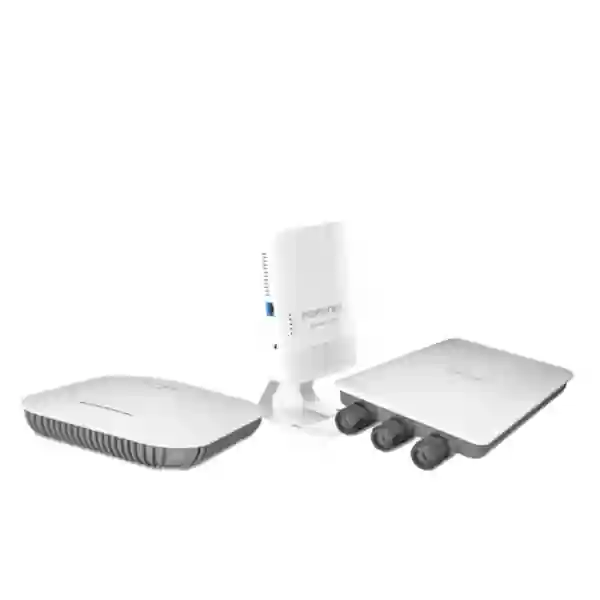
FortiAP F Series Tanzania
FortiAP F Series is Fortinet’s Wi-Fi 6 generation of enterprise wireless access points for organizations that want secure, centrally managed WLAN connectivity integrated with a broader Fortinet network. Fortinet’s current compatibility documentation identifies F-series Wi-Fi 6 models including FAP-23JF, FAP-231F, FAP-234F, FAP-431F, FAP-432F, FAP-432FR, FAP-433F and FAP-831F. The family spans different deployment and capacity requirements, so buyers should select the exact model from site conditions, radio design, client density, Ethernet and PoE requirements, management architecture and current software compatibility rather than treating every F-series unit as interchangeable.
Wi-Fi 6 efficiency
Fortinet documents Wi-Fi 6 improvements such as OFDMA and MU-MIMO for more efficient multi-client operation. These capabilities are valuable in offices, classrooms, meeting areas and other environments where many endpoints share airtime.
Fortinet-managed WLAN
FortiAP can be centrally managed through supported Fortinet platforms. In FortiGate-managed designs, wireless can align with segmentation, security policy and the Fortinet Security Fabric instead of operating as an isolated access layer.
Design before quantity
AP quantity depends on floor plan, wall construction, interference, concurrent clients, applications, roaming and mounting. A visible signal is not the same as sufficient capacity, so important deployments benefit from RF planning.
FortiAP F Series overview and model-selection guidance
The FortiAP F Series is best understood as a family rather than one specification. Fortinet’s current compatibility matrix groups F-suffix FortiAP models under Wi-Fi 6, while newer G models are Wi-Fi 6E and K models are Wi-Fi 7. This distinction matters when procurement teams compare online listings. A requirement for “FortiAP F Series” should therefore be translated into an exact model after the deployment environment is known. Indoor office coverage, outdoor areas, high-density rooms, wall-jack requirements, antenna preferences and uplink capacity can lead to different model choices.
Fortinet recommends matching FortiAP firmware with the respective FortiOS version when available. Before an F-series AP is ordered for an existing FortiGate environment, administrators should record the FortiGate model, FortiOS release, intended FortiAP model and current support plan, then validate the combination against the current Fortinet compatibility matrix. This is especially important for lifecycle planning because a technically functional combination may not provide the same feature set or support path as a recommended matched release.
Wireless design also depends on the wired network. Access points require suitable Ethernet connectivity and power, and the exact PoE and uplink requirements vary by model. A quotation should therefore identify the switch platform, available PoE budget, port speeds, cabling category, uplink design and VLAN requirements. Organizations replacing older Wi-Fi should not assume that changing only the AP will solve congestion caused by older switches, insufficient uplinks or poor placement.
FortiAP, FortiGate and the secure LAN edge
FortiAP becomes particularly useful when wireless policy is planned with the rest of the network. Employee, guest, voice and IoT traffic can be separated according to the organization’s design, while firewall policy determines which resources each segment can reach. A guest SSID may be internet-only, managed corporate devices may receive access to internal applications, and operational devices may be restricted to specific services. The exact policy should reflect business requirements rather than a generic template.
For Tanzania projects, review FourTeck’s integrated Tanzania technology solutions to understand how Wi-Fi relates to switching, firewalls, cabling and other infrastructure. The Tanzania business technology shop provides related purchasing context, while FourTeck Tanzania services is relevant when the requirement includes design, installation, configuration or lifecycle support. For an exact F-series reference, the existing FortiAP FAP-231F Tanzania page covers a verified indoor Wi-Fi 6 model. Buyers considering a newer radio generation can compare FortiAP FAP-231G Wi-Fi 6E, FortiAP FAP-233G Wi-Fi 6E, FortiAP FAP-221K Wi-Fi 7 and FortiAP FAP-222KL Wi-Fi 7. These links help procurement teams distinguish the F generation from newer FortiAP platforms instead of mixing specifications.
FortiAP F Series buying framework
| Planning area | What to confirm | Why it matters |
|---|---|---|
| RF environment | Floor plan, walls, ceiling, interference, outdoor exposure | Determines placement and appropriate model type. |
| Capacity | Concurrent clients, applications, high-density zones | Prevents designing only for signal coverage. |
| LAN and PoE | Switch model, port speed, PoE budget, cabling | Ensures APs have appropriate power and backhaul. |
| Management | FortiGate/FortiOS, cloud or other supported method | Establishes operational and compatibility requirements. |
| Security | SSIDs, VLANs, authentication, guest and IoT policy | Defines how wireless users reach business resources. |
FortiAP F Series Tanzania
Organizations evaluating FortiAP F Series in Tanzania should begin with the business workload and building rather than selecting an AP only from advertised wireless speed. An office in Dar es Salaam, an education facility in Dodoma, a hospitality property in Arusha and a branch in Mwanza can all have different radio conditions even when the number of users is similar. Concrete walls, glass, shelving, neighboring wireless networks, ceiling height and the location of meeting rooms affect propagation. Capacity also changes with applications: email and web browsing place different demands on a WLAN from simultaneous video meetings, cloud applications, voice over Wi-Fi or large file transfers.
A Tanzania procurement brief should identify the approximate number of concurrent users and devices, building type, floors, priority applications, guest requirements and any areas where roaming is important. If a FortiGate is already installed, include its exact model and FortiOS release so the intended F-series model can be checked against current compatibility guidance. If switching is already present, provide switch models, free ports, PoE availability and uplink capacity. These details allow the wireless requirement to be evaluated as a complete access-layer design rather than an isolated hardware purchase.
Businesses refreshing older Wi-Fi should document current SSIDs, authentication, VLANs, known dead zones and user complaints before migration. This helps distinguish RF problems from internet, switching or firewall constraints. For new sites, define employee, guest and device access policies before installation so cabling, switch configuration and firewall rules can be prepared together. A site survey or predictive RF design is valuable where coverage is operationally important, particularly for multi-floor sites or environments with challenging construction.
For quotation purposes, request the exact FortiAP model, regional variant, quantity, required accessories, support expectations and installation scope. Do not assume stock, lead time or a universal F-series specification. FourTeck Tanzania’s verified contact and quotation page is the appropriate place to provide site details and request a current proposal.
FortiAP F Series Dar es Salaam
Dar es Salaam businesses considering FortiAP F Series often need wireless for office floors, customer areas, meeting rooms, retail administration, education, healthcare, hospitality or branch operations. Dense commercial environments can contain many neighboring WLANs, so radio planning should consider interference as well as simple signal strength. An AP mounted where it is convenient for cabling may not be in the best position for users. Meeting rooms and collaborative spaces can become high-density zones at certain times of day even when average building occupancy looks modest.
A practical Dar es Salaam design maps user concentration, room function and device type. Staff laptops and phones may need corporate authentication and access to internal applications, guests may need isolated internet access, and operational devices may need restricted connectivity. These groups can be represented through SSIDs and VLANs according to the organization’s security policy. Where FortiGate is the network security platform, the WLAN can be planned with firewall segmentation and centralized Fortinet management, subject to model and firmware compatibility.
The wired layer deserves equal attention. Wi-Fi 6 can increase wireless efficiency, but the experience will still be constrained if AP uplinks, switch capacity, PoE or internet connectivity are inadequate. During a refresh, check whether existing cabling and switches were designed for the new AP requirement. During a new fit-out, coordinate AP cabling before ceilings are closed and furniture layouts are finalized. This reduces later compromises in mounting position.
For a Dar es Salaam quotation, provide floor plans when possible, the number of floors, approximate concurrent clients, current AP locations, switch and FortiGate details, guest-access expectations and whether installation or RF validation is required. The FourTeck Tanzania contact page currently identifies Dar es Salaam among its contact locations, making it useful for initiating a project discussion without assuming product availability before quotation.
FortiAP F Series Mwanza
Mwanza organizations can evaluate FortiAP F Series for branch offices, schools, clinics, professional workplaces, hospitality facilities and customer-facing business environments that need enterprise Wi-Fi 6. A branch may prioritize standardized management and security policy with a headquarters network, while a larger local site may place greater emphasis on roaming, client density and coverage across multiple rooms. These are different design goals and should be stated before model selection.
Coverage and capacity must be separated during planning. One access point can sometimes produce a visible signal across a broad area, but that does not guarantee enough airtime for many active clients. Conversely, adding too many APs without coordinated channel and power planning can increase contention. Wi-Fi 6 technologies improve efficiency, yet they do not replace RF engineering. Floor layout, construction, device capabilities and application demand remain important inputs.
Mwanza projects that already use Fortinet can benefit from documenting the existing architecture before expanding wireless. Record FortiGate model and software, VLANs, authentication approach, switch platform and any existing FortiAP units. This makes it easier to check whether the new F-series model fits the current environment and whether a software change should be planned. Multi-site businesses should decide which settings are standardized centrally and which radio settings remain site-specific.
A useful quotation should state site type, quantity estimate, approximate users, floor area, PoE availability, management preference and deployment scope. If the project is replacing another wireless platform, include existing SSID and authentication information so migration can be planned. Asking for a complete bill of materials is safer than comparing AP unit prices without power, mounting, support or configuration dependencies.
FortiAP F Series Arusha
Arusha buyers may consider FortiAP F Series for offices, hospitality properties, travel businesses, schools, NGOs and distributed branch networks. Hospitality and visitor-facing environments often require strong separation between guest connectivity and operational systems. A hotel or lodge administration network, for example, may need employee access, guest internet, point-of-service connectivity and management devices to follow different policies. Wireless design should therefore begin with traffic groups and operational needs, not only coverage.
Roaming is another important consideration in environments where users move between reception, meeting spaces and work areas. Access-point placement should reflect movement patterns and density. Corridors may need coverage but can have lower client demand than conference rooms or shared workspaces. Walls, doors and decorative materials can alter signal propagation, so a geometric spacing rule is rarely sufficient for a business-critical deployment.
If the organization already uses FortiGate, confirm the intended FortiAP F model and current FortiOS compatibility before purchase. If the project includes new switching, check the exact AP’s Ethernet and power requirements and size PoE capacity with appropriate headroom. For existing switching, confirm available PoE budget and port capacity instead of assuming that every PoE-labelled switch can support the intended deployment.
An Arusha RF and procurement brief should include the property type, floors, guest and staff populations, high-density spaces, current wireless issues, Fortinet equipment and expected service scope. FourTeck’s Tanzania contact page identifies Arusha among its contact locations. Use the quotation process to confirm the exact regional product, accessories and current commercial conditions rather than relying on specifications copied from a different FortiAP model or regulatory market.
FortiAP F Series Dodoma
Dodoma organizations evaluating FortiAP F Series may include administrative offices, institutions, education environments, professional organizations and branch operations. Centrally managed enterprise Wi-Fi is useful where administrators want consistent SSID, access and segmentation policy rather than a collection of independently configured consumer access points. The final design should still be based on the site’s physical layout and the organization’s security requirements.
A strong deployment plan identifies corporate users, visitors, managed devices and IoT or operational endpoints before configuration. Each group can then receive the appropriate authentication and network access. Guest traffic may be restricted to the internet, while managed users reach approved business resources. Device networks can be limited to only the systems they require. The exact structure depends on the customer’s applications and policies, but planning it early prevents unnecessary reconfiguration after the WLAN is live.
Operational lifecycle matters as much as initial installation. Teams should decide who manages firmware, how configurations are backed up, how AP health is monitored and how changes are documented. Fortinet’s guidance to align FortiAP firmware with the corresponding FortiOS release should be incorporated into maintenance planning. For multi-branch organizations, naming and policy standards can be repeated while channel plans and transmit-power settings remain tailored to each building.
For a Dodoma quotation, provide floor plans or dimensions, high-density rooms, estimated users, existing network hardware and expected growth. Confirm whether the requirement includes installation, configuration, survey or post-deployment validation. FourTeck Tanzania’s contact page lists Dodoma as a contact location and can be used to begin the requirement discussion and confirm current product availability and scope.
FortiAP F Series UAE
UAE procurement teams evaluating FortiAP F Series for offices, branches or regional networks should make regulatory model identification part of the purchasing process. Wireless equipment operates within country-specific radio rules, so a unit sourced for another regulatory domain should not automatically be treated as interchangeable. The quotation should identify the exact model appropriate to the deployment and current support status.
The F series remains relevant where an organization specifically needs Fortinet Wi-Fi 6 and has an established Fortinet architecture or a standardized regional design. High-density meeting rooms, collaboration zones and guest areas should be mapped separately from ordinary desk areas. If a project is new and lifecycle horizon is a priority, procurement teams can also compare current Wi-Fi 6E and Wi-Fi 7 FortiAP options rather than assuming an F-series model is always the appropriate generation.
Organizations coordinating UAE and Tanzania sites can standardize security concepts such as SSID naming, segmentation and authentication while allowing each country and building to retain its own regulatory and RF design. Existing FortiGate and switching details should be included in the cross-region bill of materials so compatibility and PoE requirements are reviewed consistently.
For UAE-focused technology coordination, FourTeck UAE provides regional context, while Fortinet UAE resources are relevant to Fortinet-oriented requirements. A complete request should state locations, quantity estimates, firewall and switch platforms, support expectations and whether the WLAN is a new deployment or migration.
FortiAP F Series Uganda
Ugandan organizations can evaluate FortiAP F Series for secure indoor and model-appropriate wireless deployments across offices, education, healthcare, hospitality and distributed branches. A Fortinet-oriented WLAN is especially relevant when the organization wants wireless administration aligned with an existing FortiGate environment. Before procurement, document client density, applications, guest requirements, VLANs, switching and PoE so the AP model and quantity reflect the actual network.
Multi-site companies operating in Tanzania and Uganda can reduce operational variation by standardizing naming, authentication and segmentation principles. Radio channels, power and AP placement should remain site-specific because buildings and RF conditions differ. The F-series Wi-Fi 6 generation can serve modern endpoint populations, but capacity planning is still necessary for conference rooms, classrooms and shared spaces with concentrated client demand.
The compatibility process should be explicit. Record the FortiGate model and FortiOS version, then verify the intended F-series AP against current Fortinet documentation. Review switch PoE and port capacity at the same time. For refresh projects, document existing SSIDs, credentials or authentication systems and any guest portal so migration tasks are understood before equipment arrives.
Use FourTeck Uganda for Uganda-focused project coordination. A quotation should specify city, site count, required quantity, existing network equipment, installation expectations and desired support scope. Exact regulatory model and availability should be confirmed at quotation time.
FortiAP F Series Kampala
Kampala offices and institutions can have a demanding mixture of employee devices, guest users, cloud applications, meeting-room video and operational endpoints within the same building. FortiAP F Series can form part of a Wi-Fi 6 architecture that separates these traffic classes through appropriate WLAN and VLAN policy. Dense neighboring networks may add RF contention, making channel planning and placement important in commercial areas.
Where FortiGate protects the internet edge, FortiAP can be evaluated within a consolidated Fortinet environment. This does not remove the need to verify the exact FortiGate, FortiOS and FortiAP combination. Administrators should also review switch uplinks, PoE and cabling because a WLAN is only as effective as its wired backhaul. Guest access, authentication and internal-resource policy should be agreed before configuration begins.
A Kampala deployment should identify peak rather than only average demand. A conference room can fill with clients for one hour while nearby office areas remain lightly used. Training rooms and shared workspaces can create similar bursts. Designing for these zones separately can improve the result compared with evenly spacing APs based only on floor area. Where roaming-sensitive applications are important, test transitions between coverage cells during validation.
For quotation accuracy, provide building type, floor area, floor plans, expected concurrent clients, existing APs and application priorities. State whether the project includes multiple branches and whether centralized management is required. This makes it easier to distinguish hardware cost from configuration, installation, survey and support requirements.
FortiAP F Series Arua
Arua branch networks, education sites, healthcare facilities and business offices can use FortiAP F Series where enterprise Wi-Fi 6 and centralized control fit the requirement. Remote or distributed sites often benefit from simple, repeatable standards: clearly named SSIDs, documented VLANs, predictable addressing and centralized monitoring can reduce troubleshooting complexity when local IT resources are limited.
The physical site still needs individual RF planning. Concrete walls, room geometry, roof or ceiling construction and mounting position affect radio propagation. User count alone cannot determine the number of access points. Teams should identify important coverage zones, high-demand spaces and devices that depend on stable connectivity, then validate the design against those requirements.
PoE and switching should be checked before ordering. The exact F-series model determines power and interface requirements, so do not generalize specifications from another FortiAP. If the site connects back to a headquarters environment, confirm whether local internet breakout, centralized applications, VPN or SD-WAN architecture creates additional bandwidth considerations. Wireless problems can sometimes originate upstream from the AP itself.
Arua buyers should request the exact regional FortiAP model and provide existing Fortinet equipment details for compatibility review. Organizations linking Arua with Kampala or Tanzania operations can standardize policy while retaining local RF tuning. Include installation, configuration, documentation and support expectations in the quotation request so the project scope is clear before procurement.
FortiAP F Series Mbarara
Mbarara organizations planning a wireless refresh can consider FortiAP F Series when Wi-Fi 6, Fortinet integration and enterprise management are priorities. Offices and institutions now commonly connect laptops, smartphones, tablets, printers, collaboration equipment and specialized devices at the same time. Wi-Fi 6 efficiency features help multi-client environments, but correct placement and network design remain essential.
Segmentation should be decided before rollout. Employee, guest and device networks may require different authentication and access rights. When FortiGate is part of the architecture, wireless policy can be coordinated with firewall rules and VLANs. The exact software combination should be checked against current Fortinet documentation rather than inherited assumptions from an older deployment.
Refresh projects should also assess whether older switches and cabling can support the selected APs. A new WLAN may expose bottlenecks in PoE capacity or uplinks. If the project replaces another vendor, inventory existing AP locations and SSIDs, identify authentication dependencies and note any devices that are difficult to migrate. A phased rollout can reduce risk where wireless supports critical operations.
For Mbarara procurement, provide the site type, floors, approximate clients, current switches, FortiGate information and preferred management method. Ask whether installation includes configuration and RF validation, and identify migration requirements. This produces a clearer project scope than comparing access-point prices without the surrounding infrastructure.
FortiAP F Series Gulu
Gulu businesses, NGOs, education environments and branch operations can evaluate FortiAP F Series for secure enterprise Wi-Fi 6. Distributed organizations often value configurations that can be repeated across locations, but each building needs its own placement and RF settings. Central management can improve visibility and policy consistency compared with independently managed consumer access points.
A deployment plan should document coverage zones, high-density rooms and applications that depend heavily on stable wireless connectivity. Voice and video collaboration make capacity and roaming particularly important. Switching, PoE, WAN performance and internet service also contribute to user experience, so troubleshooting and design should consider the complete path rather than the radio alone.
For organizations with FortiGate, verify software compatibility before rollout and decide how wireless segments map to firewall policy. Guest users, staff devices and operational endpoints should not automatically share identical access. If multiple sites use the same SSID names, administrators should still confirm that authentication and addressing are designed consistently and that local RF conditions are independently validated.
Gulu quotation requests should identify whether the requirement is a single branch or part of a regional rollout. Include current FortiGate and switch information, quantity estimates, building details and support expectations. Confirm the regional model, required accessories and current availability during quotation rather than assuming conditions from another market.
FortiAP F Series Kenya
Kenyan organizations can evaluate FortiAP F Series for office, branch, education, healthcare and hospitality wireless projects where Wi-Fi 6 and Fortinet integration are required. Dense business areas can contain significant neighboring RF activity, while multi-floor buildings add propagation and roaming challenges. A predictive design or site survey can help establish placement for important deployments instead of relying on generic distance or area assumptions.
Companies operating across Kenya and Tanzania may benefit from a common security and wireless architecture. SSID naming, segmentation principles, authentication and operational processes can be standardized, while each country’s regulatory requirements and each building’s RF characteristics remain local design inputs. This balance supports easier administration without pretending that every site is physically identical.
Before rollout, check the intended FortiGate/FortiOS and FortiAP firmware combination and review switch power and uplink capacity. Newer client devices do not guarantee a good wireless experience if the access layer is constrained by old cabling or congested upstream connectivity. Where a project includes a mix of F-series and newer FortiAP generations, document model placement and software requirements carefully.
For Kenya-specific coordination, use FourTeck Kenya. Provide exact site locations, users, building details, firewall and switch information and installation scope. This helps produce a quotation that includes the practical dependencies of the WLAN rather than an isolated AP price.
FortiAP F Series Kuwait
Kuwait businesses evaluating FortiAP F Series should treat regulatory model selection and lifecycle status as procurement requirements. Wireless radio rules differ by country, so buyers should confirm the correct orderable model rather than importing a unit intended for another domain. The exact F-series model should also be checked against current Fortinet software compatibility and support information.
For offices and branches, design inputs include user density, meeting spaces, guest access, authentication, segmentation and PoE switching. Where FortiGate is already deployed, WLAN configuration can be aligned with firewall and VLAN policy. The design should identify whether wireless is primarily for employee productivity, guest access, voice, operational devices or a mixture, because these workloads can require different policies and capacity assumptions.
Organizations with regional sites can document a standard WLAN architecture while retaining local regulatory and RF validation. A standard can define naming, authentication, segmentation, monitoring and change-control practices. The local design then determines AP model, quantity, channel plan and mounting. This approach is more maintainable than forcing identical hardware counts into different buildings.
For Kuwait-focused coordination, visit FourTeck Kuwait. Include installation, configuration and support expectations in the quote request, together with FortiGate and switching details, so the project can be evaluated as a complete wireless deployment.
FortiAP F Series Ghana
Ghanaian offices, schools, clinics, hospitality sites and branch networks can consider FortiAP F Series for enterprise Wi-Fi 6 deployments that need centralized management and Fortinet integration. Wireless planning should begin with users and applications rather than a generic coverage radius. Wall materials, floor layout, neighboring WLANs and concentration of active devices can materially change AP quantity and placement.
Organizations standardizing Fortinet across African operations can reduce administrative variation through a common wireless policy framework. Corporate, guest and device segments can follow consistent principles while radio settings are adapted locally. FortiGate and FortiAP software compatibility should be checked using current vendor documentation as part of deployment and change planning.
The wired access layer should be included in the design. Confirm switch PoE capacity, free ports, uplink speed and cabling. For refresh projects, identify whether old AP placement was driven by convenience rather than RF performance. New hardware installed in the same poor locations may reproduce existing coverage problems. Where business operations depend on WLAN availability, include validation and documentation in the deployment scope.
Use FourTeck Ghana for Ghana-focused coordination. A procurement brief should identify site count, users, floor area, existing switches, FortiGate models and required services. Confirm exact regional model, accessories and availability when the quotation is prepared.
FortiAP F Series Nigeria
Nigeria deployments may range from a single office to large multi-site corporate networks. FortiAP F Series can be evaluated where organizations need Wi-Fi 6, Fortinet integration and centralized policy. High-density meeting areas and shared workspaces should be assessed separately from low-occupancy zones because wireless capacity, not merely visible signal, determines the user experience during peak demand.
IT teams should check PoE budgets, switch capacity, VLAN architecture and firewall policy before rollout. For migration from another wireless platform, document existing SSIDs, authentication, guest portals and application dependencies. A phased migration can be useful for larger organizations because it allows teams to validate coverage, roaming and policy before expanding the design to every site.
Regional operations can standardize configuration principles without forcing identical RF settings. Fortinet compatibility should be validated for each planned AP model, particularly where an estate contains multiple FortiAP generations. Firmware planning, monitoring, configuration backup and documentation should be included in the operating model so the WLAN remains supportable after installation.
For Nigeria-specific coordination, visit FourTeck Nigeria. Buyers should provide exact locations, quantity estimates, existing Fortinet infrastructure and desired service scope. Regional model selection and commercial availability should be confirmed at quotation time.
FortiAP F Series Seychelles
Seychelles businesses in hospitality, professional services and distributed office environments can evaluate FortiAP F Series for model-appropriate Wi-Fi 6 deployments. Hospitality environments should separate guest connectivity from operational traffic and plan capacity around reception areas, conference rooms, restaurants and other busy zones. Indoor F-series models should not be assumed suitable for exposed outdoor areas; select a model specifically designed for the environmental requirement.
Island procurement benefits from preparing a complete bill of materials before shipment. Identify access points, appropriate PoE infrastructure, mounting accessories, cabling requirements and management dependencies. Confirm the regulatory model and support status. An incomplete order can cause disproportionate delay when a missing power or mounting component is discovered only during installation.
Organizations using FortiGate can evaluate FortiAP as part of a unified Fortinet deployment, subject to current compatibility guidance. Guest, employee and operational networks should be designed according to business policy, and the wired network should be checked for capacity. Where hospitality operations depend on reliable roaming, validate coverage in corridors, rooms and shared areas according to the actual service objective.
A Seychelles quotation request should include building layout, user count, guest requirements, switch and firewall details and installation scope. Ask for confirmation of exact model, accessories and current availability. This supports a deployment based on real operational requirements rather than generic online specifications.
Deployment, compatibility and lifecycle checklist
Before purchasing any FortiAP F Series model, verify the regulatory-region model, current lifecycle and support status, compatibility with the intended FortiGate/FortiOS and FortiAP firmware, switch PoE capability, Ethernet requirements, expected client density and RF coverage. Do not select quantity solely from square-metre estimates. Wireless propagation changes with walls, glass, shelving, floor construction, interference and mounting location.
For greenfield projects, define VLANs, SSIDs and authentication before installation. For refresh projects, document the existing WLAN and migration dependencies. Where wireless supports critical operations, consider a survey and post-installation validation. Record final AP names, switch ports, cable identifiers, IP addressing and configuration ownership so later troubleshooting is not dependent on individual memory.
FortiAP F Series FAQs
Is FortiAP F Series Wi-Fi 6?
Yes. Fortinet’s current compatibility matrix identifies FAP-23JF, FAP-231F, FAP-234F, FAP-431F, FAP-432F, FAP-432FR, FAP-433F and FAP-831F as Wi-Fi 6 models. Exact specifications differ by model.
Can FortiGate manage FortiAP?
Fortinet documents FortiAP centralized management through the integrated WLAN controller on supported FortiGate environments. Always verify the exact FortiGate, FortiOS and FortiAP firmware combination against the current compatibility matrix.
How many FortiAP F Series units do I need?
There is no reliable universal count based only on floor area. Quantity depends on building materials, layout, interference, concurrent clients, applications, roaming and the selected AP model. Important projects should use an RF design or site assessment.
Should I buy F Series, G Series or K Series?
The answer depends on lifecycle, client devices, spectrum requirements, budget and infrastructure. F models are Fortinet’s Wi-Fi 6 generation, while current G models include Wi-Fi 6E and K models include Wi-Fi 7. Compare exact models rather than generation names alone.
What information should I provide for a FortiAP quotation?
Provide country and city, building type, floor plans where available, expected users and devices, existing FortiGate and switch models, PoE availability, current WLAN details, desired SSIDs, guest requirements, quantity estimate and installation or support scope.
Quotation checklist
Send the exact site location, building type, number of floors, approximate concurrent clients, important applications, current firewall and switches, PoE information, existing SSIDs, guest-access requirements, preferred management method, quantity estimate and required deployment services. If a floor plan is available, include it. These inputs help determine whether the requested F-series model fits the project and what supporting components should be considered.
Decision recap
FortiAP F Series is appropriate to evaluate when an organization needs Fortinet enterprise Wi-Fi 6 and wants wireless to participate in a centrally managed security and networking architecture. Final selection should be based on the exact F model, RF design, Fortinet compatibility, regulatory domain, switching and PoE readiness, lifecycle and operational support requirements. Buyers planning a new long-life deployment should also compare current FortiAP Wi-Fi 6E and Wi-Fi 7 options before finalizing the bill of materials.
Plan your FortiAP deployment with FourTeck
Share the site, user estimates, building information, existing Fortinet equipment and deployment goals. FourTeck can structure the discussion around model fit, wireless design, switching, PoE, segmentation, compatibility and quotation scope. Current price, stock, lead time, regional model and service scope should be confirmed during quotation rather than assumed from a generic product-family page.


Reviews
There are no reviews yet.