
Cloud-managed switching for modern access networks
Cisco Meraki MS130-24X Tanzania
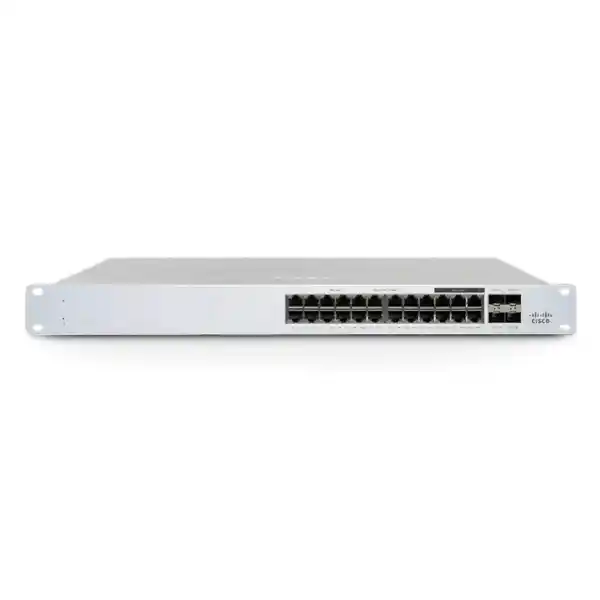
Cisco Meraki MS130-24X is a cloud-managed access switch for organizations that need a practical combination of standard Gigabit connectivity, multigigabit access, PoE power and 10 Gigabit fiber uplinks. Cisco positions the MS130 family for branch and campus deployments, while the MS130-24X specifically adds six 2.5 GbE access ports and four 10 GbE SFP+ uplinks to a 24-port design. That makes it especially relevant for networks that are moving toward faster wireless access points, IP surveillance, voice, workplace devices and other PoE-powered endpoints while still retaining many conventional 1 GbE users.
What is the Cisco Meraki MS130-24X?
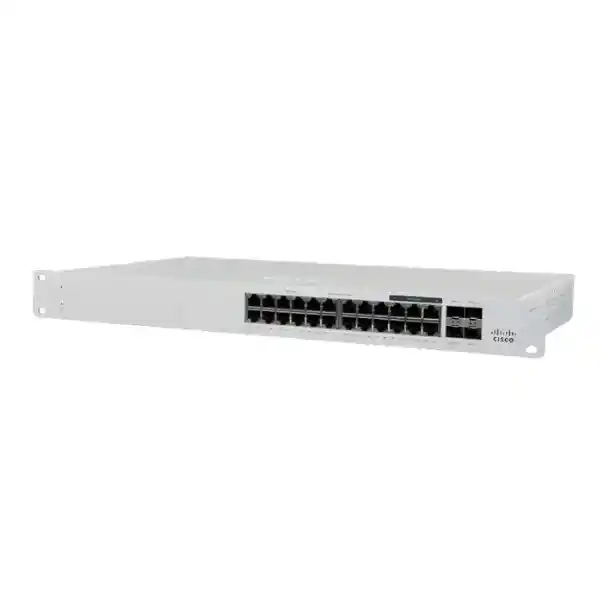
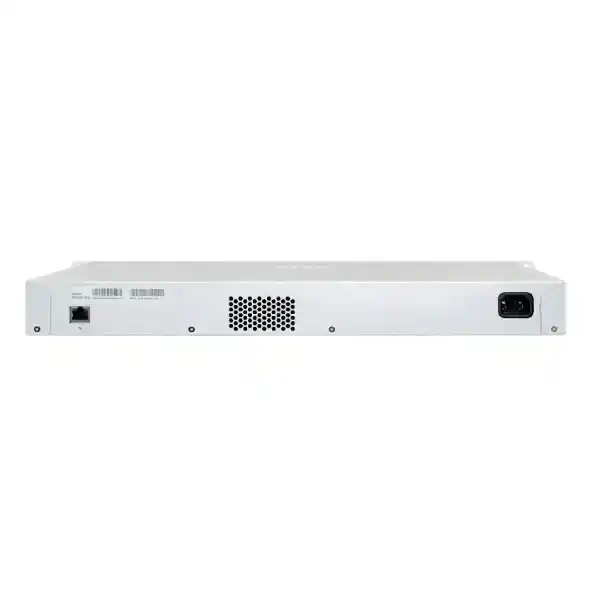
The MS130-24X is a fixed-configuration Meraki access switch in the MS130 family. Its role is straightforward: connect users and devices at the access layer while giving administrators centralized cloud visibility and management. The port mix is one of its main purchasing advantages. Eighteen RJ45 ports operate at 1 GbE, while six RJ45 ports support 2.5 GbE multigigabit connectivity. Four fixed 10 GbE SFP+ uplinks provide a faster path toward distribution, aggregation or other upstream switching. Cisco lists a 370 W PoE capability for the 24X platform, so the switch can power compatible endpoints without requiring separate power supplies for every device.
For a buyer, the key point is that the MS130-24X should not be selected only because it has twenty-four access ports. It is most valuable where at least some endpoints can benefit from multigigabit wired access or where the network is expected to support newer wireless infrastructure. A Wi-Fi 6E or Wi-Fi 7 access point with a 2.5 GbE Ethernet interface can be constrained when connected to a traditional 1 GbE access switch. The six multigigabit ports on the MS130-24X create a sensible upgrade path while the remaining eighteen Gigabit ports continue serving phones, printers, desktops, cameras and other devices that do not need more than 1 GbE.
Multigigabit edge
Six 2.5 GbE access ports help accommodate higher-bandwidth access points and other multigigabit devices without converting every port on the switch to a premium-speed interface.
10G uplinks
Four 10 GbE SFP+ uplinks provide room for fiber or high-speed copper-transceiver choices, subject to supported optics and the upstream architecture.
PoE access
A 370 W PoE budget supports compatible access points, phones, cameras and other powered devices, provided the total connected load is planned correctly.
Cloud operations
Meraki Dashboard centralizes provisioning, monitoring and troubleshooting, which is particularly useful when the same IT team supports several branches or sites.
Verified Cisco Meraki MS130-24X specifications
| Item | MS130-24X detail |
|---|---|
| Product family | Cisco Meraki MS130 cloud-managed access switching |
| Access interfaces | 18×1 GbE RJ45 + 6×2.5 GbE RJ45 |
| Uplinks | 4×10 GbE SFP+ |
| PoE capability | 370 W PoE budget |
| Routing capability | DHCP relay; the MS130 family is positioned as Layer 2 access switching |
| Stacking | Virtual stacking |
| Power configuration | Internal power supply |
| Adaptive Policy | mGig X models are hardware-ready; Cisco states MS17 firmware and an advanced license are required for the feature |
| Hardware identifier | MS130-24X-HW |
Specifications should be matched to the exact hardware revision, supported transceivers, firmware and licensing in the final bill of materials. The figures above are product-family facts from Cisco Meraki documentation rather than performance guarantees for a particular building or workload.
Licensing, dashboard ownership and deployment planning
Meraki switching is built around cloud management, so hardware procurement should be planned together with the appropriate licensing and organizational ownership. Before ordering, the customer should identify the Meraki organization that will claim the switch, the administrator accounts that will control it, the desired license term and the internal owner responsible for renewals. Treating licensing as a later administrative detail can create avoidable project delays.
Deployment planning should also include the uplink path. Four 10G SFP+ interfaces create useful capacity, but the optics, fiber type, upstream port capability and topology must be checked. Where two uplinks are used for redundancy or aggregation, the design should be documented clearly so a future engineer can understand the intended behavior. The same principle applies to PoE. A 370 W budget is substantial, but every access point, camera and phone still consumes power. Build a device schedule, list maximum or expected power per endpoint, and leave sensible margin for growth.
For network design help beyond the switch itself, FourTeck Tanzania’s technology services and integration page explains how switching, wireless, security, cabling and lifecycle support can be considered as one environment rather than separate purchases.
Where the MS130-24X fits best
The MS130-24X is a strong fit for branch and campus access layers where IT teams want cloud management and need more than basic Gigabit switching. Typical connected devices can include office workstations, printers, IP phones, surveillance cameras, badge readers, room systems, wireless access points and IoT endpoints. Because six ports support 2.5 GbE, the switch is especially relevant when selected access points or high-throughput devices need faster wired backhaul while most other endpoints remain at 1 GbE.
The switch also makes sense for distributed organizations. Centralized Meraki management can reduce the operational friction of branch support by giving administrators a common view of switch ports, clients, alerts and configuration. That does not remove the need for local physical work when cabling or hardware is faulty, but it can improve first-line diagnosis and reduce unnecessary travel for configuration-only tasks. Standardized templates, VLAN naming, port profiles and monitoring practices become more valuable as the number of sites grows.
Wireless projects are a natural companion. FourTeck Tanzania lists related Meraki access points such as the Cisco Meraki CW9162I-MR Wi-Fi 6E access point and the higher-capacity Cisco Meraki CW9164I-MR Wi-Fi 6E access point. These pages are useful when a switch purchase is being driven by wireless upgrades and the buyer needs to compare PoE and multigigabit requirements.
Cisco Meraki MS130-24X Tanzania
Organizations evaluating the Cisco Meraki MS130-24X in Tanzania should begin with a port-and-power schedule rather than simply asking for a 24-port switch. List every connected endpoint, identify which devices require PoE, record which devices can use 2.5 GbE, and decide how many ports should remain free for expansion. This quickly shows whether the MS130-24X is the right balance of standard Gigabit and multigigabit access. For many office and campus environments, most wired endpoints still operate comfortably at 1 GbE, while newer wireless access points create the strongest demand for 2.5 GbE. The 18-plus-6 split can therefore be cost-efficient compared with purchasing a switch where every port is multigigabit when the environment does not need that capability.
Tanzania buyers should also document the uplink architecture. A switch with four 10G SFP+ uplinks can connect toward a distribution or core layer with significantly more headroom than a basic 1G uplink design, but only when the rest of the network can use that capacity. Check the upstream switch interfaces, supported optics, fiber type and distance between racks or buildings. If the site uses copper for short high-speed uplinks, confirm supported transceiver or direct-attach options before placing an order. This avoids last-minute accessory substitutions that can delay deployment.
Power planning matters in Tanzania because access switching often feeds several infrastructure categories at the same time. Wireless access points, IP phones and surveillance cameras can all draw from the same 370 W PoE budget. A quotation request should therefore include approximate endpoint models and quantities, not only total port count. UPS sizing should also account for the switch and the powered endpoints if the business expects connectivity to continue during short utility interruptions. For branch or head-office networks, administrators should decide which services are critical enough to keep on UPS-backed switch ports.
For procurement, include the hardware model MS130-24X-HW, required license term, optic or cable requirements, mounting details, quantities and any configuration support in the RFQ. FourTeck Tanzania’s business technology shop is a useful internal reference for adjacent firewall, wireless, server, voice and infrastructure requirements that may belong in the same project.
Cisco Meraki MS130-24X Dar es Salaam
Dar es Salaam organizations often run a mixture of dense office space, customer-facing areas, warehouses, hospitality environments, professional-services workplaces and multi-floor commercial buildings. For an MS130-24X deployment, that diversity makes port classification important. A corporate floor may use most switch ports for workstations and IP phones, while a warehouse or hotel back-office rack may devote more PoE capacity to access points, surveillance cameras and operational devices. The six 2.5 GbE ports should be reserved for endpoints that can actually use them, typically higher-performance wireless access points or other multigigabit devices, while the eighteen 1 GbE ports can carry mainstream endpoint traffic efficiently.
In a multi-floor Dar es Salaam building, the four 10G SFP+ uplinks can support fiber connections back to a distribution layer, provided the chosen optics and installed fiber are compatible. This is where site information matters. Procurement teams should state whether the switch will sit in a floor cabinet, a server room or a remote communications rack, and should record approximate fiber length, connector type and upstream switch model. A switch purchase that ignores these details can arrive without the correct optics or patching accessories.
Cloud management can be useful for businesses whose central IT team is based in Dar es Salaam but supports other Tanzanian branches. The Meraki Dashboard allows configuration and monitoring to be handled centrally, making it easier to standardize VLANs, port descriptions, access policies and firmware planning. That operational model is strongest when network documentation is consistent. Naming conventions for sites, switches, uplinks and critical ports should be agreed before rollout rather than created differently at each branch.
A Dar es Salaam RFQ should therefore include device counts, PoE endpoints, required multigigabit ports, fiber uplink information, license term, rack and UPS context, and any need for configuration or migration assistance. If the project also includes Wi-Fi 6E, the Cisco Meraki CW9166I-MR page provides an adjacent wireless reference for higher-capacity access-point planning.
Cisco Meraki MS130-24X Mwanza
Mwanza businesses considering the MS130-24X can use it as a centrally managed access layer for branch offices, education facilities, retail operations, healthcare environments, hotels and other sites that need predictable switching without keeping specialist network staff permanently on location. The strongest business case appears when the site needs PoE and there is value in cloud visibility. Instead of treating the branch switch as a black box that is only investigated after a user reports a problem, administrators can monitor status and configuration centrally through the Meraki platform.
Before deciding on quantity, a Mwanza project should map physical device locations to cabling and switch ports. Twenty-four access interfaces may be sufficient for a smaller branch, but an apparently simple count can grow quickly when IP phones, access points, cameras, printers, meeting-room systems and management devices are included. Leave capacity for expansion rather than designing the rack at one hundred percent occupancy on day one. The six multigigabit ports can be reserved for access points or other higher-throughput devices, while 1 GbE ports handle ordinary endpoints.
PoE should be calculated in watts rather than in number of powered ports. Different cameras and wireless access points draw different amounts of power, and consumption can increase when radios, infrared illumination or other features are active. Add the expected powered devices, compare them with the 370 W switch budget, and leave operating margin. Where the branch relies on UPS backup, consider both the switch’s own consumption and the power being delivered to connected devices when sizing runtime.
For Mwanza procurement, include the exact switch model, quantity, license requirement, rack position, cable and optic requirements and expected endpoint list. This allows the quotation to address the full operating requirement rather than just the switch chassis.
Cisco Meraki MS130-24X Arusha
Arusha deployments can include corporate offices, hospitality businesses, NGOs, educational institutions, tourism-related operations and distributed organizations that value simple remote administration. The Cisco Meraki MS130-24X can be useful where an IT team wants centralized switching visibility while supporting a mixture of standard Ethernet and newer multigigabit devices. Rather than selecting the model purely by port count, buyers should identify the applications carried by each connection. Office computers and IP phones may remain on 1 GbE, while selected Wi-Fi access points can take advantage of the 2.5 GbE interfaces.
The four 10G SFP+ uplinks can be valuable in larger Arusha sites that use fiber between floors, buildings or communications rooms. However, SFP+ is an interface type, not a complete fiber solution. The optic, fiber strand, connector, wavelength and supported distance must match both ends. When the existing network is being upgraded, record the current core or distribution switch model and the installed fiber specification before ordering new optics.
For organizations with sites in several regions, cloud management can simplify configuration governance. Define standard VLAN IDs, port profiles, administrative roles, monitoring alerts and firmware windows that can be reused where appropriate. Local variations should still be documented, especially for CCTV, guest Wi-Fi, point-of-sale or building-management devices that may require separate network policies. The switch provides connectivity, but segmentation design should reflect business risk and application needs.
A well-prepared Arusha quotation request should identify whether installation is a new build, an upgrade or a replacement. Include existing switch details, endpoint counts, PoE device models, expected multigigabit demand, uplink media, Meraki organization information if already in use and preferred license term. Those inputs make model validation and rollout planning far more reliable.
Cisco Meraki MS130-24X Dodoma
Dodoma organizations evaluating the MS130-24X may include public-sector offices, professional services, education, healthcare, corporate branches and institutions that need a managed access layer with consistent policy. In such environments, the ability to view and administer switching through a centralized platform can be as important as port speed. Network changes should still follow formal change control, but cloud management can make status, configuration and troubleshooting information easier to access for authorized administrators.
The switch’s port mix allows a practical tiering strategy. Use the 2.5 GbE ports where the connected device can justify the extra bandwidth, and use 1 GbE ports for standard desktops, printers, phones and cameras. This approach helps avoid paying for unnecessary multigigabit connectivity everywhere while still preparing the access layer for current wireless designs. The four 10G uplinks can then carry aggregated traffic upstream, subject to the capacity and topology of the distribution layer.
Government and institutional procurement often benefits from a detailed bill of materials. In addition to MS130-24X-HW, list license duration, optics or direct-attach cables, rack accessories, patch cords, UPS capacity, installation scope, configuration scope and documentation requirements. If there is an existing Meraki organization, identify who controls administrative access and how the new device should be named and assigned. If this is the first Meraki deployment, organization ownership and renewal responsibility should be decided before handover.
For Dodoma sites using PoE endpoints, attach a power schedule to the design. The 370 W budget should be compared with the maximum expected connected load. This is especially important when wireless access points and cameras share the same access switch, because both categories can draw meaningful power during normal operation.
Cisco Meraki MS130-24X UAE
UAE buyers looking at the Cisco Meraki MS130-24X often have branch, retail, hospitality, office or distributed-enterprise requirements where centralized operations are valuable. The same design logic applies: separate standard Gigabit endpoints from devices that can use 2.5 GbE, calculate PoE consumption, and verify that the 10G SFP+ uplinks connect cleanly to the existing core or distribution infrastructure. The model is especially attractive when a business is modernizing wireless access because six multigigabit ports can support selected access points without requiring an all-multigigabit access switch.
Multi-site UAE organizations should standardize switch templates and naming. Retail groups, clinics, branch offices and service companies may have dozens of similar locations, and small configuration differences can become difficult to support at scale. Meraki Dashboard can help central teams maintain a common operational view, but governance still matters. Document which VLANs are allowed, which ports are reserved for uplinks, how guest devices are segmented, how administrators authenticate and how firmware changes are scheduled.
Procurement should confirm licensing and support terms as part of the quote rather than ordering hardware alone. For high-priority sites, include spare strategy and replacement planning in the lifecycle discussion. If a location depends on PoE phones and access points, a switch failure affects multiple business services at once, so the customer should understand recovery procedures and configuration restoration before a problem occurs.
The UAE market also includes many mixed-vendor infrastructures. The MS130-24X can operate as part of a broader Ethernet environment, but feature depth depends on the final architecture. Compatibility of optics, VLAN design, spanning-tree behavior and upstream switching should therefore be validated during planning rather than assumed from port speed alone.
Cisco Meraki MS130-24X Uganda
Uganda organizations can consider the MS130-24X for offices, education, financial services, NGOs, healthcare, hospitality and distributed branches that need centralized switching. The cloud-managed model can reduce the burden on small IT teams by allowing authorized staff to see switch health and configuration without being physically present at each site. That is particularly useful when branch locations are spread across different cities and on-site technical resources vary.
A Uganda deployment should begin by defining connected device classes. Standard workstations, printers and IP phones normally need only 1 GbE, while modern access points can justify 2.5 GbE. Reserving the six multigigabit ports for those devices creates a clean design. The 370 W PoE budget should then be checked against the full set of powered endpoints. If cameras and Wi-Fi share the same switch, calculate the maximum combined draw and include growth capacity.
For sites connected by fiber, the four 10G SFP+ uplinks can support faster inter-switch connectivity, but each link needs the correct optic or compatible cable. Procurement teams should supply distance, fiber type and upstream interface information with the RFQ. When that information is missing, the switch can be quoted correctly while the necessary uplink components remain uncertain.
Licensing, Meraki organization ownership and administrator roles should be settled early. If a regional IT team manages both Tanzania and Uganda sites, the naming and policy structure should make it easy to distinguish each network while maintaining common standards where practical. This operational planning is often more important to long-term support than small differences in initial purchase price.
Cisco Meraki MS130-24X Kampala
Kampala businesses frequently operate office networks with a mix of staff devices, Wi-Fi, IP telephony, cameras and cloud applications. The MS130-24X can consolidate these endpoints on a managed access layer while providing six 2.5 GbE interfaces for devices that need more than standard Gigabit bandwidth. When a Kampala head office also manages remote branches, centralized dashboard operations can help the IT team maintain consistent configurations and identify issues before dispatching an engineer.
The biggest planning mistake is to treat PoE as a yes-or-no feature. The switch’s 370 W budget is shared, so every powered endpoint contributes to total consumption. Record the access-point, camera and phone models that will connect to the switch, estimate their requirements and leave reserve capacity. The same exercise supports UPS planning because PoE load influences how much power the switch draws during an outage.
For campus-style or multi-floor Kampala sites, determine whether the four 10G uplinks will connect to a redundant distribution pair, a single core switch or another topology. Uplink design affects resilience and troubleshooting. Clearly label primary and secondary links, record optic types and document VLAN trunks. Cloud management improves visibility, but physical patching and fiber records remain essential.
A good Kampala RFQ should therefore describe the switch’s role, not only its model number. State whether it is a new access layer, a replacement for a failed or aging switch, or part of a wireless upgrade. Include user count, PoE device quantity, multigigabit requirements, uplink media, license duration and any need for migration support.
Cisco Meraki MS130-24X Arua
Arua sites can benefit from the MS130-24X where centralized IT teams need to manage a branch without maintaining specialist staff at the location. This can apply to NGOs, logistics offices, education, healthcare, retail and other distributed operations. Cloud management is useful because many configuration and diagnostic tasks can be performed remotely, but the physical infrastructure still needs careful planning. Cabling quality, rack power, cooling, UPS runtime and uplink media determine whether the switch performs reliably in day-to-day use.
For a typical Arua branch, the eighteen 1 GbE ports may carry most user and operational devices, while the six 2.5 GbE interfaces are kept for current or future access points. This creates a sensible growth path without overcomplicating the LAN. If the site currently has only 1 GbE wireless infrastructure, the multigigabit ports can remain available until later upgrades, provided overall port count still fits the branch requirement.
Remote branches should place extra emphasis on resilience and documentation. Label every patch-panel position, document which devices depend on PoE, record the switch serial and license ownership, and keep a current network diagram. If an outage occurs, a local non-specialist can then assist with physical checks while the central IT team uses cloud tools for diagnosis. This division of work is more effective when the installation is clearly documented.
For procurement, include the actual branch delivery context, exact hardware and license requirements, desired spare strategy and uplink accessories. Avoid assuming that a generic 10G optic will work with every installed fiber type. Confirm both ends of the link before ordering.
Cisco Meraki MS130-24X Mbarara
Mbarara businesses looking for cloud-managed switching can use the MS130-24X as a branch access platform where PoE and wireless growth are important. A medium-size site may connect office users, phones, access points, cameras and shared devices to one or more switches. The MS130-24X helps separate bandwidth needs by providing both standard Gigabit and 2.5 GbE interfaces. The design should assign ports according to endpoint capability instead of simply using the first available port during installation.
Network teams should also think beyond the individual switch. Four 10G SFP+ uplinks can provide substantial upstream capacity, but if the WAN connection, firewall or distribution layer is much slower, the end-to-end performance remains limited by those components. For a wireless-heavy site, review access-point density, switch uplinks, firewall throughput and internet capacity together. This prevents a local access upgrade from exposing another bottleneck immediately afterward.
PoE planning should cover today and the likely next phase. If a branch expects to add more cameras or upgrade access points, reserve both ports and wattage. The 370 W budget is shared across connected powered endpoints, so a design with many higher-power devices should be calculated carefully. UPS capacity should similarly reflect the switch plus its PoE load, not just the switch chassis.
For Mbarara procurement, provide the switch quantity, site count, desired license term, required uplink optics, rack and power information and any installation or configuration needs. A complete scope helps avoid separate accessory purchases after the main hardware has already arrived.
Cisco Meraki MS130-24X Gulu
Gulu organizations that operate branches, institutional facilities, healthcare environments, education sites or NGO offices can consider the MS130-24X when centralized management and PoE are priorities. The switch provides enough flexibility to support a mixed endpoint environment without requiring multigigabit capability on every access port. Six 2.5 GbE ports can be assigned to newer access points, while eighteen 1 GbE ports connect ordinary business devices.
For a remote or semi-autonomous Gulu branch, operational simplicity is important. Use consistent port descriptions, VLAN names and device labels so central administrators can understand the site quickly. If the branch has limited local technical support, keep a printed or locally accessible rack diagram and identify critical ports such as WAN handoff, uplink, primary Wi-Fi, server and voice infrastructure. The Meraki Dashboard can provide remote visibility, but local staff still need clear instructions for safe physical checks.
Power protection deserves attention where switching also supplies PoE. A switch outage can simultaneously disconnect phones, access points and cameras, so UPS design should reflect the critical services expected to remain active. Calculate the likely PoE draw and target runtime. Where long backup duration is required, consider whether every connected PoE endpoint needs to stay powered or whether some noncritical devices can be excluded from backup.
A Gulu RFQ should identify the exact hardware, license term, PoE endpoint list, uplink design and support requirement. If the branch is part of a larger organization, include the existing Meraki organization and naming standards so the new switch can be incorporated cleanly into the current operating model.
Cisco Meraki MS130-24X Kenya
Kenya organizations can deploy the Cisco Meraki MS130-24X in Nairobi and other business centers as an access switch for offices, campuses, retail branches, hotels, clinics, schools and distributed enterprise environments. The product is particularly relevant where wireless upgrades are increasing demand for multigigabit wired backhaul. Six 2.5 GbE ports can serve selected access points, while the remaining eighteen Gigabit interfaces support conventional endpoints. This port mix makes the model practical for transitional networks in which only part of the edge has moved beyond 1 GbE.
Kenya deployments with several branches can benefit from centralized Meraki operations. Standardize configuration where possible, including VLAN IDs, port profiles, administrative permissions, alerting and firmware windows. For organizations that operate both Kenya and Tanzania, separate site naming and inventory clearly while preserving common technical standards where they make operational sense. This reduces confusion during support and helps regional teams understand which settings are intentional and which are local exceptions.
The four 10G SFP+ uplinks can be used in fiber-connected office or campus designs, but the full bill of materials should include supported optics or compatible cable assemblies. Procurement should never assume that the switch chassis alone completes a 10G link. The upstream switch, fiber type, connector format and distance all matter. PoE planning similarly needs endpoint-level detail so the shared 370 W budget is not exceeded after cameras and access points are added.
Before ordering for Kenya, prepare a short technical schedule covering port use, PoE load, uplink design, licensing and rack context. That document makes quotation comparison easier because vendors can price the same scope rather than making different assumptions.
Cisco Meraki MS130-24X Kuwait
Kuwait businesses can consider the MS130-24X for cloud-managed office, retail, hospitality and branch networks where Wi-Fi modernization and PoE are important. The six 2.5 GbE ports are valuable for selected access points and other high-throughput edge devices, while eighteen 1 GbE ports serve mainstream endpoints. Four 10G SFP+ uplinks support higher-capacity connectivity toward distribution or core switching, provided supported optics and the upstream network are matched correctly.
In larger Kuwait deployments, cooling, rack organization and cable management deserve the same attention as the logical configuration. PoE switches can deliver significant power to connected devices, so cabinet ventilation and UPS loading should be evaluated. Patch panels should be labeled and higher-speed uplinks should be clearly identified to avoid accidental moves during maintenance. A clean physical installation makes remote cloud troubleshooting much more effective because the physical topology matches the documented design.
Licensing should be included in total cost of ownership. Decide who owns the Meraki organization, who has administrative rights and who is responsible for renewal. For multi-branch groups, establish a common policy for device naming, alert recipients and firmware windows. Cloud management creates a shared control plane, but governance determines whether that control remains organized over several years.
A Kuwait RFQ should include MS130-24X-HW, quantity, desired license duration, optics, rack and UPS context, endpoint PoE requirements and any requested configuration or rollout support. If the project is tied to a wireless refresh, list the AP models so the 2.5 GbE and PoE requirements can be validated together.
Cisco Meraki MS130-24X Ghana
Ghana businesses evaluating the MS130-24X can use it for branch and campus access networks that need PoE, cloud visibility and a measured transition toward multigigabit Ethernet. The model avoids an all-or-nothing upgrade by combining eighteen 1 GbE access ports with six 2.5 GbE ports. This is useful when standard office devices remain on Gigabit while newer wireless access points need faster backhaul.
Distributed organizations should use the project as an opportunity to improve documentation. Central management works best when every switch has a consistent site name, clear port descriptions and an accurate inventory. Define how VLANs map to staff, guest, voice, camera and other device classes. If a branch requires a local exception, record why it exists. This makes troubleshooting faster and reduces configuration drift as more sites are added.
PoE is another lifecycle consideration. The 370 W budget can power multiple endpoints, but the design should calculate current demand and reserve capacity. A wireless or CCTV expansion can increase consumption quickly. UPS systems should be sized with the switch and connected PoE load in mind, especially where continued voice or Wi-Fi availability is important during brief power events.
For Ghana procurement, state the expected endpoint mix, required uplink medium, desired Meraki license term and installation scope. Four 10G SFP+ ports provide flexibility, but the correct optics depend on the fiber and distance. Including those details in the RFQ reduces the risk of receiving a switch without the accessories required to place it in service.
Cisco Meraki MS130-24X Nigeria
Nigeria enterprises with distributed offices, retail sites, financial operations, education, healthcare, hospitality or service branches can consider the MS130-24X when centralized cloud management is part of the network operating model. Six 2.5 GbE ports can support newer wireless access points, while eighteen 1 GbE ports handle ordinary Ethernet devices. Four 10G uplinks allow the access switch to connect upstream with greater capacity than traditional 1G designs, provided the distribution network can accept those links.
For large branch estates, configuration standardization is critical. Use repeatable VLAN structures and port profiles where practical, define who can make dashboard changes and separate administrative responsibilities from ordinary user access. Cloud management can make a geographically distributed estate easier to operate, but only if device naming and policy conventions stay disciplined. A poorly organized dashboard can become difficult to manage even when individual switches are technically healthy.
PoE and power resilience should be evaluated together. If the switch feeds access points, phones and cameras, one power event can affect multiple services. Calculate the expected 370 W PoE usage, identify which endpoints are business-critical and size UPS systems according to desired runtime. For sites with generator or inverter backup, include switch startup and connected load in the overall power design.
Nigeria procurement teams should request a full bill of materials that includes hardware, license duration, optics or direct-attach cables, rack accessories and any deployment services. Comparing complete scopes is more useful than comparing only switch chassis prices because missing licenses or uplink components can materially change project cost.
Cisco Meraki MS130-24X Seychelles
Seychelles organizations may use the MS130-24X for hospitality, corporate, public-sector, education and other island-site networks where remote manageability is especially valuable. When technical resources are not always on the same site as the equipment, centralized visibility can help administrators diagnose configuration and port issues before arranging physical attendance. That operational benefit should be paired with good local documentation and a spare or recovery strategy appropriate to the site’s importance.
The mixed-speed port design supports a sensible deployment pattern. Use the six 2.5 GbE ports for newer wireless access points or other high-throughput endpoints and keep standard 1 GbE devices on the remaining eighteen interfaces. In hotels and resorts, PoE demand can grow quickly when access points, IP phones and cameras share the switch, so the 370 W budget should be checked against a complete endpoint schedule rather than estimated informally.
Fiber uplinks are common in larger properties or multi-building sites, making the four 10G SFP+ interfaces useful. Confirm fiber type, link distance and upstream port compatibility before ordering optics. Where environmental conditions or cabinet placement are challenging, make sure rack ventilation, power protection and cable management are appropriate for continuous network operation.
A Seychelles quotation request should include license term, endpoint counts, uplink design, rack location and operational support needs. If the switch is part of a wireless upgrade, provide access-point models and expected quantities so both PoE and multigigabit requirements can be validated before shipment.
Related Meraki wireless planning
The MS130-24X is often selected because a wireless refresh creates demand for multigigabit Ethernet and PoE. FourTeck Tanzania also lists the Cisco Meraki CW9171I Wi-Fi 7 access point, which can be useful as a reference when planning a newer wireless edge. The right switch-to-AP pairing depends on the exact access-point Ethernet speed, PoE requirement, user density and wireless design. Avoid assuming that every Wi-Fi 7 or Wi-Fi 6E deployment automatically needs the same port configuration.
A practical design considers the number of APs per switch, their maximum or expected power, the access-port speed, the switch’s own 10G uplink capacity and the upstream bottlenecks. This end-to-end view helps the network upgrade deliver real application benefit rather than simply increasing one interface speed in isolation.
Cisco Meraki MS130-24X buying and quotation checklist
Confirm MS130-24X-HW, quantity and whether the design needs one switch or several access switches.
Specify the desired Meraki license term and confirm organization ownership and renewal responsibility.
List powered endpoint models and quantities, then compare expected demand with the 370 W budget.
Identify which endpoints actually need 2.5 GbE so the six mGig ports can be allocated correctly.
Record fiber type, distance and upstream interfaces before selecting 10G SFP+ optics or cables.
Confirm rack space, ventilation, power distribution and UPS runtime expectations.
Document existing VLANs, trunks, endpoint groups and whether FourTeck is expected to migrate configuration.
Define required diagrams, port maps, admin roles, backups and acceptance testing.
Frequently asked questions
How many multigigabit ports does the MS130-24X have?
The MS130-24X provides six 2.5 GbE RJ45 access ports. The remaining eighteen RJ45 access ports operate at 1 GbE.
What uplinks are available?
Cisco lists four fixed 10 GbE SFP+ uplinks on the MS130-24X. The correct optics or compatible cables depend on link distance, fiber type and the upstream interface.
What is the PoE budget?
The MS130-24X has a 370 W PoE budget. A deployment should calculate the combined power needs of access points, phones, cameras and other powered devices rather than relying only on port count.
Is the MS130-24X a Layer 3 switch?
Cisco positions the MS130 as Layer 2 access switching with DHCP relay. Buyers needing broader Layer 3 routing functions should compare the requirement with other switching families before ordering.
Does the MS130-24X support physical stacking?
Cisco lists virtual stacking for the MS130 family rather than dedicated physical stacking links. If physical stack architecture is required, compare an alternative platform designed for it.
Why choose the X model?
The X model is relevant when the access layer needs selected 2.5 GbE ports and 10G SFP+ uplinks. It can be a practical match for modern wireless networks while retaining standard Gigabit ports for ordinary devices.
What should be included in a quote request?
Include hardware quantity, license term, PoE device list, multigigabit endpoint count, uplink media and distance, rack and UPS context, delivery location and any installation, configuration or migration requirements.
Decision recap
Choose the Cisco Meraki MS130-24X when the network needs a cloud-managed 24-port access switch with a deliberate mix of 1 GbE and 2.5 GbE access, meaningful PoE capacity and 10G uplinks. Its strongest use case is a branch or campus edge where standard wired devices coexist with higher-bandwidth wireless infrastructure. Validate the 370 W PoE budget against real endpoints, reserve the six multigigabit ports for devices that can use them, and design the four SFP+ uplinks around the actual upstream network.
Do not treat licensing, optics, rack power or dashboard ownership as afterthoughts. A complete bill of materials and a documented deployment plan are the difference between receiving a switch and receiving a network component that can be installed cleanly.
Consult FourTeck Tanzania about your switching requirement
Share the site location, switch quantity, endpoint count, PoE devices, wireless access-point models, required license term, uplink media and any existing Meraki environment. FourTeck can use those details to prepare a more accurate product and deployment discussion. For general solution context, the FourTeck Tanzania technology solutions homepage explains the wider networking, security, server, voice and infrastructure portfolio.
Availability, final pricing, warranty terms, delivery scope and support scope should be confirmed in the current quotation because they can vary by supplier status, quantity, project location and selected commercial terms.



Reviews
There are no reviews yet.