
Fanvil H1 Hotel IP Phone
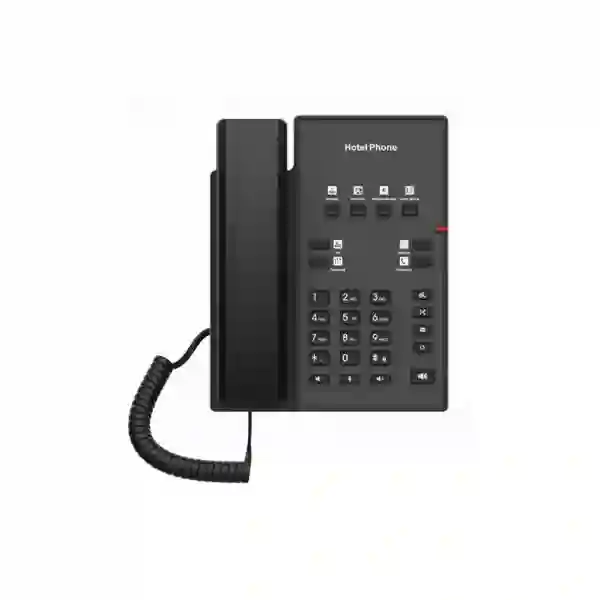
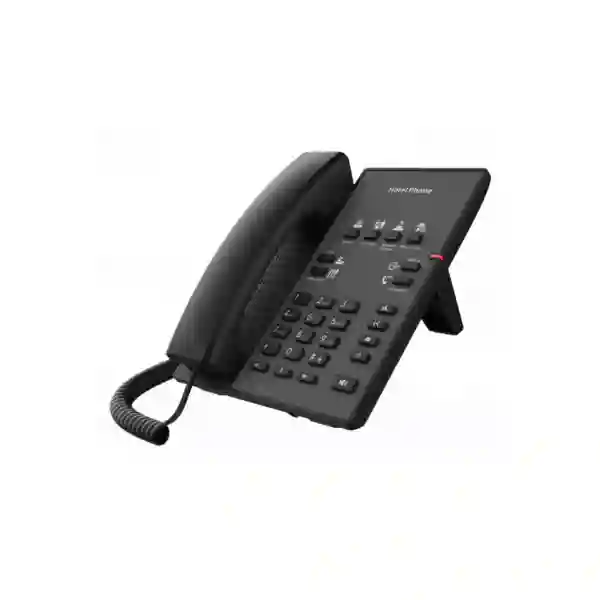
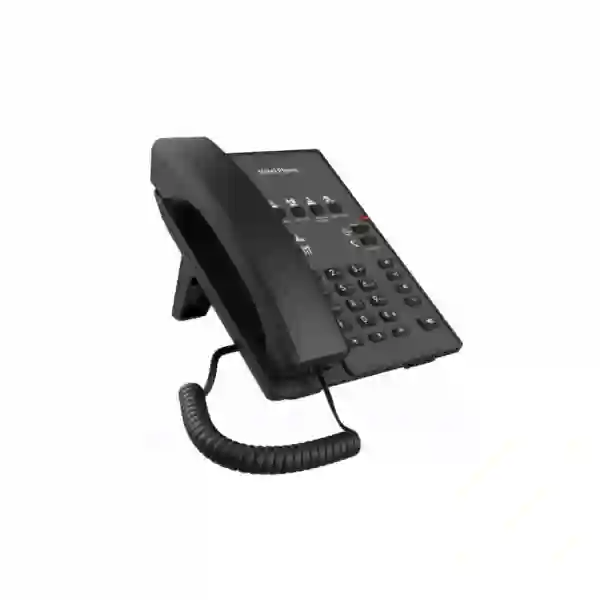
The Fanvil H1 is a compact hotel IP phone for guest rooms and other service-focused spaces where people need simple calling and one-touch access to frequently requested services. Fanvil equips the H1 with two SIP lines, eight programmable DSS soft keys, HD voice, G.722 and Opus wideband codec support, a 10/100 Mbps Ethernet interface and integrated Power over Ethernet. The design supports desk installation and optional wall mounting, making it suitable for hospitality rooms, healthcare environments, retail counters, supermarkets and other spaces that value a clean, purpose-built voice endpoint.
Choose the H1 when a room or service point needs straightforward SIP calling, PoE, two SIP registrations and customizable one-touch service buttons rather than a large screen or executive-phone feature set. For hotel projects, confirm the PBX, PoE switching, VLAN/QoS design, faceplate labeling, mounting method and provisioning workflow before ordering quantity.
What the Fanvil H1 is designed to solve
A guest-room telephone has a different job from a typical office desk phone. Guests usually do not need a large display, many line appearances or complex menus. They need to reach reception, housekeeping, room service, emergency support or other hotel functions quickly and with as little friction as possible. The Fanvil H1 addresses that requirement with a compact keypad, conventional handset, hands-free mode and eight programmable DSS keys that can be assigned to the service numbers a property wants to expose directly.
That service-key approach is useful because it lets a hotel create a clear in-room call experience without asking guests to remember internal extension numbers. A customized faceplate can identify the function of each key in terminology that matches the property. The same idea can be adapted for hospitals, clinics, supermarkets, assisted-service counters and other environments where users need simple access to predefined destinations.
The H1 is an IP endpoint, so it should be viewed as one component in a wider voice environment. The PBX or hosted SIP platform handles call routing, extensions and service logic; the LAN provides connectivity; PoE can provide device power; and network policies can protect and prioritize voice traffic. This makes planning important. A successful hotel deployment is not just a matter of placing phones in rooms: the project should map extensions, room numbers, service buttons, switch ports, voice VLANs, QoS, provisioning, emergency-calling procedures and support responsibilities.
Verified Fanvil H1 features
8 programmable DSS keys
Configure direct access to front desk, room service, housekeeping, spa, restaurant, emergency or other property-defined destinations.
2 SIP lines
Two SIP registrations provide flexibility for extension design, secondary identities or service arrangements supported by the chosen PBX.
HD voice
Fanvil lists G.722 and Opus wideband codecs, full-duplex hands-free audio, echo cancellation and additional voice-processing functions.
Integrated PoE
Power and network connectivity can be delivered over the Ethernet infrastructure when connected to compatible PoE switching, simplifying room cabling.
10/100 Mbps Ethernet
The phone uses a Fast Ethernet network connection suitable for its voice role. Network design should still consider VLANs, QoS and switch capacity.
Desktop or wall installation
The H1 supports normal desk placement and optional wall mounting using the appropriate accessory, which can help in compact room layouts.
Technical capabilities that matter in a hotel deployment
| SIP | SIP v1/v2 with UDP, TCP and TLS transport support |
| Media security | RTP/RTCP and SRTP support |
| IP networking | IPv4/IPv6, static address, DHCP and PPPoE options |
| LAN controls | 802.1X, VLAN 802.1P/Q, QoS and LLDP |
| VPN | L2TP and OpenVPN support listed by Fanvil |
| Call functions | Hold, redial, attended/unattended transfer, forwarding, hotline and voicemail functions |
| Audio codecs | G.711A/U, G.729AB, G.723.1, G.726, iLBC, G.722 and Opus |
Feature support on a live system depends on the PBX, firmware, provisioning profile, network policy and SIP service configuration. For large rollouts, test a representative unit against the intended production environment before finalizing room quantities.
Hospitality deployment planning: from guest room to PBX
The most valuable part of a hotel phone project is often the planning behind the handset. Start by defining the room-numbering and extension scheme. Decide whether the telephone extension matches the room number, whether suites have more than one endpoint, and how back-office, reception and service departments are numbered. Map each DSS key to a real workflow and confirm that the destination is available whenever the label promises it. For example, a “Room Service” button should route to the intended department or to an appropriate fallback path when the service desk is unattended.
Next, review network readiness. Because the H1 supports PoE, one Ethernet cable can carry power and data from a compatible switch. That can simplify room installation, but the switch must have enough PoE ports and total power budget for the phone count. Voice VLAN design can separate room phones from guest Wi-Fi and other hotel devices. QoS can help prioritize voice on congested links, while firewall rules should permit only the traffic required by the telephony architecture. If the hotel depends on IP telephony during short electrical interruptions, UPS protection should be considered for the PBX, switches, routers and other components needed to keep voice paths operating.
Finally, plan lifecycle operations. A large property may have dozens or hundreds of endpoints, so manual per-phone changes quickly become inefficient. Use supported provisioning mechanisms where appropriate, maintain an extension inventory, document switch-port assignments and create a controlled process for firmware updates. Keep a small number of tested spare phones for maintenance planning when operationally justified. The objective is a system that the property can support after installation, not simply a set of phones that worked on commissioning day.
Who can use the Fanvil H1?
Hotels and resorts
Guest rooms can present familiar telephone access while programmable buttons create direct paths to reception and property services.
Hospitals and clinics
Patient rooms and controlled service spaces can benefit from a simple handset with predefined service destinations and centrally managed SIP connectivity.
Retail and supermarkets
Service counters, staff areas and operational points may use programmable keys to reach departments without a complex desktop-phone interface.
Related FourTeck Tanzania resources
For broader planning, review the FourTeck Tanzania technology overview to understand how IP telephony connects with networking, cybersecurity and infrastructure. The Tanzania technology shop explains buying considerations across IP phones, PBX hardware, switching and related categories, while the technology services page covers planning and integration considerations for voice, LAN, Wi-Fi and other systems. Buyers can also review About FourTeck Tanzania for the wider business-technology approach and use the FourTeck Tanzania contact page when ready to discuss quantities and deployment requirements.
If you are comparing alternative business SIP endpoints, the Dinstar C60S business IP phone, Dinstar C60SP PoE business IP phone, Dinstar C60U-W Wi-Fi IP phone and Dinstar C62UP PoE business IP phone provide useful reference points for office-oriented deployments. Those products serve different user roles from the hotel-focused H1, so the comparison should be based on location, interface expectations, power method and PBX requirements rather than brand or price alone.
Regional FourTeck network for multi-country projects
Organizations standardizing voice across several markets can also reference FourTeck’s specialist IP phone site for broader endpoint selection, FourTeck Kenya for Kenya requirements, FourTeck Uganda for Ugandan projects, FourTeck Africa for wider regional technology planning and FourTeck UAE for UAE projects. Multi-country buyers should still verify local procurement, compatibility, support scope and delivery terms separately for each requirement.
Regional buying and deployment guidance
Fanvil H1 Hotel IP Phone Tanzania
For a Tanzania hotel, lodge, hospital or service property, the Fanvil H1 is most relevant when the requirement is a simple room endpoint connected to a centrally managed SIP platform. The phone’s eight programmable DSS keys can be mapped to high-frequency services, while the two SIP lines allow the system designer some flexibility in how the endpoint is registered. Integrated PoE can simplify cabling in new builds and renovation projects because compatible switching can deliver network connectivity and device power through the Ethernet run. That advantage is strongest when the switch infrastructure is already planned for enough ports, sufficient PoE budget and resilient power.
Tanzania buyers should begin with room count and property workflow rather than with handset quantity alone. List guest rooms, suites, reception points, back-office locations and service departments. Decide where phones are required and whether the same model is appropriate everywhere. A guest room may need a clean, simplified H1 interface, while reception or reservations may need a more capable business phone with a display and additional line keys. This role-based approach prevents overbuying premium endpoints for rooms and under-specifying phones for staff who manage many simultaneous calls.
Network and power conditions should also be documented. Where a hotel uses managed switching, voice can be placed on a dedicated VLAN, and QoS can be applied to prioritize real-time traffic. Internet reliability matters if the SIP service or PBX depends on external connectivity, while an on-premises PBX still requires appropriate LAN reliability. If continuity during short power disturbances is important, consider UPS protection for the PBX, switches, router and other devices needed to preserve the call path. The H1’s PoE design can be useful here because central switch power is easier to protect than separate adapters in every room.
A Tanzania quotation request should include the number of room phones, number of staff phones, PBX platform and version, switch models, available PoE capacity, extension scheme, service-button labels, preferred mounting method and any centralized provisioning requirement. If the project is a retrofit, include information about existing cabling and any legacy telephone wiring that may affect the migration design. FourTeck can then treat the H1 as part of a complete hotel voice environment instead of as an isolated device purchase.
Fanvil H1 Hotel IP Phone Dar es Salaam
Dar es Salaam hospitality projects often combine guest rooms with restaurants, conference spaces, reception areas, business centers and operational offices. In that mixed environment, the Fanvil H1 is best positioned as the room or simple service-point endpoint, not automatically as the phone for every employee. Its programmable DSS keys are particularly useful in guest-facing locations because the hotel can expose a small number of important destinations in a direct, recognizable way. Front desk, reservations, housekeeping, restaurant, spa or emergency functions can be represented according to the property’s actual workflow.
For new hotel construction or refurbishment in Dar es Salaam, coordinate the voice design with structured cabling and switching. Each planned H1 requires a network connection, and PoE use requires suitable switch access ports. The switch design should account for all room phones plus staff endpoints, access points, cameras and other PoE devices sharing the same infrastructure. A switch that has enough physical ports can still be unsuitable if the total PoE budget is inadequate. Similarly, uplink design should reflect the combined traffic from voice, Wi-Fi, CCTV and business applications instead of assuming the phone network operates in isolation.
Hotels serving business travelers may also have demanding connectivity environments. Large file transfers, guest Wi-Fi peaks and cloud applications can create bursts of traffic that should not degrade voice. Managed VLANs and QoS help create predictable behavior, while monitoring can reveal packet loss or congestion before it becomes a recurring guest complaint. Where external SIP trunks are used, confirm firewall policy, NAT behavior, codec requirements and failover options with the PBX provider or telecom service. Secure signaling and media should be considered where supported end to end.
Before requesting pricing in Dar es Salaam, define room quantities, required spare units, wall versus desk mounting, faceplate design, extension numbering and the service-button map. Also identify whether configuration will be staged centrally before installation or performed onsite. A well-prepared bill of materials can include phones, PoE switching, patching, PBX capacity, UPS protection and any mounting accessories, which makes the deployment easier to budget and commission.
Fanvil H1 Hotel IP Phone Mwanza
Mwanza hotels, lodges, medical facilities and service organizations evaluating the Fanvil H1 should focus on how quickly users need to reach predefined destinations. The phone’s eight programmable service keys can reduce dependence on printed extension directories and make the guest experience more intuitive. For a hotel, each button can represent a property function; for a clinic or care environment, it can connect to reception, nursing support, administration or another approved internal destination. The key labels and call routes should reflect real staffing arrangements so a one-touch function remains useful at all operating hours.
A Mwanza rollout can also benefit from standardized configuration. When multiple rooms use the same basic profile, administrators can create a repeatable provisioning template and then apply room-specific extension values as required. Standardized settings for codecs, time, network addressing, VLANs, service keys and security reduce inconsistency. Before deploying at scale, test one or several phones on the production PBX and confirm registration, inbound and outbound calling, transfer behavior, voicemail indication, service-key destinations and recovery after a network or power interruption.
Infrastructure planning is especially important where the property is expanding in stages. Ensure the switching design leaves enough ports for future rooms or new service areas and that rack power and UPS capacity are not sized only for the first phase. If guest-room phones, wireless access points and cameras all use PoE, document the per-switch power budget and distribute loads sensibly. Keep network diagrams and room-to-switch-port mappings current, because troubleshooting is faster when technicians can identify the exact physical and logical path for an affected phone.
Procurement teams in Mwanza should request the exact Fanvil H1 model and avoid mixing it with the separate H1-2 Wire product, which has a different physical network concept. The standard H1 uses Ethernet and integrated PoE. Include the PBX platform, quantity, mounting plan, labeling requirement, switch details and support expectations in the quotation request. These details help confirm whether H1 is the right endpoint or whether another H-series model better fits the property.
Fanvil H1 Hotel IP Phone Arusha
Arusha has hospitality environments ranging from city hotels to lodges and tourism-oriented properties where room communication remains part of the guest-service experience. The Fanvil H1 can suit properties that want an IP-based room phone without placing a feature-heavy executive handset beside every bed. Its conventional handset, hands-free operation and programmable service keys keep interaction familiar, while SIP connectivity lets the device participate in a modern PBX architecture.
For a property where guests frequently contact reception, restaurant, transport coordination or housekeeping, the DSS keys can be configured around the most useful services. The key map should be reviewed with hotel operations before deployment because telephony design affects guest workflow. A service key is valuable only when the call route behind it is managed. If a department closes after a certain hour, the PBX can be designed so the button routes to an alternate destination rather than leaving guests with unanswered calls. That routing logic belongs in the PBX, but the H1 provides the simple one-touch interface.
Arusha projects should also account for property layout. A multi-building hotel, lodge or campus may require fiber or long-distance network links between communications rooms. The room phone still connects through Ethernet at the edge, but the larger network may use different uplink media and redundancy. Voice VLANs can span the designed infrastructure where appropriate, and QoS policies should be consistent across switches and routed links. Centralized monitoring and documentation become more important when endpoints are distributed across several buildings.
When preparing a quotation, provide room count by building, planned PBX location, existing LAN topology, switch and PoE capacity, mounting preference and whether there are remote buildings connected by fiber or wireless backhaul. For renovation projects, specify which cabling is already present and whether new Cat6 runs are feasible. A structured assessment helps determine the supporting network work required before the H1 phones are commissioned.
Fanvil H1 Hotel IP Phone Dodoma
Dodoma organizations considering the Fanvil H1 may include hotels, government-related guest facilities, clinics, training centers and other service properties where a simple SIP telephone is preferable to a large office handset. The H1’s strength is controlled simplicity: two SIP lines, eight programmable DSS keys, familiar call controls and PoE-backed network connectivity. That makes it appropriate where users should have immediate access to a small number of call destinations without navigating complex menus.
For procurement, separate guest-room requirements from administrative telephony. A hotel may standardize on H1 units in rooms while using business IP phones at reception, finance and management desks. This mixed-endpoint model can be more practical because each role receives the interface it needs. Reception users often need multiple line keys, visible call states and directory access, whereas a guest usually needs only a room extension and clearly labeled service buttons. Standardizing by user role also makes budgeting easier.
Dodoma deployments should include basic network governance. Each phone can be associated with a room or location in an asset register, and the switch port, extension and MAC address can be documented. If VLANs are used, ensure the phone receives the correct network parameters through the designed provisioning method. 802.1X support is available, but organizations should enable it only when their network authentication design and operational support can manage certificates or credentials consistently. Likewise, SIP over TLS and SRTP are most effective when configured across the complete call environment.
A useful quotation package for Dodoma includes the phone quantity, service-button plan, PBX type, PoE switch details, VLAN requirements, desired mounting method, spare strategy and installation scope. If the site has unstable utility power and voice continuity is operationally important, include UPS sizing for the central communications rack. This creates a realistic project scope instead of assuming PoE alone guarantees resilience.
Fanvil H1 Hotel IP Phone UAE
UAE hotels and hospitality groups frequently operate at a scale where endpoint standardization, room turnover and centralized IT management matter as much as the initial handset specification. The Fanvil H1 is suited to guest-room roles that prioritize one-touch service access and a clean physical footprint. Its two SIP lines and eight DSS keys allow a property to define a consistent service experience across rooms, while the customizable faceplate can align labels with the hotel’s operational terminology.
For multi-property groups, the H1 can be evaluated as part of a standard room-technology profile. That profile should cover phone firmware, provisioning templates, extension conventions, VLAN IDs, PoE requirements, PBX integration, emergency calling and support procedures. A consistent baseline helps a central IT team compare sites and makes replacement easier. However, each property may still need different key mappings or call routes based on available services, so standardization should distinguish between common device settings and site-specific operational settings.
UAE projects may also involve renovation timelines where rooms are upgraded floor by floor. In that case, staging and logistics become important. Test the device and PBX profile before mass rollout, label phones and room assignments, and create a commissioning checklist that verifies registration, dial tone, inbound calling, outbound policy, service keys and handset audio. If wall mounting is required, include the correct optional accessory and confirm mounting positions with interior design or facilities teams before installation.
Businesses operating between the UAE and Tanzania can use a common technical design where it makes sense while still handling local telecom, procurement and support conditions separately. FourTeck’s regional network can help frame multi-market technology requirements, but availability, delivery, installation and service scope should always be confirmed for the specific project and location before purchase.
Fanvil H1 Hotel IP Phone Uganda
Uganda hospitality and healthcare organizations can consider the Fanvil H1 when moving room telephony onto a SIP-based platform. The device is especially useful where the goal is to replace a basic telephone with an IP endpoint while keeping the user interface simple. Eight programmable service keys can represent the most frequently needed destinations, while two SIP registrations offer flexibility for the underlying PBX design. Integrated PoE reduces the need for a local power adapter where compatible switching is available.
For hotels with several floors or buildings, the rollout should be treated as a network project as well as a phone project. Count required PoE ports, verify switch power budgets and check uplinks between access switches and the communications core. If the PBX is hosted or located offsite, assess internet reliability and failover strategy. If it is on-premises, protect the local PBX, routing and switching components with appropriate power backup where operational continuity is required. These surrounding systems determine whether room phones remain reachable during disruptions.
Uganda buyers should also define how support will identify a faulty endpoint. A room number, extension, switch port and device identifier should be linked in documentation. When a guest reports that a phone is not working, support can then determine whether the issue is the handset, cable, switch port, VLAN, PBX registration or upstream service. Consistent provisioning and a tested spare strategy can shorten resolution time in larger properties.
Before ordering, share phone quantity, PBX platform, room numbering, desired service keys, switching infrastructure and mounting requirements. If the property already has analog cabling but no Ethernet in rooms, do not assume the standard H1 can reuse that wiring directly. Cabling architecture must be reviewed, and the separately specified H1-2 Wire solution should not be confused with the Ethernet H1.
Fanvil H1 Hotel IP Phone Kampala
Kampala hotels, serviced apartments, clinics and customer-service environments often need a balance between guest convenience and manageable infrastructure. The Fanvil H1 can serve room and simple service-point roles where fast dialing is more important than a graphical user interface. The eight programmable DSS keys can reduce friction for guests, and the two SIP lines provide a standards-based connection to a compatible PBX.
In a busy Kampala property, the telephony network may share physical switching with Wi-Fi access points, CCTV cameras and office data. Segmentation and capacity planning therefore matter. A voice VLAN can separate phone traffic logically, while QoS can protect call quality during network peaks. PoE design should consider the combined power requirement of all devices connected to each switch, not just the H1 phones. Large camera or wireless deployments can consume significant power budget, so room phones should be included in a complete calculation.
Front-office workflow should also shape the key configuration. If guests use one button for reception and another for housekeeping, those calls need predictable routing during day and night shifts. PBX time conditions, ring groups or queue logic can route service requests to available staff without changing the guest-facing labels. The H1 remains intentionally simple while the PBX manages complexity behind the scenes.
A Kampala quotation request should state room count, staff endpoint requirements, intended SIP PBX, whether phones will be desk-mounted or wall-mounted, required key labels and the existing network. For a retrofit, identify whether room Ethernet exists and whether switch capacity is available. For a new property, coordinate telephony outlets with the electrical and structured-cabling plan early, because adding network points after finishes are complete is more disruptive.
Fanvil H1 Hotel IP Phone Arua
Arua hotels, clinics and institutional facilities may value the H1 for a different reason than a large city hotel: operational simplicity. A room phone should be easy to explain, easy to replace and easy to map to a known extension. The H1’s physical keys and conventional handset support that objective. Administrators can use the programmable DSS buttons to present a small set of destinations relevant to the facility rather than exposing users to complex menus.
The surrounding infrastructure should be designed for maintainability. If technical support is not located onsite at all times, remote management and consistent documentation become particularly useful. Maintain records of each phone’s room assignment, extension number, switch port and provisioning profile. Standardize firmware and configuration across the site so a replacement handset can be prepared with minimal uncertainty. Where remote PBX management is used, secure administrative access rather than exposing management interfaces directly to the public internet.
Connectivity architecture should reflect the actual site. If the SIP server is in another city, a data center or the cloud, voice availability can depend on WAN connectivity. The organization may need to evaluate primary and backup internet paths based on the business impact of an outage. If the PBX is local, internal room-to-reception calling can be less dependent on the WAN, though external calling still depends on the chosen trunk or gateway arrangement. The correct approach depends on the service design.
For procurement in Arua, ask for a bill of materials that reflects the whole deployment: H1 phones, PoE ports, PBX capacity, network cabling, UPS needs, mounting accessories and configuration. If the site is upgrading from analog phones, first confirm whether Ethernet reaches each room. The standard H1 should not be ordered on the assumption that it will work over existing two-wire analog cabling without the appropriate architecture.
Fanvil H1 Hotel IP Phone Mbarara
Mbarara accommodation providers and healthcare organizations can use the Fanvil H1 where rooms need reliable voice access without the cost and complexity of executive desk phones. The eight DSS keys can be programmed for locally meaningful service destinations, and a customized faceplate can make the labels clear to guests or patients. This is particularly useful where a property wants the telephone to act as a simple service interface rather than merely a dial pad.
A practical Mbarara deployment plan begins with a room inventory. Classify standard rooms, suites, common areas, offices and service desks. Determine which locations need H1 units and which need a different phone type. Then map the physical network: cable outlet, switch port, PoE source and VLAN assignment. This inventory becomes valuable during installation and later maintenance because support teams can trace an endpoint without guessing.
The voice environment should be tested under realistic network conditions. Confirm that calls remain intelligible when the network carries normal business traffic, Wi-Fi usage and CCTV activity. Verify that QoS markings are handled correctly across the network and that the chosen codec settings are supported by the PBX and trunk. Security options such as TLS, SRTP and 802.1X can be considered, but they should be implemented as part of a coherent security design rather than enabled selectively without certificate and policy planning.
Before requesting the H1 price or availability for Mbarara, provide the expected quantity, PBX model, service-key plan, switch model, power backup expectations and any wall-mount requirement. A supplier can then identify supporting accessories and infrastructure rather than returning a handset-only quote that leaves critical installation items unresolved.
Fanvil H1 Hotel IP Phone Gulu
Gulu hospitality, healthcare and institutional users can consider the Fanvil H1 when the telephone must provide a predictable experience for people who are not trained on a business phone system. The device keeps the interface simple and supports dedicated service keys, making it suitable for rooms where the user needs to call a small number of internal destinations quickly. The two SIP lines and standards-based protocol support allow the H1 to connect to compatible modern PBX environments.
The project should pay attention to lifecycle support from the beginning. Number each phone according to a documented convention, retain configuration records and define how replacements will be provisioned. If a hotel has many identical rooms, template-driven configuration can reduce human error. Test the template before rollout and preserve a known-good version so future replacements do not need to be rebuilt from memory. Also document any custom DSS key mappings and PBX routing rules.
For sites where power stability is a concern, PoE can make central protection easier. A UPS-backed switch can continue powering connected H1 phones during short utility interruptions, provided the PBX, routing and any necessary upstream services are also powered. This does not guarantee calling during every outage, because external connectivity and telecom services may have separate dependencies, but it creates a more manageable resilience design than individual unprotected adapters in each room.
Gulu buyers should describe the complete environment when requesting a proposal: room count, number of service points, PBX location, cabling status, PoE switching, required call destinations and support model. If the property has multiple buildings, include the inter-building links and communications-room locations. These details allow the hotel phone system to be sized as an integrated service rather than as a simple count of handsets.
Fanvil H1 Hotel IP Phone Kenya
Kenya hotels, serviced apartments, hospitals and other service organizations may evaluate the Fanvil H1 for projects where one-touch calling and SIP-based management are central requirements. The model is already visible in the East African commercial market, which means buyers commonly compare it on price and headline features. A better decision is to compare the complete deployment: PBX compatibility, switch capacity, provisioning, mounting, faceplate design and the operational usefulness of the eight programmable keys.
For hotel groups operating several properties, standardization can simplify support. Use a shared baseline for firmware, codecs, security and VLAN policy, then layer property-specific extension numbers and service destinations on top. This model supports centralized documentation while respecting differences in restaurants, spas, housekeeping workflows and reception structures. If the PBX platform differs between properties, test the H1 against each environment rather than assuming that successful SIP registration guarantees identical behavior for every feature.
Kenya deployments should also evaluate whether Fast Ethernet is sufficient for the endpoint role. The H1 itself is a voice phone and does not need Gigabit throughput for its own traffic. The more important network questions are reliable switching, PoE, VLANs, QoS and stable PBX connectivity. Where there is no second PC pass-through requirement at a guest room, the 10/100 Mbps interface is usually assessed in the context of voice rather than desktop data.
When asking for a Kenya quotation, include exact quantity by property, room and service-key requirements, PBX vendor and software version, PoE switch details, mounting method and any project staging dates. Use FourTeck Kenya for Kenya-specific project discussions and keep Tanzania procurement separate when the deployment crosses borders.
Fanvil H1 Hotel IP Phone Kuwait
Kuwait hospitality and healthcare projects can use the same core H1 strengths: a compact room-friendly design, eight programmable service keys, two SIP registrations, HD voice and integrated PoE. The endpoint is especially relevant when room telephony must be simple for users but centrally manageable for IT. The property can keep the guest interface consistent while using the PBX to handle more complex routing, time conditions and service-group logic behind the scenes.
Large buildings should treat cabling and switching as part of the telephony bill of materials. Confirm the number of access switches, available PoE ports, uplink bandwidth and communications-room distribution. If the property has separate towers or wings, map where the PBX, core network and local switches will reside. Voice VLANs and QoS policies should be consistently implemented rather than configured differently on each floor. This becomes especially important for support teams managing hundreds of endpoints.
A hotel may also want multilingual or brand-specific service labels. The H1’s customizable faceplate supports a property-specific presentation, but the final artwork and button functions should be approved before mass rollout. Verify that every printed service name maps to the correct call destination and that after-hours routing behaves as expected. A commissioning checklist can test each service key in a sample room before the same profile is applied throughout the property.
Kuwait procurement teams should request the exact H1 model, quantity, mounting accessories, configuration scope and support expectations. Do not assume stock, warranty or delivery timelines until confirmed in the quotation. For cross-border hotel groups, keep technical standards aligned where practical but validate local purchasing and telecom requirements separately.
Fanvil H1 Hotel IP Phone Ghana
Ghana hotels and service institutions can consider the Fanvil H1 as a room endpoint when their voice strategy is based on SIP and structured Ethernet. The phone’s integrated PoE helps minimize local power-adapter clutter, and its programmable service keys can make guest calling more intuitive. Instead of giving each room a general-purpose office phone, the property can use an endpoint specifically aligned with room-service workflows.
A Ghana deployment should begin by confirming whether Ethernet cabling is present in every intended location. In new construction, this can be built into the structured-cabling plan. In existing properties, room cabling may be based on legacy analog telephone wiring, which changes the migration approach. The standard H1 is an Ethernet IP phone; it should not be treated as a drop-in analog replacement without reviewing the physical network. Where rewiring is required, coordinate it with room renovation schedules to reduce disruption.
Once connectivity is confirmed, define a PBX profile and service-key plan. Test secure registration, audio, transfer, redial, voicemail indication and hotline or speed-dial functions as needed. Verify that emergency and front-desk routes follow property policy. Maintain a room-to-extension register and keep configuration backups. These operational practices matter more as the number of phones increases.
Ghana buyers should ask for a project quote that separates phones, mounting accessories, switches, cabling, PBX licensing or capacity, configuration and installation where applicable. This makes competing proposals easier to compare because each supplier is evaluated against the same scope. Avoid comparing handset price alone when one proposal includes required infrastructure and another does not.
Fanvil H1 Hotel IP Phone Nigeria
Nigeria’s large hospitality and healthcare market can involve properties with substantial room counts, making repeatable provisioning and network architecture important. The Fanvil H1 fits projects where the room phone should remain simple while the central PBX carries the complexity. Two SIP lines support flexible registration, and eight programmable DSS keys can expose hotel services directly. The design can be standardized across rooms, floors or multiple properties when the organization maintains disciplined configuration control.
For a high-volume deployment, start with a pilot. Configure a small set of H1 phones with the intended PBX, firmware, VLAN, QoS, codecs and key mappings. Place them in representative rooms and verify call quality, provisioning and service routing. Test restart and recovery behavior and make sure configuration changes can be repeated consistently. Once the profile is stable, stage larger batches with clear room labels and asset records.
Power continuity may be a significant design consideration. PoE allows central switches to power endpoints, so UPS or other approved backup arrangements can protect many phones together. The full call path still includes PBX, routing and potentially ISP or SIP-trunk infrastructure, so resilience planning should identify every dependency. If the business requires a particular level of telephony availability, document the target and design the supporting systems around it rather than assuming one component creates end-to-end continuity.
A Nigeria quotation should include quantities by site, expected rollout phases, PBX platform, required service keys, switch and UPS environment, mounting method and any centralized provisioning requirements. Multi-site groups should also specify whether they want a common configuration standard. Confirm commercial details such as availability, warranty, taxes and delivery scope in the final supplier quotation rather than relying on generic web listings.
Fanvil H1 Hotel IP Phone Seychelles
Seychelles hospitality environments often place a premium on a clean guest-room experience and dependable service communication. The Fanvil H1 can support that requirement with a compact hotel-oriented form factor and eight programmable service keys. Resorts can use those keys to create direct paths to reception, dining, housekeeping, guest services or other destinations that match the property. The phone’s SIP architecture allows these room endpoints to be integrated into a centrally managed voice system rather than operated as isolated lines.
For island or multi-building resort environments, network topology deserves special attention. Guest rooms may be distributed across separate blocks, villas or facilities connected by fiber, copper or wireless backhaul. The H1 itself connects through Ethernet at the room edge, but the larger path to the PBX should be engineered for stable latency and packet delivery. Voice VLANs, QoS and monitored uplinks can help maintain predictable service. If the PBX or SIP provider is remote, WAN resilience should be considered according to the property’s operational needs.
Maintenance logistics can also influence the design. Standardizing on a tested room profile and keeping appropriately planned spare stock can reduce disruption when an endpoint needs replacement, but spare quantities and inventory policy should be determined by the property rather than assumed. Document room assignments and configuration so a replacement can be commissioned without recreating settings from scratch.
For a Seychelles proposal, provide the room schedule, property layout, PBX location, inter-building network, PoE switch design, service-button plan and installation expectations. This information helps determine whether the H1 is suitable throughout the resort or whether different phone classes should be used for guest rooms, staff offices, reception and management areas.
Selection checklist before you buy
Confirm SIP registration and the exact call features required on your PBX version.
Count ports and total switch power, including phones, access points and cameras.
Verify Ethernet reaches each location; do not assume legacy analog wiring is directly reusable.
Define labels, destinations and after-hours routing before faceplates are finalized.
Confirm desk or wall placement and include the optional wall accessory where needed.
Plan repeatable configuration and asset documentation for multi-room deployments.
Frequently asked questions
Does the Fanvil H1 support Power over Ethernet?
Yes. Fanvil lists integrated PoE on the H1. The connected network switch must support compatible PoE and have sufficient port and power capacity for the deployment.
How many SIP lines does the Fanvil H1 support?
Fanvil specifies two SIP lines for the H1. The way those registrations are used depends on the PBX and the property’s call design.
Can the service buttons be customized?
The H1 provides eight programmable DSS soft keys and supports a customized faceplate. A hotel can map the keys to service destinations supported by its PBX and label them for the property’s workflow.
Is the H1 suitable only for hotels?
No. Fanvil also positions the H1 for other service environments such as hospitals, shopping malls and supermarkets where simple calling and programmed service access are useful.
Can the Fanvil H1 be wall mounted?
Yes. Fanvil lists desk installation and optional wall mounting. The required wall accessory should be included in the bill of materials when wall placement is planned.
What should I provide for a quotation?
Provide the number of phones, property or site locations, PBX platform, current switch and PoE details, room cabling status, mounting method, service-key requirements and any installation or provisioning scope. This makes the quotation more accurate and helps identify supporting equipment.
Quotation checklist
For a useful Fanvil H1 proposal, send a concise project brief containing the points below. This allows endpoint pricing to be matched with the practical requirements of the deployment.
- Exact number of guest-room and service-point H1 phones.
- PBX or hosted SIP platform and software version.
- Room numbering and extension plan.
- Eight DSS/service-button labels and destinations.
- Existing Ethernet cabling status for each room.
- PoE switch models, available ports and power budget.
- Voice VLAN, QoS and security requirements.
- Desk or wall installation requirement.
- Provisioning, staging, installation and testing scope.
- Any multi-site standardization or rollout phases.
Decision recap
The Fanvil H1 is a strong fit when the endpoint must be simple for a guest or occasional user but still operate inside a managed SIP environment. Its combination of eight programmable service keys, two SIP lines, HD voice, PoE and flexible desk or wall placement is aligned with hotel rooms and comparable service spaces. It is not intended to replace every phone type in a property. Reception, reservations, supervisors and administrative users may require business phones with larger displays, more line appearances or other role-specific features.
The best buying decision therefore starts with the property workflow and network design. Confirm PBX compatibility, PoE switching, VLANs, QoS, cabling, mounting and service-key routing before placing a bulk order. A tested pilot and documented provisioning profile are particularly valuable when many rooms are involved.
Plan your Fanvil H1 hotel phone deployment
Share your room count, PBX platform, switch infrastructure and service-button requirements with FourTeck Tanzania. A quotation can then address the phones together with the network, PoE and deployment considerations needed for a usable hotel voice system.




Reviews
There are no reviews yet.