
Fanvil H4W Wi-Fi IP Phone Tanzania
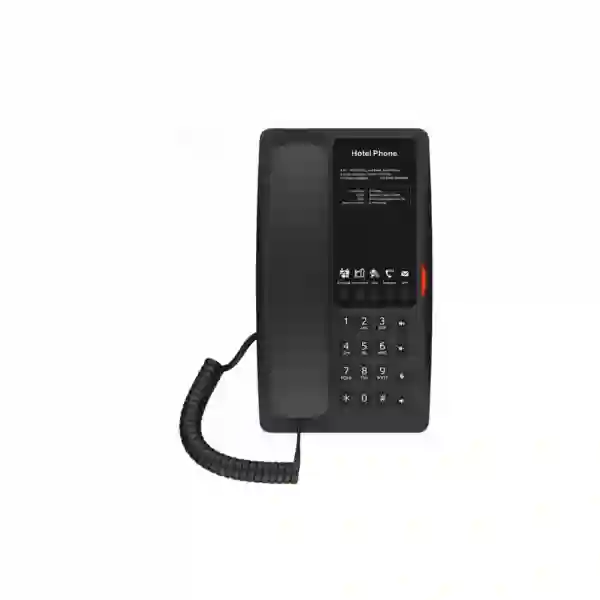
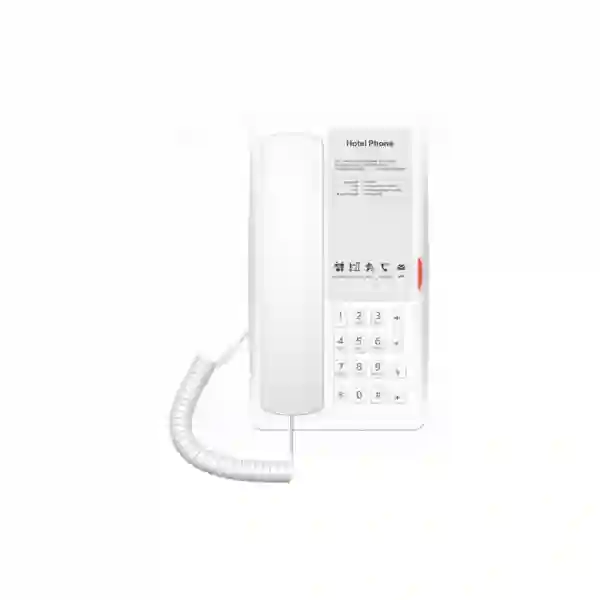
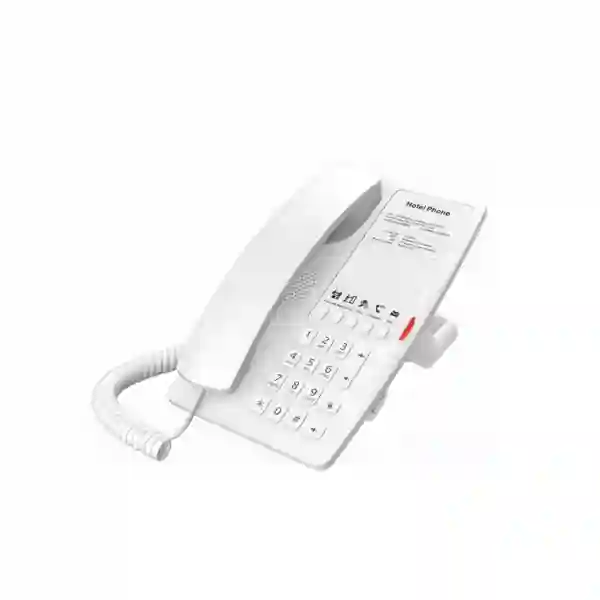
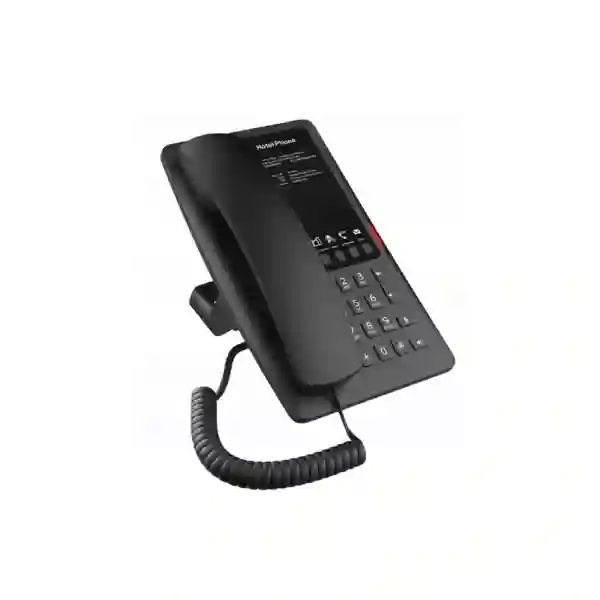
The Fanvil H4W Wi-Fi IP Phone is a purpose-built SIP endpoint for hotels and other environments where a simple user experience, reliable voice and flexible network connectivity matter more than a large desktop display. Fanvil positions the H4W as a cost-effective hotel IP phone with five programmable service keys, built-in dual-band 2.4 GHz and 5 GHz Wi-Fi 6, HD voice, 10/100 Mbps Ethernet and Power over Ethernet. The phone supports two SIP lines and is designed to give guests straightforward access to frequently used destinations such as reception, housekeeping, room service, reservations or emergency contacts without unnecessary complexity.
For Tanzanian hotels, serviced apartments, healthcare facilities, retail environments and other organizations, the H4W can be evaluated as part of a broader VoIP deployment rather than as an isolated handset. Practical questions include whether the existing IP PBX accepts the required SIP functions, whether wireless coverage is strong enough at every intended phone position, whether wired PoE is available where preferred, how service keys will be programmed, and how devices will be provisioned and documented.
Verified Fanvil H4W capabilities
The H4W belongs to Fanvil’s H-series hotel-phone family. It is intentionally screenless, helping reduce the number of on-device menus a guest needs to navigate. Fanvil documentation specifies two SIP lines, five DSS keys, ten speed-dial keys, a 10/100 Mbps network interface, PoE, built-in dual-band Wi-Fi 6 and a USB charging port. HD voice is supported with wideband codecs including G.722 and Opus.
The combination of wireless and wired connectivity is useful in refurbishment projects. A property may have strong managed Wi-Fi but insufficient structured cabling near bedside tables or guest-room desks. Wi-Fi can reduce the need for new data drops, provided coverage, roaming behaviour, VLAN design, authentication and quality of service are engineered appropriately. In new builds, wired PoE may remain attractive because power and data are delivered through the same network cable.
Technical specification summary
| Area | Detail |
|---|---|
| SIP lines | 2 SIP lines |
| Programmable keys | 5 DSS/service keys plus 10 speed-dial keys |
| Wireless | Built-in 2.4 GHz and 5 GHz Wi-Fi 6 |
| Wired network | 10/100 Mbps Ethernet |
| Power | PoE supported |
| Audio | HD voice; G.722 and Opus |
| USB | USB charging port |
Deployment planning for hotels and shared-use locations
A successful H4W deployment begins with the communications workflow rather than the handset count. Hotels should map the destinations guests are expected to call, including reception, concierge, restaurant, housekeeping, reservations, security or emergency services. Those routes then need to be implemented correctly in the IP PBX. The network layer is equally important. Wi-Fi deployment should be assessed using actual room layouts, wall construction, access-point placement and expected concurrent traffic. Where wired PoE is available, VLANs and QoS policies can separate voice from guest data and other high-volume traffic.
For broader technology planning, visit FourTeck Tanzania, review available solutions in the FourTeck Tanzania shop, and see FourTeck Tanzania services for project-oriented assistance around design, installation, configuration and support.
Fanvil H4W Wi-Fi IP Phone Tanzania
For organizations buying the Fanvil H4W Wi-Fi IP Phone in Tanzania, the main advantage is flexibility between wireless and wired deployment. Hotels frequently inherit mixed infrastructure: some rooms have live Ethernet outlets, some have cabling that is difficult to trace, and some refurbished areas depend mainly on managed Wi-Fi. The H4W can fit into that mixed environment because it supports both dual-band Wi-Fi 6 and Ethernet with PoE. Procurement teams should not assume that wireless removes all infrastructure work. Voice quality still depends on access-point coverage, channel planning, backhaul capacity, PBX reachability, addressing policies and prioritization relative to guest internet use.
Hotels in Tanzania can use the H4W’s five service keys to simplify guest interactions. Instead of asking visitors to remember internal extensions, the keys can be labeled and provisioned for functions such as reception, housekeeping, restaurant, reservations or security. Before a bulk order, document the PBX vendor and version, SIP-registration method, extension range, service-key destinations, expected faceplate labeling, preferred power method and whether automatic provisioning will be used. A repeatable template makes a large deployment easier to maintain.
Outside hospitality, the H4W can be considered for clinics, hospitals, supermarkets, malls, common areas and other sites that need an uncomplicated voice endpoint. Buyers should confirm PBX compatibility, power method, required quantities and centralized-provisioning expectations before approving a bill of materials.
Fanvil H4W Wi-Fi IP Phone Dar es Salaam
In Dar es Salaam, the H4W is relevant to hotels, serviced apartments, healthcare facilities, retail complexes and business sites that want an IP phone with a deliberately simple interface. Dense multi-floor buildings often contain a combination of wired LAN infrastructure, managed Wi-Fi and legacy cabling. The H4W lets project teams choose Wi-Fi 6 for rooms where adding cable is disruptive while retaining Ethernet and PoE for areas where structured cabling already exists.
A Dar es Salaam hotel procurement should identify the PBX platform, SIP account plan, guest-service destinations and available network ports. Wireless rooms should be checked for both 2.4 GHz and 5 GHz coverage at the actual phone position. Wired rooms should have switch-port availability, sufficient PoE budget and a documented voice VLAN where segmentation is used. Operations teams should decide how the five programmable keys support the guest journey and standardize those labels across the property.
For larger projects, include spare units, provisioning records, network documentation and a clear process for room moves or PBX changes. The H4W is best treated as one component of the complete communications environment, so a quotation should specify quantities, connection method, PBX details and required service-key programming.
Fanvil H4W Wi-Fi IP Phone Mwanza
The H4W can suit hospitality and institutional projects in Mwanza where rooms or common areas need straightforward SIP calling and where the network may not provide an Ethernet outlet at every telephone position. Built-in dual-band Wi-Fi 6 allows the endpoint to join a managed wireless network, while Ethernet and PoE preserve the option of a conventional wired installation. That flexibility is useful for properties expanding in stages.
For Mwanza deployments, the design should account for building materials, room layout and access-point location. Wireless coverage should be validated in representative rooms and areas with thicker walls, service corridors or multiple floors. Where a property also runs guest Wi-Fi, CCTV, IPTV or business applications over the same infrastructure, segmentation and capacity planning can prevent busy periods from degrading voice quality.
Procurement teams should build the H4W requirement around operational use. Before ordering, document the PBX vendor and version, service-key destinations, preferred power method and whether automatic provisioning will be used. If several properties or branches are involved, use a repeatable configuration template.
Fanvil H4W Wi-Fi IP Phone Arusha
Arusha’s hospitality sector creates a practical use case for the H4W because guest communication often needs to be simple, consistent and easy for property staff to administer. The phone has no display, keeping the interface focused on calling. Five programmable service keys can be dedicated to the destinations that matter to the property, while dual-band Wi-Fi 6 makes it possible to place the phone where managed wireless coverage is strong even if a data outlet is not convenient. Wired PoE remains available.
A lodge, hotel or serviced residence in Arusha should evaluate the H4W together with its PBX and network architecture. If Wi-Fi is used, separate staff, guest and infrastructure traffic where appropriate and confirm that phones can reach the PBX securely. If the PBX is hosted, internet stability and firewall policy become part of the voice path. If it is on premises, switch design, VLANs and UPS protection deserve attention.
For purchasing, estimate not just occupied rooms but the full endpoint requirement: guest rooms, public spaces, administration, spares and any staff-only positions that fit this phone type. Capture firmware and provisioning settings in a handover document so support procedures remain predictable.
Fanvil H4W Wi-Fi IP Phone Dodoma
In Dodoma, the H4W can be considered for hotels, offices with guest areas, clinics and institutions that want a straightforward SIP endpoint with wireless flexibility. Wi-Fi 6 support on both 2.4 GHz and 5 GHz bands is relevant when a building has managed wireless coverage but lacks a suitable Ethernet outlet beside every desk, bed or reception point. Where cabling is available, the same phone can connect through Ethernet and receive power through PoE.
Decision makers should assess the calling workflow before deciding quantities. The H4W supports two SIP lines and five programmable DSS keys. A property should list the required destinations, confirm that the PBX routes them correctly, and test behavior for unanswered calls, after-hours service or overflow. These call-flow decisions directly influence guest experience.
A quotation request should describe the current PBX, whether endpoints will be wired or wireless, expected phone count, room or department naming, and any installation or configuration assistance required. That information allows the H4W to be evaluated as a deployable communications endpoint.
Fanvil H4W Wi-Fi IP Phone UAE
For UAE hospitality and commercial projects, the H4W offers a compact Wi-Fi-capable SIP endpoint that can support hotel-room communication without a touchscreen or complex guest interface. Properties undergoing renovation may value dual-band Wi-Fi 6 because room layouts can make existing data points inconvenient. Newer developments can still use Ethernet and PoE. Large properties should standardize naming, extension assignment and faceplate labeling so replacement phones can be configured quickly.
Wireless deployments should be designed around enterprise access points, appropriate VLANs and traffic policy rather than shared consumer Wi-Fi, particularly when the same infrastructure also carries guest internet and staff applications. Organizations coordinating deployments between Tanzania and the Gulf can review FourTeck UAE technology solutions for regional context.
A cross-region project benefits from a common endpoint standard, but local PBX, carrier, network and installation requirements still need to be confirmed per site. Buyers should request quotations with clear quantities, desired configuration, power method and PBX details.
Fanvil H4W Wi-Fi IP Phone Uganda
The H4W can serve Ugandan hotels, guest houses, healthcare sites and retail environments that need a simple SIP handset and want flexibility in how each endpoint reaches the network. Wi-Fi 6 support can reduce dependency on room-side data outlets, while Ethernet and PoE give the project team a traditional wired option. The right method depends on the site.
Before ordering for Uganda, confirm the IP PBX platform, number of extensions, service-key destinations and how provisioning will be performed. Hotels often receive the most value from the five DSS keys when each button has a defined operational purpose. Wireless voice also requires proper network preparation. Access-point coverage should be measured at the phone position and the phone should use a controlled business network rather than an uncontrolled guest segment.
For organizations with sites in Tanzania and Uganda, consistent extension templates and device naming make remote support easier. The FourTeck Uganda site provides regional context for IP PBX, VoIP and networking solutions.
Fanvil H4W Wi-Fi IP Phone Kampala
Kampala hotels and mixed-use properties can evaluate the H4W when they need a guest-facing phone that is easy to understand and flexible to install. Its screenless design keeps the interface uncomplicated. Five programmable keys can be labeled for direct access to property services, and the phone supports two SIP lines. Built-in dual-band Wi-Fi 6 is useful where room cabling is absent or poorly positioned, while Ethernet and PoE allow wired deployment where the LAN is ready.
For multi-floor Kampala sites, Wi-Fi planning matters more than the headline wireless standard. Voice endpoints should have predictable coverage at bedside tables, desks or wall-adjacent positions, not merely in hallways. Access points must be connected to a stable switching core and the PBX path should avoid congestion.
Procurement should include operational details such as service-key mapping, replacement-phone provisioning and configuration ownership. For chains with several properties, a consistent profile can shorten installation and support. A request for quotation should specify room count, shared-area endpoints, spare quantity, PBX model and whether installation or network assessment is required.
Fanvil H4W Wi-Fi IP Phone Arua
For hospitality and institutional sites in Arua, the H4W can be useful when the communications design needs a compact IP phone that can operate over managed Wi-Fi or a wired LAN. Its Wi-Fi 6 capability gives project teams more freedom to position the phone without depending on a nearby Ethernet wall outlet, while PoE provides a clean single-cable option where network cabling exists.
Wireless calling should be tested under realistic usage because guest internet traffic can create congestion during busy periods. The access-point system, upstream links and PBX connection should be designed so voice remains stable. If the H4W is used over Ethernet, verify VLAN settings, DHCP, switch capacity and PoE. In either case, document the configuration.
Arua buyers should decide service-key destinations in advance and make sure call routes behave correctly after hours and during staff changes. A useful quotation includes total endpoint count, connection preference, PBX details, service-key requirements and any need for installation support.
Fanvil H4W Wi-Fi IP Phone Mbarara
The H4W is relevant to Mbarara hotels, medical facilities, retail environments and institutions that need uncomplicated SIP communication with the option of Wi-Fi. The endpoint combines dual-band Wi-Fi 6 with Ethernet and PoE, allowing deployment to follow the site’s actual infrastructure. Keeping one endpoint model across wireless and wired situations simplifies inventory and user familiarity.
Before installation, the wireless environment should be validated at every typical phone location. Voice calls are sensitive to unstable latency and packet loss, so signal strength alone is not enough. Access points should have suitable capacity, and voice devices should be placed on the intended business network. If the phone is wired, switch configuration and PoE capacity should be checked.
The H4W’s two SIP lines and five programmable keys provide a practical balance. Mbarara buyers should create a configuration sheet covering extension numbers, key mappings, network settings and property labels. A clear quotation request should state quantities, site type, PBX platform and preferred deployment model.
Fanvil H4W Wi-Fi IP Phone Gulu
Gulu organizations considering the H4W can use it as a guest-room or shared-area SIP endpoint where simplicity is important. The telephone’s design avoids a display and instead emphasizes direct calling through standard keys and five programmable DSS buttons. Built-in Wi-Fi 6 supports both 2.4 GHz and 5 GHz networks, while Ethernet and PoE provide a wired alternative.
Network readiness should be part of procurement. A hotel may have excellent wireless coverage in public spaces but weaker coverage behind room walls or in remote wings. Testing should therefore include representative rooms and busy periods. Voice traffic should have a reliable path to the PBX, whether that PBX is local or hosted.
Operationally, the H4W is strongest when key assignments and call routing are standardized. Gulu buyers should document those mappings and define who can modify them. For larger rollouts, add device naming and room numbers to the provisioning record.
Fanvil H4W Wi-Fi IP Phone Kenya
In Kenya, the H4W can be evaluated for hotels and shared-use environments that want a compact SIP phone with modern wireless connectivity. Dual-band Wi-Fi 6 is useful in properties that have invested in managed wireless coverage but do not want to extend copper cabling to every room-side table. Ethernet and PoE remain available, so the same phone can be used in wired areas.
A Kenya deployment should match the endpoint to the IP PBX rather than assume universal compatibility for every optional feature. Confirm SIP registration, codec policy, extension numbering and provisioning method. The H4W supports two SIP lines, HD voice and five programmable DSS keys, making it appropriate for service-oriented communication rather than complex executive call handling.
When several properties are involved, standardized configuration becomes a major support advantage. The FourTeck Kenya site provides regional context around VoIP, IP PBX and networking. Buyers should include project quantities, intended connection method, PBX details and configuration scope when requesting a quote.
Fanvil H4W Wi-Fi IP Phone Kuwait
The H4W can support hotel-room telephony and similar shared-use applications in Kuwait where buyers want a screenless SIP phone with Wi-Fi and wired network choices. Dual-band Wi-Fi 6 can be useful in refurbishment projects because it reduces dependency on existing Ethernet outlet locations. In new-build or fully cabled environments, Ethernet with PoE may remain the preferred design.
For hospitality deployments, configuration planning should cover PBX integration, room-extension assignment, service buttons and network security. The H4W provides five programmable DSS keys and two SIP lines. If faceplate customization is required, include artwork and labeling expectations early in procurement.
Wireless endpoints still depend on access points, switches and upstream connectivity, so infrastructure resilience should be part of the voice design. A Kuwait quotation should state the number of rooms and common-area phones, whether Wi-Fi or PoE is preferred, and the expected configuration service.
Fanvil H4W Wi-Fi IP Phone Ghana
For Ghanaian hotels, hospitals, retail sites and other facilities, the H4W provides a simple SIP endpoint with dual-band Wi-Fi 6. Wireless connectivity can help where room layouts make additional cabling inconvenient, while Ethernet and PoE allow the same model to fit a wired network. Choosing between the two should depend on the building and operational priority.
A property using Wi-Fi should validate radio coverage at the precise handset location, including rooms at the edge of access-point cells. Voice performance also depends on the path from the access point through switching and routing to the PBX. Wired installations need equivalent attention to switch-port availability, PoE budget and VLAN assignment.
The H4W supports two SIP lines and five programmable service keys, a combination well suited to guest-service calling. Ghana buyers can use the keys to present a clear set of operational destinations. Procurement teams should specify quantities, PBX platform, button functions, connection mode and any desired deployment support.
Fanvil H4W Wi-Fi IP Phone Nigeria
Nigerian hospitality groups and multi-site businesses can consider the H4W when they want a standardized guest-facing VoIP endpoint with Wi-Fi and Ethernet options. Dual-band Wi-Fi 6 helps during room refurbishments where new cable runs would be disruptive, while PoE support is valuable in new or fully cabled properties. A group can therefore use the same endpoint family across properties with different physical infrastructure.
At larger sites, central provisioning and documentation become particularly important. A hotel group can define guest-facing labels centrally, then map them to each property’s local extensions and call flows. Device names, room numbers, MAC addresses and configuration ownership should be documented so replacements and audits are straightforward.
Wireless design should account for capacity as well as coverage. A busy property may carry guest internet, staff applications, CCTV and other services across the same access infrastructure. Voice traffic should be segmented and prioritized where appropriate, and hosted-PBX deployments should consider WAN resilience.
Fanvil H4W Wi-Fi IP Phone Seychelles
The H4W is a practical candidate for Seychelles hospitality environments where guest-room telephony must remain simple but room-side cabling can be difficult to change. Dual-band Wi-Fi 6 gives hotels the option of using a managed wireless network, while Ethernet and PoE remain available for buildings with structured cabling. This flexibility can be valuable for resorts composed of multiple blocks, villas or refurbished spaces.
Wireless voice in resort environments should be tested carefully. Building materials, distance between access points and outdoor or semi-outdoor transitions can affect signal quality. Voice endpoints should connect to a controlled network that can reach the PBX reliably. Wired areas need checks for PoE, VLAN configuration and switch capacity.
The H4W’s five programmable keys are useful when a property wants guests to reach a small set of services without memorizing extensions. Resorts can select destinations such as reception, restaurant, housekeeping, activities or transport coordination depending on operations. Before ordering, buyers should document phone count, room and villa naming, service-key labels, PBX details and preferred connectivity.
Compatibility, PBX and network checklist
Before rollout, identify the PBX manufacturer and software version, registration method, SIP credentials, codec expectations and any provisioning server used by the organization. Decide whether each endpoint will use Wi-Fi or Ethernet. For Wi-Fi, confirm SSID, security method, VLAN design and coverage. For Ethernet, confirm available ports, PoE support and voice VLAN settings. Service-key behavior should be tested with real call scenarios, including unanswered calls and after-hours routing.
For broader handset requirements, review FourTeck IP phone solutions. This is useful when a project includes reception phones, executive endpoints or conference devices alongside the H4W.
Quotation checklist
- Number of guest rooms, common-area phones and spare units.
- PBX brand, model and whether it is on premises or hosted.
- Preferred connection method: Wi-Fi 6, Ethernet with PoE, or a mix.
- Five required service-key destinations and labels.
- Extension-numbering plan and room-naming convention.
- Any faceplate customization requirement.
- Need for installation, provisioning, testing or network assessment.
Frequently asked questions
Does the Fanvil H4W support Wi-Fi 6?
Yes. Fanvil specifies built-in dual-band 2.4 GHz and 5 GHz Wi-Fi with Wi-Fi 6 support.
Can the H4W use Ethernet and PoE?
Yes. The H4W includes 10/100 Mbps Ethernet and supports PoE.
How many SIP lines does it support?
The H4W supports two SIP lines.
What are the five programmable keys for?
They can be configured as direct-access service keys for destinations such as reception, housekeeping, restaurant, reservations or security.
Does the H4W have a display?
No. The H4W is intentionally screenless and designed for straightforward guest and shared-use calling.
Decision recap and consultation
Choose the Fanvil H4W when you need a compact, screenless SIP phone designed around hotel and shared-use communication, with the flexibility of dual-band Wi-Fi 6 or wired PoE. Its two SIP lines, five programmable service keys, HD voice and USB charging capability focus on practical guest-room use. For a useful quotation, share your property type, room count, PBX platform, preferred Wi-Fi or PoE method, and the services you want on the programmable keys.




Reviews
There are no reviews yet.