
FortiSwitch FS-T1024F-FPOE Tanzania
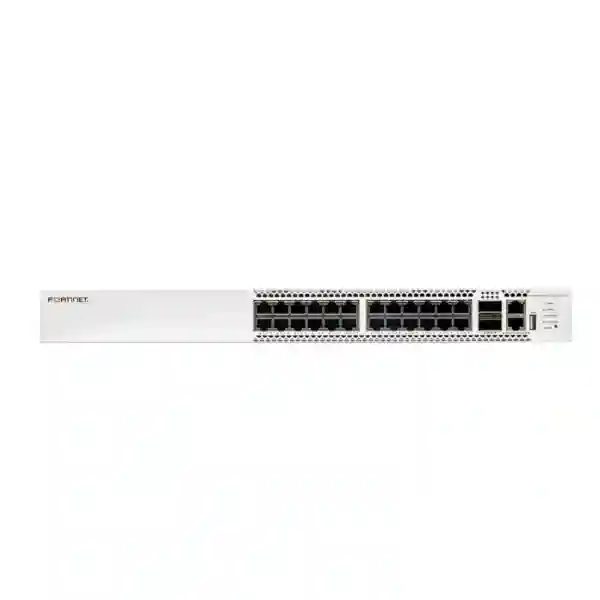
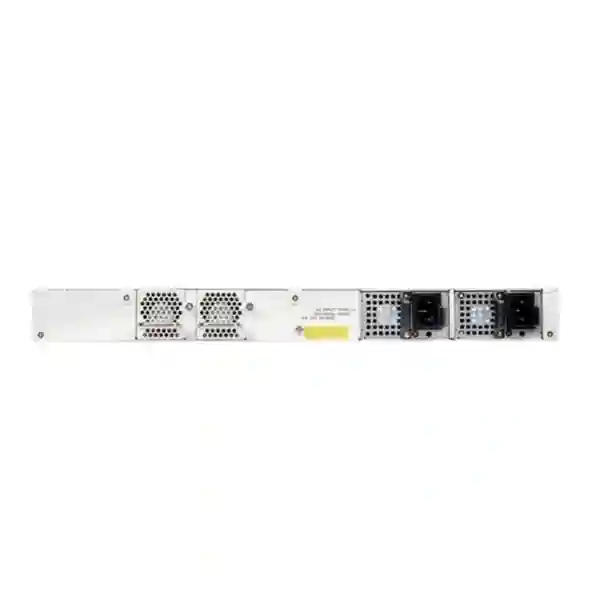
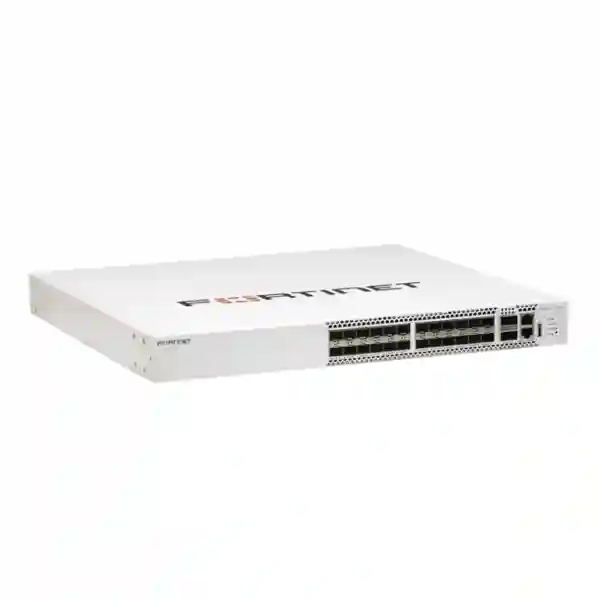
The FortiSwitch FS-T1024F-FPOE is designed for enterprise networks that need more than ordinary Gigabit access. Its combination of 24 copper interfaces capable of 10G, 5G, 2.5G, 1G and 100M operation, two high-speed 100G/40G QSFP28/QSFP+ interfaces, full-power PoE capability and a compact 1RU rack format gives network architects a platform for bandwidth-intensive endpoints, wireless infrastructure, powered devices and high-capacity uplinks. For Tanzanian organizations planning campus modernization, Wi-Fi expansion, converged access or resilient high-speed switching, the model offers a practical way to consolidate data connectivity and device power while preserving headroom for faster endpoint generations.
Verified FortiSwitch T1024F-FPOE specifications
Fortinet specifies 24 × 10G/5G/2.5G/1G/100M BASE-T network interfaces, allowing mixed-speed copper endpoints to be accommodated on the same switching platform.
Two 100G/40G QSFP28/QSFP+ interfaces support high-capacity uplink or aggregation designs where access traffic must be moved efficiently toward core, firewall or data-center infrastructure.
All 24 PoE ports support IEEE 802.3af/at/bt Type 4, backed by a published 1440W PoE power budget. This is relevant when planning power for compatible access points, cameras, collaboration endpoints and other powered devices.
Why enterprises consider this switch
A network refresh is increasingly driven by endpoint density, wireless throughput, PoE demand and uplink congestion rather than simple port count. The FS-T1024F-FPOE addresses those dimensions together. Multi-gigabit BASE-T ports can help organizations retain familiar copper cabling approaches while introducing faster-capable endpoints where the installed cabling and endpoint support the required rate. High-power PoE can simplify device placement by reducing the need for separate electrical adapters at every compatible endpoint. The 100GbE uplinks provide substantial aggregation capacity for designs in which many high-speed access devices may communicate concurrently.
The switch should still be selected through a complete design exercise. Confirm endpoint speed, cable category and distance, PoE class and wattage, uplink optics or direct-attach requirements, rack power, cooling, redundancy objectives, FortiSwitchOS compatibility and management architecture before procurement. A quotation should distinguish the switch hardware from any transceivers, cables, support services or other accessories required for the final topology.
FortiSwitch FS-T1024F-FPOE Tanzania
For buyers in Tanzania, the strongest use case is a network where ordinary 1GbE access is becoming a constraint or where the next refresh must support higher-speed wireless and powered endpoints. Enterprises can evaluate the FS-T1024F-FPOE for headquarters, larger branch campuses, hospitality networks, education environments, healthcare facilities, technology operations and other sites that need a concentrated set of high-performance copper connections. The 24-port count makes sizing especially important: planners should map every powered and non-powered endpoint, reserve capacity for growth and determine whether one switch or multiple switches best fits the required fault domains.
Procurement teams should request a bill of materials that captures more than the chassis. The two 100G/40G uplink interfaces may require appropriate Fortinet-supported optics, cabling or peer-interface choices depending on the design. PoE planning should use the actual device power requirements rather than assuming every connected endpoint draws the same wattage. With a 1440W published PoE budget, the platform provides significant capacity, but a professional design should still calculate expected and worst-case consumption and account for rack-level electrical planning.
Tanzanian deployments should also consider the operational model. FortiSwitch can be part of a broader Fortinet networking architecture, so organizations already using Fortinet security can assess how switching management and policy fit their established environment. Buyers starting a new architecture should document VLANs, routing boundaries, access controls, monitoring, logging, firmware policy and support processes before implementation. Explore FourTeck Tanzania technology solutions for related infrastructure planning, or use the consultation option below to prepare a model-specific requirement.
FortiSwitch FS-T1024F-FPOE Dar es Salaam
Organizations in Dar es Salaam frequently plan networks around dense offices, commercial facilities, hospitality sites, institutions and multi-floor environments where many users and devices converge on shared infrastructure. In this context, the FS-T1024F-FPOE can be evaluated when access-layer demand extends beyond conventional Gigabit Ethernet. Its 24 multi-rate copper ports allow a design to mix endpoint capabilities, while two 100GbE/40GbE uplinks can provide high-capacity paths toward aggregation or core infrastructure.
A useful pre-sales exercise is to separate current requirements from growth assumptions. Count access points, cameras, phones, workstations, servers or appliances that genuinely require copper connectivity, then identify which devices support 2.5G, 5G or 10G. Next, calculate PoE demand by endpoint and class. This avoids oversizing merely because high specifications are available, while also reducing the risk of selecting a switch that cannot support a planned wireless or surveillance expansion.
For multi-floor or campus deployments, the uplink architecture deserves equal attention. Fiber type, transceiver compatibility, distance, link aggregation and redundancy should be specified before ordering. Rack depth, ventilation, power distribution and UPS strategy should also be checked. A Dar es Salaam quotation request is most useful when it includes endpoint quantities, desired access speeds, PoE device models, uplink distances and the existing Fortinet environment. This allows the switching requirement to be evaluated as part of the network rather than as an isolated hardware purchase.
FortiSwitch FS-T1024F-FPOE Mwanza
For Mwanza businesses and institutions, the FS-T1024F-FPOE is relevant where network growth creates a need for faster access interfaces and substantial PoE capacity in a compact rack footprint. A typical evaluation might involve a central communications room serving high-throughput wireless access points, video systems, collaboration equipment and other Ethernet devices. Because the switch supports several copper link rates up to 10GbE, it can accommodate a phased migration in which not every endpoint is upgraded simultaneously.
The planning priority should be compatibility. A 10GbE-capable switch port does not guarantee a 10GbE endpoint experience unless the connected device, cabling, distance and configuration all support that rate. Likewise, PoE Type 4 capability should be matched against the powered device specification. Document each endpoint model, expected wattage and network speed, then create a port schedule before installation. This produces a clearer picture of spare capacity and helps identify where specialized cabling or optics may be required.
Organizations connecting multiple network zones should define how the two high-speed QSFP28 uplinks will be used, including whether they connect to a core switch, aggregation layer or another supported network device. Resilience requirements may justify diverse uplinks or redundant upstream infrastructure. For procurement, request a quote that explicitly lists required transceivers and cables rather than assuming they are bundled. That approach reduces ambiguity and makes the final deployment easier to validate against the intended topology.
FortiSwitch FS-T1024F-FPOE Arusha
Arusha organizations evaluating network modernization can consider the FS-T1024F-FPOE for environments where user connectivity, wireless access and powered devices share the same access infrastructure. Hospitality, offices, education and operational facilities may all have different traffic profiles, so selection should begin with a traffic and endpoint inventory rather than a generic port-count comparison. The switch’s multi-rate copper interfaces are particularly useful when an environment contains a mixture of legacy Gigabit devices and newer multi-gigabit equipment.
Wireless refresh projects are a common reason to examine multi-gigabit switching. Modern access points can place greater demands on both Ethernet bandwidth and PoE. The FS-T1024F-FPOE provides 802.3af/at/bt Type 4 capability across its 24 PoE ports, but each proposed access point should still be checked against Fortinet documentation and its specific power requirements. Cabling certification is equally important because the desired negotiated speed depends on the complete physical channel.
For an Arusha project, prepare a floor-by-floor or building-by-building port schedule, identify uplink distances and media, and document any requirement for segmentation, guest access, surveillance or operational networks. The final design should include monitoring and firmware procedures as well as the physical hardware. A well-defined scope makes it easier to determine whether the T1024F-FPOE belongs at access, aggregation or another layer and whether additional FortiSwitch models are needed to complete the topology.
FortiSwitch FS-T1024F-FPOE Dodoma
In Dodoma, enterprises and institutions planning high-capacity LAN infrastructure can assess the FS-T1024F-FPOE when they need a compact switch that combines multi-gigabit access and substantial PoE delivery. The model is not simply a faster replacement for a basic 24-port switch; its value is strongest when the connected environment can make practical use of higher copper rates, high-power PoE and 100GbE-class uplinks.
Start by identifying the applications that justify higher throughput. High-density wireless, media workflows, large data transfers, high-resolution video systems and certain server or appliance connections can create different bandwidth requirements. Segment those workloads from endpoints that only need standard Ethernet speeds. This allows ports and uplinks to be assigned deliberately and can inform whether a single T1024F-FPOE or a mixed-switch architecture is more economical and operationally appropriate.
Power and environmental preparation should form part of the same assessment. The published PoE budget is 1440W, so rack electrical design, UPS sizing and cooling should reflect the expected switch and endpoint load. Uplink optics should be chosen only after confirming the peer device, speed, fiber type and distance. Buyers should also define their preferred management model, software version policy and support requirements. Supplying those details with a quotation request gives the technical team enough context to build a more accurate bill of materials.
FortiSwitch FS-T1024F-FPOE UAE
UAE projects often involve dense commercial campuses, data-intensive offices, hospitality properties and technology environments where access switching must support rapid endpoint growth. The FS-T1024F-FPOE can be considered where 24 high-speed copper interfaces and high-power PoE align with the physical design. Its two 100G/40G interfaces can serve as high-capacity uplinks, but the exact topology should be designed around the upstream switching and security architecture.
For regional procurement, specify the exact model suffix FS-T1024F-FPOE and avoid substituting similarly named T1024 variants without comparing PoE and hardware requirements. The bill of materials should identify optics, cables, support requirements and any complementary Fortinet components separately. This is especially important for projects tendered across multiple sites, where consistency of model, firmware approach and accessories can simplify deployment and operations.
Organizations coordinating Tanzania and UAE infrastructure can use FourTeck UAE as a related regional technology resource and FourTeck’s Fortinet-focused UAE resource for broader Fortinet solution context. Cross-region standardization should still account for each site’s rack power, cabling, endpoint inventory and upstream design rather than assuming identical physical requirements.
FortiSwitch FS-T1024F-FPOE Uganda
Ugandan organizations can evaluate the T1024F-FPOE for high-performance enterprise access and aggregation scenarios where powered endpoints and multi-gigabit traffic converge. Its 24 copper interfaces provide flexibility across several Ethernet rates, allowing a network to support different endpoint generations while retaining a path toward faster access. The 100GbE-capable uplinks are valuable only when the upstream design can use that capacity, so peer-device and optical planning should happen early.
A procurement assessment should include current port utilization, three-to-five-year growth expectations, PoE consumption, cabling quality and desired redundancy. For distributed sites, standardizing on a repeatable port and VLAN design can simplify support, but site-specific bandwidth and power conditions still matter. Teams should also document how switches will be monitored and managed, which firmware train is approved and how configuration backups will be maintained.
For related regional planning, visit FourTeck Uganda. When requesting the T1024F-FPOE, include the exact switch model, number and type of powered devices, intended uplink speed and distance, and any FortiGate or FortiSwitch equipment already deployed. These details support a more precise technical review and help identify accessories that might otherwise be missed.
FortiSwitch FS-T1024F-FPOE Kampala
Kampala enterprises with high-density office or campus networks may consider the FS-T1024F-FPOE when access-point upgrades, surveillance expansion or high-bandwidth user devices exceed the capabilities of conventional access switching. The multi-gigabit copper design makes it possible to connect endpoints at their supported rate, while high-power PoE can reduce the need for separate local power supplies for compatible devices.
Before selection, map the physical network. Record cable routes, approximate lengths, patch-panel standards, rack positions and the upstream equipment that will terminate the QSFP28 links. If 100GbE is planned, confirm both ends of the connection and the supported optical or direct-attach solution. If 40GbE is sufficient, document that choice explicitly so procurement and installation teams work from the same design.
PoE planning deserves its own worksheet. List each device, its required standard and maximum draw, and reserve capacity for realistic growth. Although the switch has a substantial published power budget, correct engineering prevents surprises when many high-power endpoints are connected. Kampala buyers can use this information to prepare a quote request that covers the switch, uplink media, patching and associated infrastructure rather than treating the hardware as a standalone purchase.
FortiSwitch FS-T1024F-FPOE Arua
For projects in Arua, the T1024F-FPOE is most relevant when a site requires concentrated high-speed switching and PoE rather than simply a large number of basic Ethernet ports. Its 24-port design means capacity planning should be deliberate. A site with many low-bandwidth endpoints may be better served by a different access model, while a site with fewer but faster and more power-demanding devices can make stronger use of this platform.
Network planners should classify devices by function: wireless, surveillance, user access, voice, building systems, servers or appliances. Then assign bandwidth, PoE and segmentation requirements to each group. This creates a port map that can be validated before installation and makes future troubleshooting easier. For uplinks, consider both current traffic and resilience; a high nominal link speed is only one part of an effective design.
Operational readiness is also important for sites where on-site intervention may need careful coordination. Configuration standards, remote monitoring, spare strategy and documented cabling can reduce avoidable service effort. Procurement documentation should therefore include management expectations alongside hardware specifications. When submitting an inquiry, provide the intended number of switches, endpoint types, PoE needs, uplink distances and existing Fortinet components so the proposed bill of materials can be checked against the actual environment.
FortiSwitch FS-T1024F-FPOE Mbarara
Mbarara organizations considering network upgrades can use the FS-T1024F-FPOE as a candidate for high-throughput access where multi-gigabit endpoints and PoE are central requirements. The key design question is whether the site can benefit from 2.5G, 5G or 10G copper connectivity and whether its upstream network can carry the resulting aggregate traffic. This is particularly relevant for modern wireless, video and data-intensive environments.
Cabling validation should precede deployment. Existing copper runs may have been installed for earlier Ethernet generations, and achieving higher negotiated rates depends on cable category, channel quality and distance. A structured cabling assessment can identify which links are ready for faster service and which need remediation. Powered devices should likewise be checked for IEEE PoE requirements and actual maximum consumption.
The two QSFP28 interfaces provide a path for high-capacity uplinks, but transceiver selection should never be guessed. Confirm the upstream port type, desired rate, medium and distance. For a complete quote, include rack power and UPS requirements, optics, cables and any integration work. This produces a more useful commercial comparison and reduces the risk of receiving a chassis-only proposal that omits essential deployment components.
FortiSwitch FS-T1024F-FPOE Gulu
In Gulu, the FS-T1024F-FPOE can fit enterprise and institutional designs where high-speed access must be combined with substantial power delivery to network endpoints. Because it is a specialized high-performance switch, requirements should be documented around applications and devices rather than selecting it solely from its model class. A port-by-port plan helps establish whether its 24 multi-gigabit interfaces align with actual demand.
For wireless deployments, determine the Ethernet interface capability and PoE requirement of each access point. For surveillance, assess camera bandwidth, PoE class and aggregation behavior. For workstations or appliances requiring 10GbE, verify network adapters and cabling. These checks turn headline specifications into an implementable design. They also show where a mixture of switch models might provide better port density or cost alignment.
Uplink planning should account for distance and redundancy as well as throughput. If the switch connects across buildings, fiber architecture and protection should be considered alongside optics. Management, logging and firmware maintenance should be documented before go-live. A Gulu procurement request that includes these technical details allows suppliers to quote the correct supporting components and gives the implementation team a clearer acceptance checklist.
FortiSwitch FS-T1024F-FPOE Kenya
Kenyan enterprises evaluating high-performance Fortinet switching can consider the T1024F-FPOE for campus, headquarters and technology environments that require multi-gigabit copper, strong PoE capacity and high-speed uplinks. The platform is particularly relevant when a wireless or endpoint refresh creates access speeds above 1GbE. A network assessment should identify which devices actually need those rates and how much aggregate traffic must traverse the uplinks.
The 24 PoE ports support 802.3af/at/bt Type 4 and the switch has a 1440W published PoE budget. That provides substantial design flexibility, but endpoint-specific power calculations remain essential. The same applies to 100GbE connectivity: optics and cabling depend on the peer equipment and physical path. A procurement specification should therefore include topology diagrams or at least a concise description of the upstream connections.
For Kenya-focused infrastructure resources, visit FourTeck Kenya. Organizations standardizing Fortinet networks across Kenya and Tanzania can align naming, VLAN design, monitoring and firmware processes while still sizing hardware to each site. A quote request should state the exact FS-T1024F-FPOE model and identify required accessories separately for transparent comparison.
FortiSwitch FS-T1024F-FPOE Kuwait
Kuwait projects that demand high-density powered connectivity and faster-than-Gigabit copper can assess the FS-T1024F-FPOE as part of an enterprise switching design. Its compact 1RU format combines 24 multi-rate BASE-T interfaces with two 100G/40G uplinks. This can be useful where rack space is valuable but the network must support high-performance endpoints and substantial aggregate throughput.
Thermal, electrical and rack planning should be performed with the same care as logical configuration. High PoE capacity means the rack power and UPS design should reflect realistic endpoint loads. Airflow and equipment placement should follow vendor installation guidance. On the network side, segmentation, uplink redundancy, spanning-tree or routing design and management architecture should be defined before commissioning.
For Kuwait-related technology resources, see FourTeck Kuwait. Cross-border buyers should use the full model identifier in procurement documents and validate all accessories against the intended installation. A complete requirement should include quantity, endpoint types, expected PoE load, uplink media and distance, existing Fortinet infrastructure and desired implementation scope.
FortiSwitch FS-T1024F-FPOE Ghana
Ghanaian organizations planning high-capacity campus or enterprise networks can consider the FS-T1024F-FPOE when their endpoint strategy calls for multi-gigabit Ethernet and advanced PoE capability. Rather than treating every access port identically, planners can classify connections according to required bandwidth and power. This supports a more efficient design and clarifies whether the T1024F-FPOE should be deployed alone or alongside other access-switch models.
A wireless-led project should confirm access-point Ethernet speed, PoE requirement and expected aggregate traffic. A surveillance-led project should focus on camera power, bitrate and recording architecture. Office and technical environments may instead prioritize high-speed workstations, appliances or local servers. These distinct use cases affect port allocation and uplink sizing, even when the same switch model is used.
For regional context, visit FourTeck Ghana. Before requesting pricing, document the desired uplink type and distance, because the two QSFP28 ports require compatible connectivity to the upstream device. Include optics, cables and support expectations in the request so competing proposals can be compared on a consistent scope rather than chassis price alone.
FortiSwitch FS-T1024F-FPOE Nigeria
Nigeria’s large enterprise and institutional networks can generate demanding access-layer requirements, especially where wireless density, surveillance, collaboration and high-speed user devices coexist. The FS-T1024F-FPOE offers a concentrated 24-port platform for these scenarios, with copper rates up to 10GbE and high-capacity uplinks. Selection should be based on measured or forecast demand rather than assuming every site needs the maximum available interface speed.
For multi-site organizations, a standardized switch configuration can simplify operations, but hardware sizing should still reflect each location. Headquarters may require 100GbE uplinks and many high-power endpoints, while smaller sites may not. Documenting a reference architecture with approved variations can make procurement and support more consistent without forcing the same bill of materials everywhere.
Explore FourTeck Nigeria for related regional infrastructure information. For the T1024F-FPOE, request an itemized proposal that separates chassis, optics, cables and services. Provide the existing FortiGate or FortiSwitch models, planned endpoint quantities and power requirements, and the desired uplink architecture. This enables compatibility and design questions to be addressed before installation.
FortiSwitch FS-T1024F-FPOE Seychelles
Seychelles organizations evaluating enterprise switching may find the FS-T1024F-FPOE relevant for hospitality, corporate, institutional and technical environments where a compact switch must support high-throughput endpoints and PoE. Island and multi-building deployments can make infrastructure planning especially important because replacement logistics and inter-building connectivity benefit from clear documentation and appropriate redundancy.
A robust design begins with endpoint and cabling records. Identify every powered device, its required standard and maximum wattage, then validate copper links intended for multi-gigabit operation. For building-to-building connections, define fiber type, distance and uplink speed. The switch’s 100G/40G QSFP28/QSFP+ interfaces provide significant capacity, but the correct transceiver or cable depends on the peer and path.
Operational planning should include configuration backups, monitoring, firmware policy and remote troubleshooting procedures. Where service access may require advance coordination, these practices can reduce unnecessary site visits. A Seychelles quote request should therefore include both the physical bill of materials and the expected implementation or support scope. The result is a clearer procurement package and a network design that can be validated against documented requirements.
Compatibility, deployment and buying guidance
The FS-T1024F-FPOE supports a broad set of physical capabilities, but successful deployment depends on the surrounding infrastructure. Confirm copper cabling performance for the desired negotiated rate, verify PoE requirements for every powered device and validate uplink optics against both ends of the connection. For Fortinet-managed environments, check the intended FortiSwitchOS release and management compatibility in current Fortinet documentation before deployment. Fortinet documentation lists the FS-T1024F-FPOE among supported models in current FortiSwitchOS releases, reinforcing the importance of using version-specific documentation during implementation.
The model is especially compelling when high-power PoE is a genuine requirement. Fortinet documents 802.3bt support for the FS-T1024F-FPOE, and current FortiSwitchOS documentation includes it among models supporting PoE power-control features. Still, powered-device compatibility must be validated at the endpoint level. IEEE support describes the switch capability; it does not replace checking the connected device’s interfaces, cable requirements and vendor guidance.
Related FourTeck resources
FortiSwitch FS-T1024F-FPOE FAQ
How many network ports does the FS-T1024F-FPOE provide?
Fortinet specifies 24 copper 10G/5G/2.5G/1G/100M BASE-T interfaces plus two 100G/40G QSFP28/QSFP+ interfaces. It also includes a 10/100/1000 service port and an RJ-45 serial console port.
Does the FS-T1024F-FPOE support 802.3bt PoE?
Yes. Fortinet’s datasheet specifies 24 PoE ports supporting IEEE 802.3af/at/bt Type 4 and a 1440W PoE power budget. Always confirm the individual powered device’s requirements.
Is the switch rack mountable?
Yes. Fortinet lists the T1024F-FPOE as a 1RU rack-mount model. Rack power, airflow and UPS requirements should be planned for the complete installation.
What should be included in a quotation request?
Include the exact model, quantity, endpoint types, required copper speeds, PoE device models and wattage, uplink speed, media and distance, existing Fortinet equipment, rack power constraints and required optics or cables. This creates a more accurate bill of materials.
Quotation checklist and decision recap
Choose the FS-T1024F-FPOE when the design genuinely benefits from 24 multi-gigabit/10GbE copper interfaces, high-power PoE and 100GbE-class uplinks. Before ordering, validate cabling, powered-device requirements, uplink optics, rack power, cooling, firmware compatibility, management architecture and growth capacity. Send these details with the required quantity so the commercial proposal can reflect the actual deployment rather than only the switch chassis.
For a technical consultation, describe your current topology, planned endpoints and performance goals. FourTeck can then use that requirement as the basis for product and bill-of-material discussion without assuming stock, pricing or deployment conditions that have not been confirmed.




Reviews
There are no reviews yet.