
BRI–VoIP / VoIP–BRI gateway for business telephony modernization
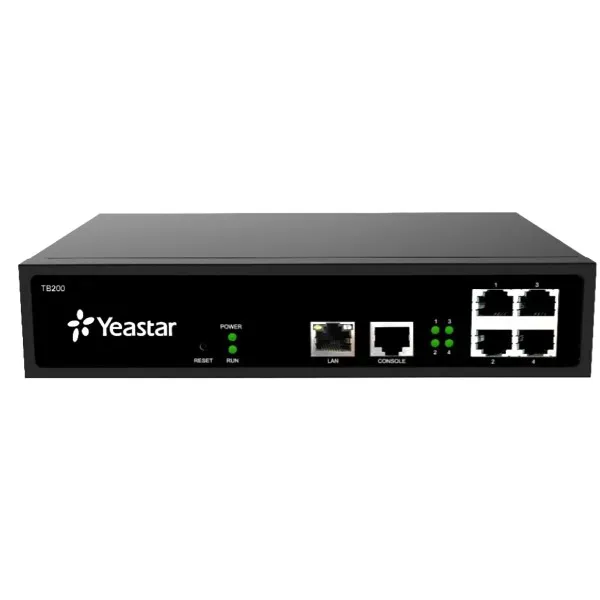
Yeastar TB200 BRI VoIP Gateway
The Yeastar TB200 is a standalone two-port BRI VoIP gateway designed to bridge ISDN BRI telephony and SIP-based voice networks. It can help an organization keep a useful ISDN PBX connected while introducing VoIP, or give a SIP-based IP-PBX access to BRI trunks where that interface remains part of the telephony environment.
What the Yeastar TB200 does
Many organizations still have useful ISDN BRI circuits, digital PBX infrastructure or branch voice services even while the rest of the communications environment is moving toward SIP, hosted PBX or modern IP telephony. The TB200 is intended for that transition point. Its two BRI interfaces can be configured in TE or NT roles, allowing the gateway to participate on the ISDN side according to the required deployment. On the IP side, it uses SIP and standard network transport methods so calls can be routed between the BRI environment and a compatible IP-PBX, SIP trunk, softswitch or other supported VoIP platform.
The practical value is architectural flexibility. A company does not necessarily have to replace every telephony component at the same moment. A legacy ISDN PBX may continue serving existing extensions while the TB200 provides a route toward SIP services. In the opposite direction, a new IP-PBX can use the gateway to reach available BRI services. This makes the device especially relevant in phased migration projects, sites where BRI remains operational, and mixed environments where old and new voice infrastructure must coexist for a period of time.
For buyers in Tanzania, the correct question is not simply whether a gateway has two BRI ports. The project should verify the signaling mode required by the BRI service, the intended SIP platform, the dial plan, caller-ID behavior, codec policy, DTMF method, security settings, routing logic and network path between the gateway and the PBX. FourTeck can help frame those requirements through its Tanzania business technology overview, which connects telephony decisions with the wider LAN, security, power and infrastructure environment.
Verified technical highlights
BRI interfaces
TB200 provides two BRI ports. The BRI side supports programmable NT/TE operation and point-to-point or point-to-multipoint connection modes for appropriate ISDN deployments.
VoIP protocol
SIP is based on RFC3261. Yeastar lists UDP, TCP and TLS for SIP transport and SRTP as an available media-security mechanism.
Voice codecs
Official specifications list G.711 a-law/u-law, G.722, G.726, G.729A, GSM and ADPCM. Codec choice should be coordinated end to end with the PBX and service provider.
DTMF
RFC2833, SIP INFO and in-band DTMF methods are listed. The selected method should match the far-end system to preserve IVR and feature-code behavior.
Network interface
One 10/100 Mbps LAN interface is specified. Network functions include DHCP, DDNS, firewall and static route features.
Physical & power
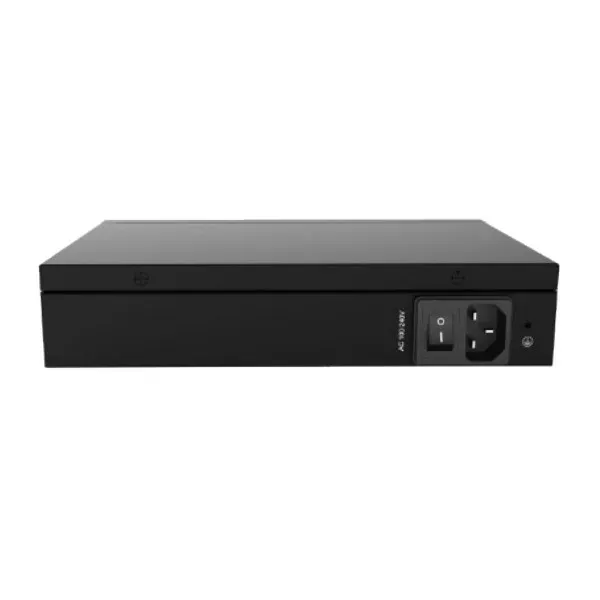
The published enclosure size is 213 × 160 × 44 mm. The listed power supply is AC 100–240 V using a 12 V 2 A adapter.
Compatibility and integration planning
SIP support alone does not guarantee a trouble-free deployment. A useful compatibility review starts with the intended PBX or softswitch and then walks through registration mode, authentication, transport, codecs, caller-ID formatting, DTMF, dial-plan expectations, NAT behavior and failover. Yeastar publishes configuration guidance for TB gateway integration with platforms such as 3CX and FreePBX, illustrating that the gateway can be used to extend BRI trunks into SIP-based systems when the settings are coordinated correctly. If a customer already operates a Yeastar PBX or another supported SIP platform, the same disciplined approach should be used rather than assuming default settings will match.
Security settings should be planned with the full voice path in mind. The TB200 supports TLS and SRTP options, but these provide value only when the connected PBX and service path support compatible settings. Administrative access should be limited to trusted management networks or controlled remote-access paths, configuration backups should be maintained, and firmware updates should be applied according to the correct hardware generation. Yeastar’s current firmware page lists TB200/400 V2 firmware 18.18.0.21 dated 2 June 2026, so procurement and support teams should record the hardware revision before planning an update.
A voice gateway also depends on the surrounding network. Stable IP addressing, predictable routing, low packet loss and appropriate quality-of-service policy can be more important to call quality than raw Ethernet speed. For broader infrastructure choices, review FourTeck Tanzania’s technology services and deployment planning and business technology shop, where voice systems can be considered alongside switches, firewalls, UPS protection and structured cabling.
Related Yeastar gateway options on FourTeck Tanzania
Yeastar TA1600 FXS Gateway
A higher-density analog endpoint gateway with 16 FXS ports. It is relevant when the migration challenge is analog phones or fax devices rather than BRI trunks.
Yeastar TA400 FXS Gateway
A four-port FXS option for smaller analog endpoint requirements. Consider it when a site needs a few analog extensions on a SIP PBX.
Yeastar TG200 4G Gateway
A two-channel cellular-to-SIP gateway for projects where cellular connectivity, not ISDN BRI, is the required external voice path.
Yeastar TG400 4G Gateway
A four-channel cellular VoIP gateway for organizations that require more cellular channels in a SIP-based voice environment.
Before ordering: six questions to answer
1. What exactly is connected to each BRI port? Identify whether the gateway is connecting to provider BRI service, an existing ISDN PBX, or another BRI endpoint, and document the required signaling role.
2. Which SIP platform will receive the calls? Record the PBX or softswitch make, software version, IP addressing, registration or peer method, transport method and authentication requirements.
3. What numbering must be translated? Document inbound DIDs, outbound presentation, extension ranges, prefixes and any digit manipulation required between ISDN and SIP.
4. Are fax or other legacy services present? If fax is business-critical, test the full path and confirm whether T.38 is supported end to end rather than assuming the gateway alone guarantees fax reliability.
5. How will the gateway be protected? Define management access, firewall policy, credentials, configuration backup, firmware process and whether TLS/SRTP will be used.
6. What happens during power or WAN failure? Review UPS coverage, internet dependency, PBX location and alternative calling paths so the business understands the practical continuity model.
Yeastar TB200 BRI VoIP Gateway Tanzania
For organizations in Tanzania, the Yeastar TB200 is particularly relevant when telephony modernization cannot be treated as a complete rip-and-replace exercise. A business may still have functioning ISDN BRI services or a PBX that supports familiar extension dialing, receptionist workflows and department routing, while management wants the flexibility of SIP trunks, IP-PBX services or a more modern branch architecture. The TB200 can sit between those environments, converting calls between BRI and SIP without forcing all connected systems to change at once. Its two BRI ports make it suitable for smaller BRI requirements, branch offices, migration pilots and sites where only a limited number of BRI interfaces must be retained.
A Tanzania deployment should begin with a technical inventory. Record the BRI provider details, current PBX make and model, signaling arrangement, active numbers, normal call direction, peak concurrent call expectations, fax use and any special dial patterns. The gateway supports programmable TE/NT modes, but the correct setting depends on what is connected to the port. SIP settings should then be designed around the target PBX or softswitch. If the SIP system is hosted offsite, confirm WAN stability and firewall policy before migration. If it is on the same LAN, consider VLAN design and quality-of-service policies so voice traffic remains predictable during busy periods.
Procurement teams in Tanzania should also look beyond the gateway price. A successful project may require BRI cabling, a managed switch, UPS coverage, rack space, firewall changes, SIP trunk configuration, PBX programming and commissioning time. For a complete requirement, use the FourTeck Tanzania quotation contact page and include the current topology rather than requesting the gateway as an isolated box. This allows the quotation discussion to cover dependencies and avoid last-minute installation gaps.
The TB200 can also form part of a wider phased strategy. A company may first bridge BRI into a new IP-PBX, then gradually change external trunks or endpoints as contracts, coverage and business priorities evolve. This approach can reduce disruption, but it requires documentation. Keep a record of BRI port roles, SIP credentials, routes, number transformations, firmware, administrative access and fallback procedures. That operational discipline is what turns a migration gateway into a maintainable part of the communications system.
Yeastar TB200 BRI VoIP Gateway Dar es Salaam
Dar es Salaam businesses often operate mixed technology environments because offices, branches, hotels, clinics, logistics operations and professional-service firms can have telephony investments that were deployed at different times. In that context, the Yeastar TB200 can be useful when two BRI interfaces must remain part of the design while the organization introduces SIP-based communication. A headquarters may have an established ISDN PBX that users understand well, yet a new branch may run an IP-PBX. Alternatively, a modern PBX may need access to an existing BRI service during a transition period. The gateway provides a practical interface between those worlds.
For a Dar es Salaam site, planning should focus on call flow as much as hardware. Reception may depend on a main published number, departments may have direct-dial numbers, and outbound caller ID may need to remain consistent during migration. Before changing anything, document inbound routes, outbound prefixes, after-hours behavior, queue destinations and any emergency or service numbers. Flexible number manipulation in the TB200 can help align different numbering formats, but it should be based on a documented dial plan. Testing should include inbound calls, outbound calls, transfer behavior, DTMF to external IVRs, caller-ID presentation and any fax service that remains in use.
Infrastructure is equally important in a dense commercial environment. The gateway’s Ethernet interface should connect to a stable LAN with controlled addressing. If voice traffic shares switching with data, video surveillance or backups, consider VLAN and QoS policy at the network level. If the PBX is hosted, test the actual WAN path during business hours rather than relying on nominal bandwidth figures. Power resilience should include the gateway, switch, router and PBX-related equipment together; protecting one device with UPS while the rest of the call path loses power does not create continuity.
When requesting a Dar es Salaam quotation, provide the BRI line type, current PBX information, number of required BRI ports, SIP destination, expected call volume, rack or desk location and whether installation or configuration is needed. That detail makes it easier to determine whether the TB200 is the correct two-port model or whether the wider design needs a different gateway capacity. The goal should be a documented, testable migration rather than a quick hardware swap.
Yeastar TB200 BRI VoIP Gateway Mwanza
Organizations in Mwanza that operate branch offices, healthcare facilities, schools, hospitality sites, logistics operations or administrative offices may need to connect established BRI telephony with a modern SIP system without changing every component simultaneously. The Yeastar TB200 is designed for that bridging role. Its two BRI ports make it a compact choice where the requirement is limited and clearly defined. Instead of replacing a working PBX solely because a new SIP platform is being introduced, the gateway can preserve the useful part of the current setup while providing a path toward IP-based call routing.
A Mwanza deployment that connects to a remote or cloud-hosted PBX should pay careful attention to network quality. Voice is sensitive to packet loss, latency variation and congestion. A broadband connection can appear fast in a speed test while still producing inconsistent call quality if the LAN is overloaded or the firewall handles traffic poorly. Build the voice path deliberately: assign stable addressing, document NAT and firewall rules, use appropriate QoS, and monitor call behavior under normal business load. If TLS and SRTP are required, confirm that the PBX uses matching transport and certificate policies.
BRI-side information is just as important. Determine whether the connected circuit or PBX expects point-to-point or point-to-multipoint behavior and whether the TB200 must operate in TE or NT mode. Record the main numbers, DIDs and outbound presentation rules. If more than one BRI path exists, define which calls should use each route and what should happen when a route is unavailable. Least-cost routing and call rules can be useful, but they should implement a business policy rather than become an undocumented collection of exceptions.
For procurement in Mwanza, include a simple network diagram with the quotation request. Show the BRI service, gateway, PBX, switch, router/firewall and internet path. Identify any UPS requirement and whether remote administration will be allowed. This information helps separate the gateway requirement from the surrounding work and gives the project a better chance of being commissioned correctly the first time. If the project later expands to analog or cellular connectivity, FourTeck Tanzania’s related TA and TG gateway pages can help compare interface types before adding more equipment.
Yeastar TB200 BRI VoIP Gateway Arusha
Arusha has a varied business mix that includes hospitality, tourism, education, healthcare, administration, NGOs and professional services. Many such organizations modernize technology in phases because guest communications, reception workflows, old PBX extension numbering or external circuits can be tightly connected to daily operations. The Yeastar TB200 can be useful where BRI remains part of that environment but SIP integration is required. It does not replace the PBX by itself; instead, it provides a controlled bridge that lets an ISDN-side system exchange calls with an IP-based voice platform.
For hospitality or service-oriented environments, call-flow discovery is essential. Ask how incoming calls reach reception, whether departments have direct numbers, whether guest or room calls require special billing or restrictions, and whether there are after-hours or emergency procedures. A BRI-to-SIP gateway transports and routes calls, but hotel PMS integrations, room status functions or proprietary PBX features may depend on other systems. These workflows must be verified before assuming that a new IP-PBX plus gateway will reproduce every function of the legacy platform.
Physical deployment should be tidy and maintainable. The TB200 is compact, but it still needs reliable power, accessible cabling and a stable Ethernet connection. Label BRI ports and network connections clearly. Maintain a backup of the configuration and record the firmware branch before updating. Restrict the web management interface so it is not unnecessarily exposed. If remote support is required from another site, use a controlled management path instead of opening administration broadly to the internet.
An Arusha quotation should state whether the project is an ISDN PBX-to-VoIP migration, an IP-PBX-to-BRI trunk connection, or a temporary coexistence design. Provide the exact number of BRI ports, known signaling details, current phone system, SIP platform, expected call directions, required numbers and any fax usage. If the site is expanding, also mention the likely future state. Two BRI ports may be ideal for today’s need, but a clear growth plan helps avoid replacing the gateway prematurely if more BRI capacity will soon be required.
Yeastar TB200 BRI VoIP Gateway Dodoma
In Dodoma, government-related offices, education institutions, NGOs, service organizations and private enterprises may operate telephony systems that have to remain stable while communication platforms evolve. The Yeastar TB200 offers a practical migration tool where BRI connectivity is still needed. With two BRI interfaces and SIP connectivity, it can allow an established ISDN PBX to reach a VoIP network or let an IP-PBX access BRI services. This can be useful when procurement cycles, existing contracts or operational risk make a complete telephony replacement undesirable.
A disciplined requirements document is especially valuable for institutional environments. It should list the lines, numbers, departments, user groups, call restrictions and approval requirements that the current system supports. During migration, those requirements should be mapped to the new routing design. Do not assume that all old PBX behaviors come from the BRI interface; many are local PBX features. The TB200 can route calls and manipulate numbers, but voicemail, queues, recording, extension permissions and user features are normally controlled by the PBX or associated applications.
Security and change management should also be part of the project. Assign named administrators, keep configuration backups and document every route. Use strong credentials, restrict management access and coordinate TLS/SRTP settings with the SIP platform when encrypted signaling or media is required. Before firmware maintenance, verify the hardware generation because Yeastar provides a defined branch for TB200/400 V2. A change record should note the previous version, new version, backup location and rollback plan.
For a Dodoma quotation, include the existing system diagram, BRI service details, SIP destination, user-impact window and any site-access constraints. If the deployment is part of a new office or wider infrastructure upgrade, consider switching, firewall rules, structured cabling and power protection at the same time. This integrated approach reduces the risk that the gateway arrives before the LAN, cabling or PBX configuration is ready. The objective is predictable commissioning and a system that another technician can understand later from the documentation.
Yeastar TB200 BRI VoIP Gateway UAE
In the UAE, the Yeastar TB200 can be relevant to businesses that still operate BRI-linked PBX infrastructure while expanding SIP, cloud communications or multi-site voice services. A small two-port BRI gateway can be especially useful for legacy-system coexistence, branch migration, laboratory testing and transitional architectures where an IP-PBX must reach an established BRI interface. The same planning principles apply regardless of market: confirm the exact BRI role first, then build SIP configuration, routing and security around the real call flow.
UAE deployments can involve multi-branch networks, centralized PBX platforms and more complex firewall policy. If the TB200 communicates with a PBX across a WAN or VPN, the network team should confirm routing, NAT, latency and QoS behavior. SIP ALG features in firewalls may need review depending on the architecture. TLS and SRTP should be coordinated end to end rather than enabled on only one side. For sites with strict change windows, stage the configuration off-production, validate backup and restore procedures, and prepare a test plan covering inbound calls, outbound calls, transfers, caller ID and DTMF.
Procurement teams should also distinguish product compatibility from telecom-service availability. The TB200’s technical support for BRI does not guarantee that a particular carrier offers or will continue a specific BRI service. Before buying, confirm the current service contract and the planned lifecycle of the circuit. If BRI is only temporary, the gateway may still provide value by allowing a phased migration, but the project should have an exit plan describing when and how the legacy interface will be retired.
For UAE-wide FourTeck resources, visit FourTeck UAE business technology solutions. When requesting a quote, provide the number of BRI circuits, PBX platform, target SIP system, site location, rack and power requirements, required security settings and whether remote commissioning is expected. This turns a model request into a deployment-ready requirement and helps avoid discovering interface or routing assumptions during the final cutover.
Yeastar TB200 BRI VoIP Gateway Uganda
Ugandan organizations that are moving toward SIP while retaining selected ISDN or PBX infrastructure can use a BRI gateway as a transition layer. The Yeastar TB200’s two BRI ports make it appropriate for limited BRI requirements where replacing a complete phone system is not yet desirable. An existing ISDN PBX can gain a route to a VoIP service, or a modern IP-PBX can use the TB200 to connect with BRI-side services where they remain available and operational.
The project should begin by determining exactly which side acts as network termination and which side acts as terminal equipment. The gateway’s programmable NT/TE capability makes it flexible, but that flexibility means configuration must be deliberate. Record whether each connection uses point-to-point or point-to-multipoint service, and collect numbering information from the telecom provider or PBX administrator. On the SIP side, define registration or peer mode, codec preference, DTMF method and dial-plan rules. Test both call directions before production cutover.
For organizations with multiple Ugandan sites, the gateway may sit at one branch while call control is centralized elsewhere. In that design, WAN resilience is important. Monitor jitter and packet loss, reserve sensible bandwidth for voice and avoid sending voice over an unstable path simply because internet access is technically present. If secure site-to-site connectivity is required, coordinate the gateway with the firewall and VPN architecture. Document the route so support teams know whether a call failure originates on the BRI side, SIP side or WAN path.
FourTeck’s Uganda IT and VoIP solutions site provides a regional resource for broader communication planning. A quotation request should specify the current PBX, BRI port count, main numbers, target SIP system, branch topology and whether configuration assistance is needed. This reduces ambiguity and makes it easier to identify supporting requirements such as switches, UPS protection, structured cabling or firewall changes.
Yeastar TB200 BRI VoIP Gateway Kampala
Kampala businesses may use the Yeastar TB200 when they have an established BRI-linked phone system but want to introduce SIP trunks, centralized call control or a new IP-PBX without creating unnecessary disruption. Corporate offices, service companies, hotels, healthcare organizations and institutions can all encounter this requirement because telephony equipment often has a longer lifecycle than user devices. The TB200’s two BRI ports provide a contained migration point where legacy and IP voice systems can exchange calls.
For a Kampala office, the busiest operational risk is often call-flow disruption. Before migration, record the main reception number, department DIDs, outbound presentation rules, hunt groups and after-hours routing. Then identify which of those behaviors are implemented in the PBX and which depend on carrier signaling. The gateway can provide number manipulation and routing, but a test plan should verify the real result. Run sample calls from multiple departments, test external IVR navigation using DTMF, confirm caller ID, and check whether transfers or forwarded calls preserve the expected numbering information.
Network preparation should include the actual business load. If the SIP PBX is cloud-hosted, test the WAN during peak usage. If the LAN carries surveillance, file transfers and Wi-Fi traffic, use managed switching and QoS where appropriate. The gateway should have a known IP address, and administrative access should be restricted. Configuration backups are important before changing routes or firmware, especially when the gateway becomes the link between a working legacy service and a newer communications platform.
A good Kampala purchase request therefore includes more than the model number. Provide the exact BRI service details, current PBX, target SIP platform, number plan, expected concurrent calls, physical installation location and desired support scope. This allows the quotation to account for commissioning and any required network work. If future growth will exceed two BRI ports, identify that now so the gateway capacity choice reflects the expected migration period rather than only the first day of deployment.
Yeastar TB200 BRI VoIP Gateway Arua
For businesses and institutions in Arua, a compact BRI-to-SIP gateway can be useful when telephony modernization is being done in stages. The Yeastar TB200 provides two BRI ports and SIP connectivity, giving a project team a way to preserve an operational BRI component while introducing an IP-based phone system. This is valuable when the existing PBX still serves its users well, when external BRI connectivity cannot be changed immediately, or when a branch must connect into a centralized SIP platform without replacing every local component.
Remote-site support should be designed from the beginning. If the main IT team is located elsewhere, the gateway needs a secure and documented management path. Avoid exposing the web interface directly to the public internet. Use the organization’s approved VPN or management network, maintain a configuration backup, and record the gateway’s IP address, administrator ownership, firmware version and connected BRI port purpose. Clear labels at the site are also important because a remote engineer may depend on local staff to check status lights or cables during troubleshooting.
Connectivity quality matters more than headline bandwidth. If SIP traffic travels between Arua and a PBX in another city, monitor latency, jitter and packet loss over the actual path. QoS can help when congestion occurs inside the managed network, but it cannot repair an unstable external link. Define what should happen if the WAN fails. Some organizations may accept a temporary loss of centralized calling, while others need an alternate route or local calling capability. That continuity requirement should influence the overall design rather than being discovered after installation.
When requesting an Arua quotation, provide the existing telephony diagram, BRI details, SIP server location, network path, power conditions and expected support model. Also identify whether the gateway is a short-term migration component or a long-term interface. That distinction influences documentation, redundancy and lifecycle planning. A well-defined project gives the TB200 a clear role and makes future replacement or expansion easier to manage.
Yeastar TB200 BRI VoIP Gateway Mbarara
Mbarara organizations can consider the Yeastar TB200 when two BRI interfaces must be connected to a SIP-based communications environment. The gateway can support a phased transition in which a legacy PBX remains operational while the organization introduces VoIP services, or it can allow a new IP-PBX to access BRI resources. The key benefit is not simply protocol conversion; it is the ability to separate the timing of infrastructure changes so a business can modernize without unnecessarily discarding working equipment.
A successful Mbarara deployment starts with capacity. Determine how many BRI ports are actually active and how many concurrent call paths the organization requires. If only one or two BRI interfaces are needed, the TB200 may be an efficient fit. If the site expects rapid expansion, compare the future requirement before committing to a two-port design. Also identify whether BRI is being retained because of a service contract, existing PBX investment, special application or temporary migration constraint. Understanding the reason helps determine how long the gateway is expected to remain in service.
Configuration should follow a written dial plan. Decide how inbound BRI numbers map to SIP destinations and how outbound SIP calls select a BRI route. Define number stripping or prefix addition rules clearly. Use a consistent naming convention for trunks and routes so another administrator can understand the configuration later. If fax is required, verify T.38 end to end and test with the real fax workflow. If encrypted SIP is required, coordinate TLS and SRTP settings with the PBX rather than changing only the gateway.
The quotation should include the desired scope: hardware only, configuration, integration testing, network changes or complete migration assistance. Mention the current PBX model, service provider details where available, physical rack or desk location, UPS requirement and remote-management policy. These details allow project planning to account for real installation work rather than treating the gateway as a standalone appliance.
Yeastar TB200 BRI VoIP Gateway Gulu
In Gulu, a BRI-to-VoIP gateway can support businesses, institutions, healthcare environments and branch operations that still rely on established ISDN-side telephony while moving call control toward SIP. The Yeastar TB200 gives such projects two BRI ports, programmable TE/NT operation and standard SIP connectivity. It is therefore best viewed as a migration and interconnection component rather than as a complete phone system. The PBX still provides extension features, user management and most application-level behavior.
For branch integration, decide where the PBX should live. A local PBX can reduce dependence on the WAN for internal calls, while a centralized or hosted PBX can simplify administration across several sites. If the TB200 connects to a remote PBX, the WAN becomes part of the call path and should be treated accordingly. Monitor link stability, define QoS policy where controllable, and ensure firewall rules are specific to the required SIP and management traffic. Avoid broad rules that expose unnecessary services.
BRI troubleshooting can be unfamiliar to teams focused mainly on IP networking, so documentation matters. Record signaling mode, switch type where applicable, port role, cable mapping, main numbers and any provider-specific information. On the SIP side, record trunk mode, credentials, server address, transport, codecs and routes. Yeastar includes trace and debug capabilities that can help isolate problems, but those tools are most effective when the expected call path is already documented.
For Gulu procurement, include both today’s requirement and the planned destination architecture. If BRI will be retained long term, consider support, spare equipment and configuration backup. If it is transitional, identify the likely retirement trigger, such as completion of SIP trunk migration or PBX replacement. This prevents a temporary gateway from becoming an undocumented permanent dependency. The wider FourTeck Uganda resource can also be used to align voice, LAN and security requirements for multi-site projects.
Yeastar TB200 BRI VoIP Gateway Kenya
Kenyan businesses that operate a mixture of legacy and modern telephony can use the Yeastar TB200 to bridge two BRI interfaces into a SIP environment. A company may be moving from an ISDN PBX to an IP-PBX, connecting a branch to a centralized communications platform, or retaining BRI service for a defined period while other voice services are migrated. The TB200 provides a clear demarcation point between the BRI and SIP sides, making it easier to phase the project instead of forcing every change into one cutover window.
For larger Kenyan organizations with branches, consider whether the gateway is deployed centrally or at the branch where the BRI service terminates. BRI is a physical interface, so the gateway normally needs to be located where that circuit or PBX connection exists. SIP traffic can then be carried over the IP network to the chosen PBX. This makes WAN design relevant: routing, VPN, QoS and failover can all affect voice service. A central IT team should also define secure remote administration and monitoring so branch gateway status can be checked without unsafe public exposure.
The technical checklist should capture BRI signaling, port role, point-to-point or point-to-multipoint mode, active numbers, codec requirements, DTMF method, SIP registration model and dial-plan translation. Test the actual business scenarios rather than only making a single sample call. Verify reception, direct-dial numbers, outbound presentation, transfer, forwarded calls and any fax workflow. Where call recording or compliance functions are required, confirm whether those functions operate on the PBX and how the gateway affects media routing.
FourTeck’s Kenya IT and VoIP solutions portal provides a regional route for related technology planning. For procurement, provide the current voice architecture, exact site, BRI count, PBX platform, expected growth and service scope. This gives suppliers enough information to determine whether the TB200 itself is sufficient or whether additional networking, power, security or configuration services should be included.
Yeastar TB200 BRI VoIP Gateway Kuwait
For organizations in Kuwait, the Yeastar TB200 can be a useful interconnection device when an established BRI telephony component needs to operate alongside SIP. Two BRI ports make the unit suitable for smaller legacy interfaces, branch requirements or migration projects. The gateway can allow an ISDN PBX to reach VoIP services or allow an IP-PBX to access BRI connectivity, depending on how the interfaces are configured. It should be selected according to the actual BRI requirement rather than only because a project uses the general term “ISDN gateway.”
Kuwait projects often involve formal IT change controls and centralized infrastructure. In that setting, prepare the TB200 configuration as part of the full voice design. Define VLAN, IP address, default route, firewall policy, NTP or time settings if used, SIP trunk parameters, BRI port roles and call routes. Back up the configuration before change windows and prepare a rollback plan. If TLS and SRTP are used, validate certificate and media compatibility with the PBX. If the service is unencrypted, ensure management access is still protected and limited to trusted networks.
Service lifecycle should also be considered. Before purchasing a BRI gateway, confirm the continuing availability and intended lifespan of the BRI circuit or attached PBX service. If the long-term destination is full SIP, the TB200 may serve as a migration bridge, and its expected retirement should be included in the roadmap. If BRI remains a long-term requirement, support processes should include configuration backup, spare planning and firmware management.
FourTeck’s Kuwait IT, PBX and network security site can be used for regional technology context. A quote request should include the BRI provider or PBX connection details, number of ports, SIP platform, site topology, rack and UPS conditions, security policy and commissioning scope. This supports a realistic bill of materials and helps the installation team prepare for the exact integration rather than discovering requirements during the maintenance window.
Yeastar TB200 BRI VoIP Gateway Ghana
Businesses in Ghana that still use BRI-linked telephony can employ the Yeastar TB200 as a controlled bridge to SIP. Its two BRI ports fit projects where only a small number of BRI interfaces must be integrated. This can be a branch office retaining an ISDN PBX, a headquarters introducing a new IP-PBX, or a transitional site where existing BRI services must remain online while the organization moves toward a newer voice architecture.
Planning should start with the service definition, not the equipment. Document why BRI must remain, how many ports are active, which numbers terminate there, and whether the gateway is expected to handle all calls or only selected routes. Next define the SIP side: PBX address, registration or peer mode, authentication, transport, codec order, DTMF and number format. Flexible number manipulation can solve format differences, but rules should be kept simple and documented so later troubleshooting does not require reverse-engineering the dial plan.
For sites with a hosted PBX, verify the IP path under real conditions. Run sustained call tests at times when internet use is high. Check firewall session behavior and ensure that remote management follows security policy. If the business uses fax, test T.38 across the actual service provider and PBX because fax success depends on the complete path. If the gateway is placed in a rack or communications room, include UPS power and cable labeling in the installation scope.
The FourTeck Ghana technology site provides a regional reference for wider infrastructure planning. For a TB200 quotation, share the current PBX model, BRI port requirement, target SIP system, site location, desired installation scope and any expected expansion. If the organization may need analog or cellular gateway functions as well, those are separate interface requirements and should be planned with the appropriate TA or TG models rather than assuming one gateway type can serve every legacy connection.
Yeastar TB200 BRI VoIP Gateway Nigeria
Nigerian enterprises, institutions and multi-site organizations may encounter BRI infrastructure while expanding into SIP and centralized communications. The Yeastar TB200 provides two BRI interfaces and SIP connectivity for exactly that boundary. It can preserve an existing ISDN PBX while allowing VoIP access, or let an IP-PBX connect with BRI-side services. The design is especially useful when replacing every telephony component at once would create unnecessary cost, operational risk or downtime.
In multi-site Nigerian deployments, clarify where call control resides and how voice travels between sites. A gateway installed at a branch may send SIP traffic over VPN or private WAN to a central PBX. That path must be designed for voice quality, security and failure handling. Define whether branch users should retain any local calling if the WAN fails. If continuity is important, the solution may need alternate trunks, local PBX capability or a documented manual fallback. The TB200 itself should not be assumed to solve every resilience requirement.
Security policy should cover both management and media. Restrict the web interface to authorized networks, use strong credentials and maintain backups. Where the PBX supports TLS and SRTP, align those settings with the gateway and test the complete route. Monitor firmware and apply updates only after confirming hardware generation and change-window requirements. Yeastar’s current V2 firmware publication demonstrates that the platform still has a defined maintenance path, but operational teams should not upgrade without a backup and rollback plan.
For regional planning, visit FourTeck Nigeria IT services. A strong purchase request should include the existing PBX, BRI provider details where available, main numbers, SIP destination, network topology, UPS and rack conditions, required security controls and commissioning expectations. This allows the gateway to be quoted as part of a complete interconnection task instead of as a standalone device with unknown dependencies.
Yeastar TB200 BRI VoIP Gateway Seychelles
Organizations in Seychelles, particularly hospitality, professional services, administration and multi-site businesses, may need to modernize telephony without replacing an established PBX or BRI service immediately. The Yeastar TB200 offers two BRI ports for this kind of controlled transition. It can link a legacy ISDN-side system to SIP or allow a modern IP-PBX to communicate with an available BRI interface. The compact capacity is useful where the BRI requirement is modest and clearly bounded.
For island or distributed operations, supportability can be as important as purchase price. Document the configuration thoroughly so the system can be managed remotely without constant site visits. Keep an encrypted backup in an approved repository, label BRI and Ethernet cables, and record the connected PBX, service provider, numbers and port modes. Restrict the web administration interface and use controlled remote access. If the gateway is part of a critical reception or reservation workflow, include the supporting router, switch and PBX in the same power-continuity plan.
Where a hosted PBX is used, internet quality should be validated with real voice traffic. Voice performance depends on packet delivery, not just advertised bandwidth. Test latency variation, packet loss and congestion at busy times. Define a failure procedure for staff so they know how calls will behave if the WAN becomes unavailable. If there is an alternate path, test it periodically rather than assuming it will work when needed.
Procurement should identify whether the TB200 is a long-term interface or a migration bridge. If BRI is temporary, document the future target and retirement trigger. If it remains strategic, include firmware management, spare strategy and support ownership. A quotation request should state the site, BRI count, PBX platform, SIP destination, call-flow requirements, rack and UPS conditions and whether on-site or remote configuration is expected. This gives the project team enough context to build a maintainable voice connection rather than simply deliver a gateway.
Frequently asked questions
How many BRI ports does the Yeastar TB200 have?
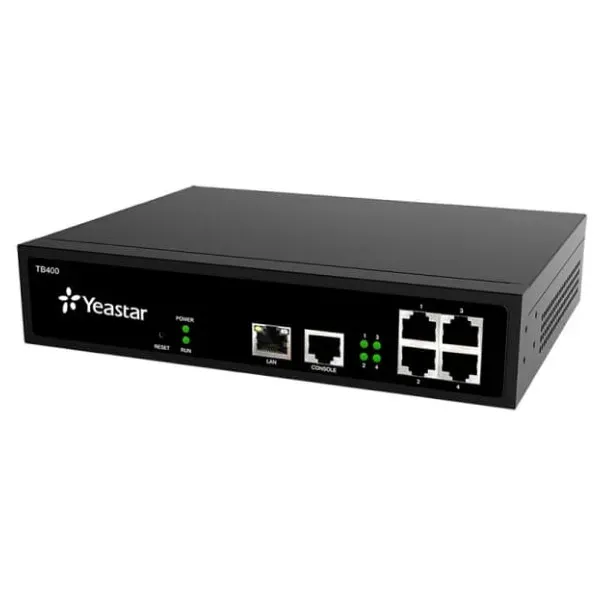
The TB200 has two BRI ports. Yeastar’s TB400 is the four-port model in the same TB BRI gateway family. Choose capacity according to the real number of BRI interfaces required and expected growth.
Can the TB200 connect an ISDN PBX to VoIP?
Yes. One of Yeastar’s stated use cases is connecting an ISDN PBX to a VoIP network. The deployment still requires correct BRI signaling, SIP trunk configuration, number routing and interoperability testing.
Can an IP-PBX use the TB200 to access BRI trunks?
Yes. Yeastar positions the TB series for providing BRI connectivity to SIP-based IP-PBX systems. Verify the target PBX integration method and the current telecom service before deployment.
Does the Yeastar TB200 support TE and NT modes?
Yes. The official product information lists programmable NT/TE modes. The correct mode depends on the device or service connected to the BRI side and should be confirmed during design.
Does TB200 support TLS and SRTP?
Yeastar lists TLS among the transport options and SRTP for secure media. These settings must be compatible with the connected PBX or SIP platform and should be implemented as part of an overall voice-security design.
Can TB200 be used with 3CX or FreePBX?
Yeastar publishes integration guidance showing TB gateway connectivity with both 3CX and FreePBX. Actual production compatibility should still be validated against the versions, security policy, dial plan and service requirements in the intended environment.
Does the TB200 support fax?
Yeastar lists T.38 fax support for the TB series. Fax success depends on the full call path, so the PBX, SIP provider and receiving side must be tested with the actual business workflow.
What information should I provide for a quotation?
Provide the number of BRI ports, existing PBX make and model, target SIP platform, known BRI signaling details, main numbers or DID ranges, expected call directions, fax requirement, network topology, rack and power conditions, site location and whether configuration or installation is required.
Quotation checklist
Send a concise technical brief so the right gateway and supporting services can be quoted.
✓ BRI port count
✓ PBX model and version
✓ SIP platform
✓ Numbers and dial plan
✓ TE/NT requirement if known
✓ Point-to-point or multipoint if known
✓ Fax requirement
✓ Network and firewall topology
✓ UPS and rack requirements
✓ Installation/configuration scope
Decision recap
Choose the TB200 when the verified requirement is two BRI interfaces that must interconnect with SIP. It is a strong fit for controlled migrations, temporary coexistence and small BRI-to-IP integration points.
If the requirement is analog FXS, analog FXO, PRI/E1/T1 or cellular, use the gateway family built for that interface instead. Selecting by interface type first prevents the wrong product from being forced into the design.
Regional FourTeck resources
For organizations coordinating projects across multiple markets, FourTeck maintains regional resources that can help align procurement and technology planning. Use FourTeck Uganda for Uganda-focused voice and IT requirements, FourTeck Kenya for Kenya projects, FourTeck Kuwait for Kuwait business IT, FourTeck Ghana for Ghana requirements, FourTeck Nigeria for Nigeria projects, and FourTeck UAE for UAE technology solutions.
Regional links are useful for project coordination, but BRI service availability, telecom regulation, carrier options, stock, lead time and deployment scope must be confirmed for each location. A gateway’s technical capability should never be interpreted as a guarantee of local carrier service or immediate product availability.
Why discuss the full voice environment before buying
A BRI gateway sits at the boundary between telecom signaling and IP networking, so it depends on both. Buying the hardware without confirming the BRI service, PBX settings, SIP design and network path can lead to delays that appear to be product faults but are really integration mismatches. FourTeck Tanzania can help structure the requirement around the existing system, desired destination and supporting infrastructure. This is particularly important when the change is part of a broader office move, branch rollout or PBX modernization project.
For a purchase or configuration discussion, use the verified FourTeck Tanzania contact page. Include enough information for the team to understand the full route from BRI circuit or PBX to SIP platform. That preparation shortens the path from model selection to a technically useful quotation.




Reviews
There are no reviews yet.