
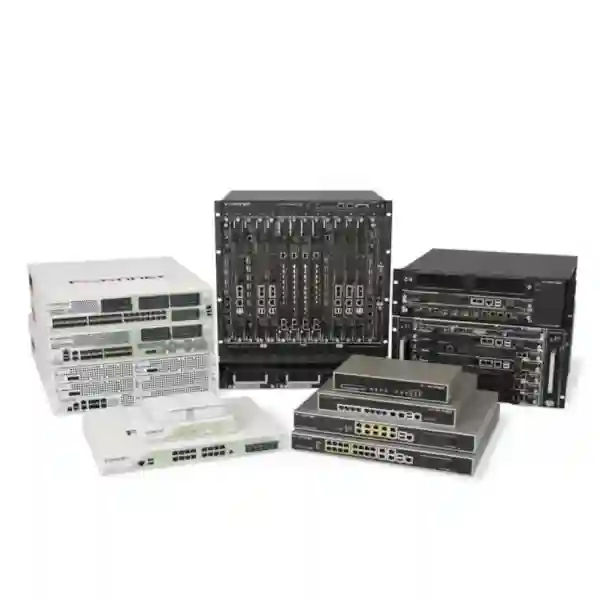
FortiExtender 200G Series
FortiExtender 200G Series Tanzania is designed as a practical buying and deployment guide for organizations searching for Fortinet cellular WAN, LTE connectivity, branch internet resilience and FortiGate extension solutions. An important procurement point comes first: Fortinet’s current official FortiExtender catalog does not list a hardware model literally called FortiExtender 200G Series. Current G-generation indoor models include FortiExtender 101G, 211G, 511G and 511G-WiFi, while FortiExtender 200F appears in the earlier F-generation. For that reason, this page does not attach invented specifications to a nonexistent 200G model. Instead, it helps buyers translate the search term into a validated current requirement before a quotation is prepared.
Fortinet’s current ordering guide positions FEX-211G as a mid-range single-modem CAT-12/LTE gateway with dual SIM plus eSIM capability.
Current FortiExtender G models support FortiGate LAN Extension and WAN Extension functions in supported designs, helping integrate cellular connectivity with Fortinet-managed networks.
Confirm carrier bands, SIM strategy, firmware compatibility, management method, accessories, support term and exact order code before purchase.
What buyers usually mean by FortiExtender 200G Series
A search for FortiExtender 200G Series often indicates a buyer wants a current Fortinet cellular gateway in the mid-range class rather than a precise, verified part number. That distinction matters. Cellular appliances are not interchangeable simply because their names look similar. Radio generation, supported modem category, regional carrier compatibility, SIM options, antenna requirements, physical installation, management architecture and firmware support can all affect whether a model fits a site. Fortinet currently lists FEX-211G as its mid-range G-generation indoor appliance, with a single CAT-12/LTE modem, dual SIM plus eSIM, one dedicated WAN port, four LAN/switch ports and FortiGate LAN/WAN extension support. Buyers requiring 5G should review the current 511G family instead of assuming that a “200G” label implies 5G.
FortiExtender is useful when cellular connectivity needs to become part of a managed enterprise network rather than remain an unmanaged hotspot. Typical projects include branch backup internet, temporary connectivity, WAN diversity, remote-site access and deployments where the cellular radio should be positioned for better signal while the firewall remains in a secure rack. Management and compatibility should be validated against the intended FortiGate and FortiOS release. Fortinet publishes compatibility matrices, and current documentation includes FEX-211G support in newer FortiOS and FortiExtender OS branches. Firmware planning is therefore a procurement requirement, not an afterthought.
FortiExtender selection and deployment checklist
FortiExtender 200G Series Tanzania
Organizations in Tanzania searching for FortiExtender 200G Series are commonly trying to improve branch connectivity, create a cellular backup path, connect a site before fixed broadband is ready, or integrate mobile connectivity into a Fortinet-managed network. The first step should be model validation. Fortinet’s current portfolio does not show a literal 200G appliance, so a Tanzania quotation should not be built around an assumed specification. The requirement should instead state the business objective, preferred mobile operators, expected traffic, FortiGate model, software version and whether the cellular connection will operate as primary or secondary WAN. From that information, the current FortiExtender model can be matched more reliably.
For Tanzania sites, radio conditions can differ substantially between buildings and locations. A strong outdoor mobile signal does not guarantee a strong signal inside a server room, metal warehouse or interior communications rack. FortiExtender can be useful because the cellular gateway can be positioned with connectivity and signal quality in mind while the security appliance remains where it belongs. Planning should consider cable routes, power, mounting, antenna placement and the path back to the firewall. The mobile service itself must also be evaluated for coverage, data plan, addressing requirements and operational policy. If two carriers are being considered for resilience, confirm how SIM selection and failover will be managed on the exact appliance.
Tanzania buyers should also treat firmware and management as part of the bill of requirements. A current G-generation model such as FEX-211G is supported on specific FortiOS and FortiExtender OS versions, so an existing FortiGate estate may need compatibility review before deployment. This is especially important for organizations standardizing several branches. Document the FortiGate model, FortiOS branch, WAN design, VLANs, monitoring expectations and who will administer the cellular gateway. FourTeck Tanzania’s IT and network services page provides context for integrated infrastructure planning, while the Tanzania technology shop helps buyers review complementary network and security products. A complete quotation should distinguish hardware, support, accessories, configuration and any deployment services so procurement teams can compare like with like.
FortiExtender 200G Series Dar es Salaam
Dar es Salaam businesses often operate internet-dependent offices, logistics facilities, retail locations, hospitality properties and distributed branches where WAN downtime can interrupt cloud applications, payments, communications and remote access. A FortiExtender project can add a cellular path to a Fortinet network, but the design should begin with the failure scenario the organization wants to address. If the objective is broadband failover, define how quickly traffic should move to cellular, which applications remain permitted during backup operation and whether bandwidth-heavy services should be restricted while the secondary path is active. These decisions are more useful than buying a cellular gateway without a policy.
Dense urban buildings can introduce practical radio challenges. Equipment rooms may be positioned away from windows or surrounded by concrete and metal. The cellular gateway should therefore be located according to measured signal quality rather than simply next to the firewall. Installation planning can include Ethernet distance, power method, antenna orientation, physical security and access for maintenance. Where a current FEX-211G is considered, confirm that its LTE CAT-12 capability matches the intended carrier environment and performance expectation. If the requirement explicitly calls for 5G, evaluate a current FortiExtender 511G-class model instead of interpreting the supplied 200G search phrase as a 5G specification.
A Dar es Salaam procurement brief should include the existing FortiGate model and firmware, primary ISP, mobile operator options, user count, critical applications and required recovery behavior. For multi-WAN projects, teams should define health checks and routing policy so failover is based on meaningful reachability rather than only interface link state. Security controls must remain consistent when traffic changes path. Buyers planning centralized logging can also review FortiAnalyzer FAZ-150G Tanzania for a compact logging platform, or FortiAnalyzer FAZ-1000G Tanzania for larger analytics requirements. These products do not replace FortiExtender; they illustrate how cellular connectivity can fit into a broader managed Fortinet environment.
FortiExtender 200G Series Mwanza
Mwanza organizations evaluating FortiExtender commonly need resilient connectivity for branches, commercial facilities, education environments, healthcare sites, warehouses or offices that depend on centrally hosted applications. Cellular WAN can be valuable as a secondary path when a fixed circuit fails, but resilience depends on independence. If both the primary and backup services share the same physical route, power source or upstream dependency, the design may still have a common failure point. A useful project review maps the fixed internet service, mobile network, firewall, switch, UPS and critical applications so the backup path addresses realistic outage conditions.
Signal assessment is particularly important before final placement. A cellular gateway installed deep inside a communications room may see weaker radio conditions than one positioned in a more suitable area. The network design should allow the FortiExtender to be placed where connectivity is practical without exposing the FortiGate itself. Buyers should record signal observations for the candidate mobile operators, understand data-plan constraints and confirm whether public addressing, inbound connectivity or VPN behavior creates any special requirement. Cellular networks often use carrier-side addressing, so applications that expect direct inbound reachability should be reviewed rather than assumed to work identically to a fixed public-IP circuit.
For Mwanza procurement, ask for the exact Fortinet model and part number rather than approving “200G Series” as a generic line item. Fortinet’s current mid-range G appliance is FEX-211G, and current compatibility documentation should be checked against the deployed FortiOS release. If the organization is also improving wireless access inside the site, FortiAP F Series Tanzania provides a related view of Fortinet Wi-Fi options. FortiAP handles local wireless LAN access while FortiExtender addresses cellular WAN connectivity; they solve different layers of the network and should be sized independently. The final quotation should identify accessories, support term, management approach and configuration responsibilities so the project scope remains clear.
FortiExtender 200G Series Arusha
Arusha businesses in hospitality, tourism, professional services, education and distributed operations may use cellular WAN to reduce dependence on a single internet connection. The value of FortiExtender is strongest when the backup link is integrated into an intentional network design. A hotel, for example, may want reservation, payment and administration systems to retain connectivity during a primary ISP interruption while guest traffic is limited. A branch office may prioritize VPN and cloud productivity services. An operational site may need remote monitoring to remain reachable. These priorities should be translated into firewall and SD-WAN policy before deployment.
The physical environment also matters. Radio performance can vary by room, building materials and surrounding conditions. Site teams should test candidate locations and avoid assuming that the rack is automatically the best place for the cellular radio. Power resilience should be considered at the same time: a backup WAN provides little benefit if the FortiExtender, FortiGate or access switch loses power during the same event. UPS planning, clean cabling and documented ports improve maintainability. Where external or specialized antennas are required, use accessories approved for the exact model and deployment rather than substituting components solely by connector type.
Arusha procurement teams should provide the current firewall model, software version, ISP topology, preferred mobile operators, number of sites and desired management model. If the request originated as “FortiExtender 200G,” validate whether FEX-211G meets the requirement or whether another current model is appropriate. Organizations modernizing the local wireless network can compare FortiAP FAP-221K Tanzania and other access-point options separately. This distinction prevents WAN resilience and Wi-Fi coverage from being mixed into one specification. For quotation preparation, list the cellular gateway, support, power or mounting accessories, implementation tasks, SIM responsibility and acceptance tests as separate scope items.
FortiExtender 200G Series Dodoma
Dodoma organizations considering FortiExtender may include public institutions, enterprises, NGOs, education environments and branch operations that require dependable access to centralized systems. A cellular secondary WAN can support continuity when the primary service is unavailable, but the design should be based on application importance. Teams should identify the services that must continue during an outage, such as VPN connectivity, email, ERP access, voice signaling or administrative systems, and decide which lower-priority traffic can be reduced. This protects the cellular link from becoming saturated immediately after failover.
A technical survey should document the firewall, switching, WAN handoff, power protection and available placement options. Cellular signal is a site-specific property, so model selection should not be completed solely from an office desk. If a G-generation FortiExtender is required, Fortinet’s current catalog should be used to choose the actual model. FEX-211G is the current mid-range LTE CAT-12 option, while higher-end 511G models provide 5G capability. This is why a request titled “200G Series” needs clarification at the quotation stage even when the commercial page preserves the search term customers use.
For multi-site Dodoma deployments, standardization is valuable. Define consistent naming, firmware policy, SIM documentation, health checks, failover rules, monitoring and escalation procedures. Record which carrier is installed at each location and who owns account administration. A branch should not become difficult to support because nobody knows which SIM, data plan or configuration is active. Fortinet’s compatibility matrices should be reviewed before firmware changes, especially when FortiGate and FortiExtender upgrades occur on different schedules. Buyers can use the FourTeck Tanzania contact page to provide the exact site requirement, and the FourTeck Tanzania solutions overview to consider supporting firewall, switching, UPS and infrastructure dependencies.
FortiExtender 200G Series UAE
UAE organizations often use cellular connectivity for branch resilience, temporary sites, retail openings, construction environments and distributed enterprise networks. A FortiExtender deployment can provide a managed cellular WAN path that integrates with Fortinet networking, but model selection should follow the radio service available at the site. If the requirement is LTE, the current FEX-211G class may be relevant; if 5G performance is required, the 511G family should be evaluated. Procurement teams should not map a “200G” search phrase to a 5G assumption without confirming the official model.
The UAE also presents dense indoor environments where cellular signal can vary dramatically between exterior areas and internal equipment rooms. Site surveys should test the intended operator at the proposed installation point. For high-rise, mall, warehouse and data-room deployments, antenna placement and cabling may influence the design. The backup path should be tested under realistic load, including VPN and cloud applications, rather than merely confirming that the modem registers on the mobile network. Where SD-WAN is used, health checks, steering rules and application priorities should be documented so behavior during an outage is predictable.
Regional procurement teams can review FourTeck UAE technology solutions and Fortinet-focused UAE solutions when coordinating related Fortinet requirements. A complete UAE quotation should identify exact hardware, regional variant if applicable, FortiCare or management subscription, accessories, implementation and testing. SIM contracts and carrier services should be described separately from appliance supply. Organizations with branches across countries should also document whether they want a common FortiExtender standard or a model-by-country approach based on local carrier compatibility. Standard operational processes can remain consistent even when radio hardware differs by market.
FortiExtender 200G Series Uganda
Uganda organizations evaluating FortiExtender often need branch connectivity that remains available when a fixed ISP circuit is interrupted or not yet installed. Cellular WAN can be especially useful for distributed offices, retail locations, clinics, schools, logistics sites and project offices where a centrally managed backup path reduces dependence on manual hotspot procedures. The design should define whether cellular is standby-only, active as part of SD-WAN or temporarily used as the primary connection. Each mode has different data-plan and policy implications.
Before ordering, validate mobile coverage at each site and identify the carrier strategy. A dual-SIM capable appliance can support operational flexibility, but SIM slots alone do not guarantee seamless resilience; failover behavior, carrier availability and configuration must be understood. Fortinet currently lists FEX-211G with dual SIM plus eSIM and LTE CAT-12, making it a relevant current mid-range reference when the “200G Series” term appears in a request. For 5G requirements, compare current 511G options. The FortiGate model and FortiOS release should be recorded so compatibility can be checked against Fortinet’s published matrix.
Uganda buyers managing a broader Fortinet estate can review FourTeck Uganda for regional technology context. A procurement document should state the number of branches, intended operator at each location, expected bandwidth, critical applications, firewall integration, management preference and support term. Installation scope should address placement, power and testing. Acceptance testing should include deliberate primary-WAN failure, restoration behavior and confirmation that business-critical traffic follows the intended path. These steps turn a cellular gateway from an emergency accessory into a controlled component of the network architecture.
FortiExtender 200G Series Kampala
Kampala enterprises and branch offices may use FortiExtender to protect access to cloud applications, VPN services and centralized business systems when a primary internet service experiences disruption. Urban connectivity can be strong, but building construction and equipment-room placement still affect radio performance. A project should therefore include signal testing in the actual deployment location. If the strongest cellular position is away from the firewall rack, the architecture should account for secure Ethernet connectivity, power and physical mounting rather than compromising radio performance for convenience.
Network teams should also decide what happens when failover occurs. A cellular link may have different bandwidth, latency or data-cost characteristics from the primary circuit. Policy can prioritize essential services and restrict nonessential downloads, guest traffic or backup jobs while the network is running on cellular. This is particularly useful for offices where hundreds of endpoints could otherwise overwhelm the backup path. FortiGate SD-WAN and policy capabilities can support controlled traffic handling when configured appropriately, while FortiExtender supplies the cellular access component.
For Kampala purchasing, avoid approving a generic “FortiExtender 200G” item without a verified part number. Ask the supplier to state the exact model, radio capability, regional applicability, support and included accessories. If FEX-211G is proposed, validate its LTE CAT-12 positioning against the intended mobile network and performance need. If the business needs 5G, request a current 5G model comparison. The quote should also identify configuration, mounting and testing responsibilities. Organizations using FortiGate at branches can coordinate the FortiExtender requirement with the wider Uganda firewall architecture so firmware, monitoring and support procedures are consistent rather than managed as isolated devices.
FortiExtender 200G Series Arua
Arua sites connected to a wider enterprise network can benefit from cellular resilience when fixed connectivity is constrained, delayed or subject to interruption. The best FortiExtender design begins with an understanding of the local site’s role. A small branch that mainly accesses cloud applications has different bandwidth needs from a warehouse transmitting large files or a site carrying continuous VPN traffic. Estimating the traffic that must survive an outage helps determine whether LTE is adequate and what data plan should be considered.
Physical deployment deserves equal attention. Test the intended mobile operator where the appliance will actually be installed, then compare alternative positions if signal quality is weak. Consider whether the communications room has reliable power and whether UPS capacity includes the cellular gateway and the network devices required to reach it. For remote support, document the FortiExtender serial information, SIM identity, carrier account, IP addressing and management method. Clear records reduce troubleshooting time when the site is far from the central IT team.
When the request uses the name FortiExtender 200G Series, the procurement team should ask for current-model validation. Fortinet’s official current range identifies FEX-211G as a mid-range G-series LTE appliance, not FEX-200G. This distinction should be written into the quote to prevent substitution or confusion with FEX-200F. Firmware compatibility with the connected FortiGate should also be confirmed before shipment. Arua deployments can then be tested against a simple acceptance plan: normal primary-WAN operation, forced failure, cellular recovery, critical-application access, monitoring visibility and restoration to the preferred link. This evidence gives operations teams confidence that the backup design works beyond the product datasheet.
FortiExtender 200G Series Mbarara
Mbarara businesses with branch, education, healthcare, retail or service operations may consider FortiExtender where reliable internet access is important to daily work. Cellular WAN is most effective when it is engineered around the applications that matter. A branch may need payment processing, ERP, email and voice connectivity during an outage while postponing large software updates. Defining these priorities allows the firewall to apply sensible policy when the backup path has less capacity than the normal broadband circuit.
Carrier selection should be based on site testing and operational requirements rather than brand familiarity alone. Coverage can vary by building and room, and a dual-SIM design may offer flexibility where more than one mobile network is suitable. If FEX-211G is the proposed current model, verify its CAT-12 LTE capability and SIM options against the intended service. If a higher-bandwidth 5G design is required, evaluate the current 511G family. Do not assume that “200G” in a search query denotes a published 5G product specification.
For Mbarara procurement, create a branch worksheet containing FortiGate model, FortiOS version, ISP details, mobile carrier, critical services, expected cellular usage, power protection and installation location. This worksheet can be repeated across sites and becomes useful during support. Include the desired management model and any FortiCare or cloud-management subscription in the commercial scope. The supplier should state whether configuration and failover testing are included or whether only hardware is being quoted. This clarity is especially important when comparing offers, because a lower hardware-only figure may not include the accessories, support and implementation required for a production-ready cellular WAN solution.
FortiExtender 200G Series Gulu
Gulu organizations can use cellular WAN as part of a continuity plan for sites that depend on central systems or internet-hosted services. The decision should begin with the business impact of losing the primary connection. If a site can operate offline for several hours, the cellular design may be simple. If operations stop immediately, the backup link, firewall policy, power and monitoring should be treated as critical infrastructure. FortiExtender can provide the cellular component, but continuity depends on the full path remaining operational.
A site survey should verify mobile coverage and identify where the gateway can be mounted securely with acceptable signal. Where the FortiGate is installed in a protected rack, the cellular radio does not necessarily need to share the same physical position. Network cabling and power can be planned around the radio requirement. Administrators should also understand how the mobile network handles addressing and whether site-to-site VPN, remote management or inbound services have dependencies that need testing. Real-world acceptance testing is more reliable than assuming behavior from a consumer mobile device.
Gulu buyers should request the exact current FortiExtender model and not rely on a “200G Series” label as an official SKU. FEX-211G is a current mid-range LTE reference in Fortinet’s ordering guide. Compatibility with FortiOS should be validated using current Fortinet documentation, especially if the branch firewall runs an older software branch. The final scope should list hardware, support, management subscription if required, accessories, SIM responsibility, installation and testing. A documented handover should include failover behavior, management access, carrier information and the process for escalating a cellular-service issue separately from a firewall or LAN issue.
FortiExtender 200G Series Kenya
Kenyan businesses operating headquarters, branches, retail sites, logistics facilities and remote offices may use FortiExtender to integrate LTE or 5G connectivity into a Fortinet network. The model should be selected according to service availability and required capacity. Current Fortinet documentation places FEX-211G in the mid-range LTE CAT-12 category and FEX-511G in the 5G category. This gives procurement teams a clearer basis than the ambiguous “200G Series” phrase. The quotation should identify the official model so technical and commercial reviewers are evaluating the same product.
For branch resilience, map the primary ISP and mobile operator dependencies. A cellular backup is valuable when it provides meaningful path diversity, but a complete design also needs resilient power and appropriate firewall policy. If the primary link fails, traffic should move according to defined health checks. Critical business applications can be prioritized while bandwidth-heavy or guest traffic is limited. The cellular service should be tested with the actual VPN and cloud applications used by the organization because latency, addressing and carrier policy can differ from fixed broadband.
Kenya buyers can review FourTeck Kenya for related Fortinet and network procurement. Multi-country organizations should consider a common operational standard covering naming, firmware, monitoring, SIM records, failover testing and support, while allowing hardware variants to follow local carrier compatibility. This approach is more robust than forcing one radio model into every country. A Kenya quotation should state appliance, regional variant, support, accessories and services separately and should include the FortiGate model and software release against which integration has been checked.
FortiExtender 200G Series Kuwait
Kuwait enterprises can use FortiExtender for backup WAN, temporary connectivity, distributed branch access and projects where a managed cellular path complements fixed broadband. Indoor radio conditions can vary significantly in commercial buildings, so installation should be based on measured signal at candidate locations. The gateway’s placement, antenna arrangement, power and Ethernet path should be considered together. A communications room optimized for security and cooling may not be the best radio location, which is one reason a separate cellular gateway can be operationally useful.
Procurement should distinguish LTE and 5G requirements. Fortinet currently lists FEX-211G as a mid-range LTE CAT-12 model, while FEX-511G is positioned as a 5G gateway. The search phrase FortiExtender 200G Series should therefore trigger validation rather than automatic specification. If a supplier proposes a model, ask for the official part number, current datasheet reference, regional applicability and support term. Also confirm FortiOS compatibility with the intended FortiGate so the project is not delayed by an avoidable software mismatch.
Kuwait buyers can review FourTeck Kuwait for regional technology procurement. The technical scope should explain whether cellular is standby or active, which applications are prioritized, how link health is measured and what happens when the preferred WAN returns. Data-plan responsibility and SIM ownership should be explicit. For sites requiring centralized operations, include monitoring and alerting expectations. A good acceptance test simulates primary-link failure and recovery, confirms business applications, verifies management visibility and records the resulting behavior for future support teams.
FortiExtender 200G Series Ghana
Ghanaian organizations with distributed offices, financial services, education, retail, logistics or service sites may consider FortiExtender where internet continuity is important. Cellular connectivity can provide a second path when fixed broadband fails or can bring a new branch online while permanent connectivity is pending. The design should state the intended operating mode because temporary primary connectivity can generate very different traffic and data-plan requirements from emergency-only failover.
Model selection should follow official Fortinet naming and local carrier requirements. FEX-211G is currently listed as a G-generation mid-range LTE CAT-12 appliance with dual SIM plus eSIM, while current 511G models address 5G use cases. A request using “200G Series” should be translated into one of these verified choices only after requirements are understood. Check carrier bands and service availability for the deployment location, then validate FortiGate and FortiOS compatibility. Physical placement and power should also be included in the design.
Ghana buyers can use FourTeck Ghana for regional procurement context. For multi-branch rollouts, build a repeatable template containing site name, FortiGate, firmware, cellular gateway, carrier, SIM identifiers, signal observations, failover policy and support contacts. This documentation becomes particularly valuable when central IT supports many locations. Commercial proposals should separate the appliance from carrier service and clearly identify support, subscriptions, accessories and installation. The acceptance process should test both failure and restoration so the branch does not remain unintentionally on cellular after the primary WAN has recovered.
FortiExtender 200G Series Nigeria
Nigeria’s large and diverse business environment creates many potential cellular WAN use cases, from corporate branches and retail chains to logistics facilities, professional offices and temporary project sites. A FortiExtender can provide managed LTE or 5G connectivity as part of a Fortinet architecture, but the service should be sized for the actual site. A small office using cloud productivity tools has different needs from a location transferring large files, supporting many VPN users or carrying voice and video traffic.
Carrier diversity is often a central part of the design. A dual-SIM capable gateway can provide flexibility, but procurement teams should test coverage and performance rather than assume both operators are equally suitable at every site. Fortinet’s current mid-range G model, FEX-211G, uses LTE CAT-12 and supports dual SIM plus eSIM. For 5G requirements, current 511G models should be reviewed. The ambiguous “200G Series” term should not be used as a substitute for an official model number in a purchase order.
Nigeria buyers can review FourTeck Nigeria for related regional technology requirements. Large rollouts benefit from centralized standards for firmware, monitoring, SIM inventory, link-health checks and escalation. Define which traffic remains allowed during failover and how usage is monitored so cellular data is not consumed unexpectedly. The commercial scope should specify exact hardware, support, management licensing if applicable, accessories and deployment services. If the cellular gateway will be managed through a FortiGate, provide the firewall model and software release so compatibility is confirmed before equipment is committed.
FortiExtender 200G Series Seychelles
Seychelles organizations in hospitality, financial services, government, professional services and multi-property operations may evaluate cellular WAN for continuity or temporary connectivity. The value of a backup path is determined by what it keeps operational. Hotels may prioritize reservation, payment and administrative systems; offices may prioritize VPN and cloud services; remote facilities may need monitoring and management traffic. Defining these priorities allows a FortiGate to apply sensible policy when the network is using cellular.
Island and property-specific radio conditions make site validation important. Confirm the intended operator at the actual installation location and consider whether the cellular gateway should be placed away from the central rack for better signal. Ensure the path between gateway and firewall remains secure and powered. If the request calls for a FortiExtender “200G,” verify the current official alternative. FEX-211G is a current LTE CAT-12 mid-range model, while 511G models address 5G. Carrier compatibility, software support and accessories should be checked before procurement.
For organizations with several properties, create a consistent site standard while allowing carrier and hardware choices to reflect local conditions. Record the FortiGate model, firmware, cellular gateway, SIM information, signal quality, health checks and failover policy for each location. Test restoration to the primary WAN as carefully as failover. A quotation should identify whether it includes only appliance supply or also configuration, installation and acceptance testing. This prevents operational gaps after delivery and gives stakeholders a clearer view of total project scope.
Related Fortinet products and Tanzania internal resources
Relevant for larger Fortinet estates that need centralized security logging and analytics alongside branch connectivity.
A compact FortiAnalyzer option for organizations evaluating centralized log management for smaller environments.
Fortinet wireless access points address the LAN Wi-Fi layer and complement, rather than replace, cellular WAN connectivity.
A related Fortinet access-point page for organizations modernizing branch wireless alongside WAN resilience.
Useful for reviewing Fortinet Wi-Fi 6E connectivity when branch LAN modernization is part of the same project.
Provides context for design, deployment and integration requirements around networking and security infrastructure.
Use the verified enquiry page to provide FortiGate, carrier, site and cellular failover requirements for quotation.
Compatibility, management and buying guidance
FortiExtender should be treated as a managed network component with a lifecycle, not simply as a modem. Before deployment, verify the exact hardware against Fortinet’s current FortiExtender OS and FortiOS compatibility documentation. Current matrices show that G-generation products such as FEX-211G require newer software branches than many older F-series appliances. This can influence projects where an established FortiGate cannot be upgraded immediately. The correct response is to validate compatibility before ordering rather than assume that every FortiExtender works with every FortiOS release.
Management choice also matters. Fortinet documents FortiGate-managed and FortiEdge Cloud-managed options across its current portfolio. Decide who owns configuration, monitoring and firmware maintenance. For a few branches, management may be straightforward; for dozens of locations, standardized naming, templates, inventory and alerting become more important. Cellular service is another operational domain, so keep carrier account and SIM records alongside network documentation. When an outage occurs, support teams need to distinguish a carrier problem from a FortiExtender, FortiGate, LAN or power problem quickly.
Commercial comparisons should be based on equal scope. One quotation may include hardware only, another may include FortiCare, cloud management, power accessories, antennas, configuration and installation. Ask each supplier to state these components clearly. Also confirm whether the quoted unit is the correct regional variant and whether any accessory is required for the intended mounting or power arrangement. FourTeck can help structure the requirement, but final technical selection should always use the current Fortinet documentation and the exact site conditions.
FortiExtender 200G Series FAQs
Is FortiExtender 200G Series an official current Fortinet model?
Fortinet’s current public FortiExtender portfolio does not list a model literally named FortiExtender 200G Series. It lists current G-generation models including FEX-101G, FEX-211G, FEX-511G and FEX-511G-WiFi. FEX-200F is an earlier F-generation model. A quotation should therefore validate the intended current model.
What is the current mid-range G-generation FortiExtender?
Fortinet’s current ordering guide identifies FEX-211G as the mid-range appliance. It is listed with one LTE CAT-12 modem, dual SIM plus eSIM, a dedicated WAN port, four LAN/switch ports and FortiGate LAN/WAN extension support.
Can FortiExtender be used for internet failover?
Yes, cellular WAN is a core FortiExtender use case. The production design should define health checks, traffic priorities, FortiGate integration, carrier service and restoration behavior so failover is controlled and testable.
Does FEX-211G provide 5G?
No. Fortinet positions FEX-211G as LTE CAT-12. Current 511G models are the 5G options in the indoor portfolio. Buyers should select by actual carrier and performance requirements.
What information should be included in a Tanzania quote request?
Include the FortiGate model and FortiOS version, site location, preferred mobile operators, whether cellular is primary or backup, critical applications, expected traffic, number of sites, management preference, support term and any installation or antenna requirements.
Quotation checklist
For a clean FortiExtender quotation, provide: exact site count; FortiGate model and software release; preferred mobile operator; LTE or 5G requirement; primary versus backup role; required SIM strategy; critical applications; expected traffic; management method; support duration; power and mounting needs; antenna requirements; configuration scope; failover testing scope; and target deployment timeline. Ask the quotation to state the exact official Fortinet model and part number rather than using “200G Series” as the purchasing identifier.
Decision recap
FortiExtender is a strong fit when an organization wants cellular connectivity to operate as a managed part of its Fortinet network. For searches using FortiExtender 200G Series, the most important step is correcting the product identity before purchase: Fortinet does not currently list a literal 200G appliance. FEX-211G is the current mid-range LTE CAT-12 G-generation model, while 511G products address 5G. Select the final model according to carrier compatibility, required performance, FortiGate software support, site signal, management and lifecycle requirements.
Plan your FortiExtender deployment
A useful consultation starts with the network you already have and the outage or connectivity problem you want to solve. Share the FortiGate model, FortiOS version, site location, mobile operators, critical applications and whether you need LTE or 5G. FourTeck can then help structure a quotation around a verified current Fortinet model instead of an ambiguous product label.



Reviews
There are no reviews yet.