
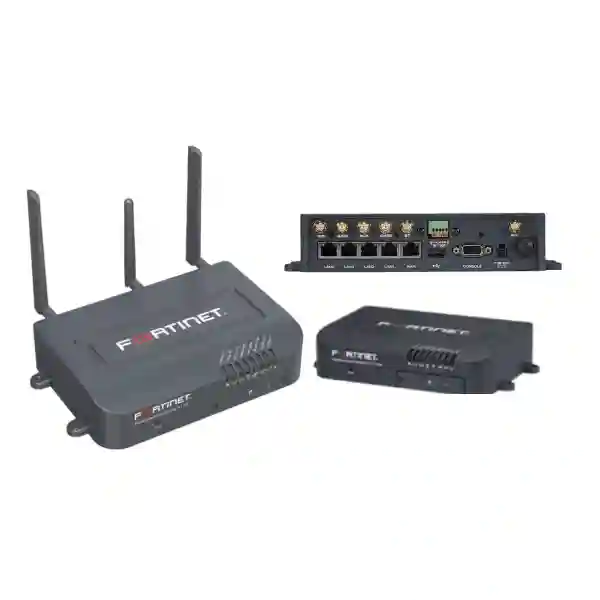
FortiExtender Vehicle Series Tanzania
FortiExtender Vehicle Series brings Fortinet cellular networking into vehicles and other mobile or demanding operational environments. Fortinet currently lists three principal vehicle models: FortiExtender Vehicle 211F, FortiExtender Vehicle 212F and FortiExtender Vehicle 511G. The 211F and 212F are CAT-12 LTE vehicle gateways, while the 511G is a 5G vehicle gateway with Wi-Fi 6. The family is designed for organizations that need connectivity to travel with the asset rather than remain fixed in a branch office.
Share vehicle count, routes, mobile operators, applications, onboard devices, FortiGate environment, management preference and installation scope. Model selection should follow the real cellular and fleet design.
What FortiExtender Vehicle solves
A fleet vehicle is a moving branch. It may carry payment terminals, tablets, laptops, cameras, telemetry, passenger systems, operational technology or other IP devices, yet it cannot depend on a fixed wired broadband circuit. FortiExtender Vehicle is intended to provide a ruggedized wireless WAN platform that combines cellular connectivity with local networking and Fortinet management. This can reduce the operational separation between fleet connectivity and the wider enterprise network.
Fortinet positions FortiExtender for primary or backup wireless WAN, centralized management, FortiGate integration and resilient cellular operation. For vehicle deployments, the practical value is the ability to design connectivity around mobile routes, multiple carriers, antenna placement, onboard Wi-Fi, segmentation and secure access. Buyers should still validate carrier bands, regional variants, antenna requirements, subscriptions, software compatibility and exact accessories for the chosen model before ordering.
Single CAT-12 LTE modem, dual SIM, built-in Wi-Fi and vehicle-focused ruggedized design. Appropriate when LTE is the selected cellular generation and single-modem architecture fits the availability plan.
Dual CAT-12 LTE modem architecture with two dual-SIM sets, built-in Wi-Fi and vehicle deployment positioning. Useful where the design calls for greater cellular-path flexibility than a single-modem model.
5G vehicle gateway with dual SIM plus eSIM, Wi-Fi 6 and a 2.5G WAN interface in Fortinet’s current ordering guide. Consider it when 5G capability and a newer wireless platform are project priorities.
Model selection and deployment guidance
| Model | Cellular | Modem approach | Wi-Fi | Buying focus |
|---|---|---|---|---|
| FortiExtender Vehicle 211F | CAT-12 LTE | Single modem, dual SIM | Built-in | LTE fleet connectivity |
| FortiExtender Vehicle 212F | CAT-12 LTE | Dual modem, two dual-SIM sets | Built-in | LTE designs needing additional modem resilience |
| FortiExtender Vehicle 511G | 5G | Single modem, dual SIM + eSIM | Wi-Fi 6 | 5G fleet and newer wireless requirements |
The table is a family-level buying guide, not a substitute for the current Fortinet data sheet and regional ordering guide. Exact carrier support, regulatory variant, antennas, accessories and software requirements should be checked for the deployment country. A vehicle project should also define mounting, power, antenna cable routing, environmental exposure, onboard client count, required VLANs or segmentation, GPS/GNSS use where applicable and the method used to manage the fleet.
Fortinet integration and management
FortiExtender can operate in standalone scenarios, can be centrally managed through FortiEdge Cloud, and can be integrated with FortiGate in supported Fortinet Fabric designs. Fortinet also documents FortiManager management options. For a fleet, centralized operations matter because dozens or hundreds of mobile gateways should not become individually administered islands. A management plan should define device naming, groups, templates, software lifecycle, credentials, cellular profiles, monitoring and escalation.
Organizations already using FortiGate should record the FortiGate model and FortiOS version before procurement and verify compatibility with the intended FortiExtender release. For related Tanzania infrastructure planning, review the FourTeck Tanzania integrated technology overview, the Tanzania technology shop, deployment and support services, the FortiAP F Series page, FortiAnalyzer FAZ-1000G, FortiAP FAP-221K and FortiAP FAP-222KL. These pages help place vehicle connectivity within a broader security, Wi-Fi, analytics and lifecycle design rather than treating the gateway as an isolated purchase.
FortiExtender Vehicle Series Tanzania
Tanzania organizations evaluating FortiExtender Vehicle Series should begin with routes, mobile-operator coverage and the business applications that must remain connected while vehicles move between service areas. Logistics fleets may need dispatch, tracking, proof-of-delivery and driver applications. Passenger transport may need operational connectivity plus carefully separated onboard Wi-Fi. Utilities and field-service fleets may need access to work orders, telemetry and secure enterprise applications. Public-sector or emergency-response projects can have different availability and security expectations. The correct model therefore depends on the operational workflow, not simply whether a specification sheet shows LTE or 5G.
A Tanzania design should map the areas in which vehicles normally operate and identify whether one or more cellular providers are expected. SIM diversity can improve resilience only when the carrier plan, modem architecture and policies are designed appropriately. The Vehicle 211F offers a single CAT-12 LTE modem with dual SIM, while the Vehicle 212F provides dual CAT-12 modems and two dual-SIM sets. The Vehicle 511G brings 5G, dual SIM plus eSIM and Wi-Fi 6. Buyers should confirm exact regional modem support and current operator compatibility before finalizing quantities.
Installation deserves equal attention. Vehicle power, ignition behavior, mounting, antenna position, cable routing, heat, vibration and access for maintenance can determine whether an otherwise suitable gateway performs reliably. Fortinet provides a dedicated vehicle antenna installation guide, which reinforces that antenna work is part of the system rather than a cosmetic accessory. For fleets that already use FortiGate at headquarters or branches, include the existing FortiOS environment in the project brief so compatibility and management architecture can be reviewed. A useful Tanzania quotation should state vehicle count, expected deployment cities and routes, preferred operators, applications, onboard devices, required Wi-Fi, management preference, installation scope, support expectations and project schedule. This creates a procurement record that can be compared on complete solution scope rather than hardware price alone.
FortiExtender Vehicle Series Dar es Salaam
Dar es Salaam fleet deployments can involve dense urban movement, port and logistics activity, corporate transport, service vehicles, retail distribution and mobile field teams. Connectivity planning in a large commercial city should account for vehicles moving through areas with changing radio conditions rather than assuming that a strong signal at the depot represents the full route. The project team should identify critical applications and decide what happens when a preferred carrier becomes weak or unavailable. This is where the choice between single-modem, dual-modem and 5G architecture becomes operational rather than theoretical.
For a delivery fleet, the priority may be continuous access to dispatch, route updates and proof-of-delivery systems. For service vehicles, technicians may need secure access to ticketing, inventory and cloud applications. A passenger or staff transport project may add onboard Wi-Fi, creating a need to separate passenger traffic from operational systems. FortiExtender Vehicle models include built-in wireless capability, but SSID, authentication, client policy and traffic segmentation still need to be designed. Fortinet documentation also supports AP and station modes on applicable vehicle units, allowing wireless design to be adapted to the use case.
Dar es Salaam procurement should include an installation plan for antennas and power. Metal bodywork, antenna location and cable routing affect cellular and GPS/GNSS performance. The gateway should be mounted where environmental and service-access requirements are understood, not simply wherever space is available. If the fleet returns to a depot, administrators can also plan how configuration, monitoring and troubleshooting will be handled when vehicles are parked versus on route. Businesses already operating Fortinet security can evaluate FortiGate or FortiEdge Cloud management according to their architecture. Before requesting price, provide the number and type of vehicles, typical routes, carriers under consideration, expected data usage, onboard Ethernet and Wi-Fi clients, VPN or enterprise-access requirements, and whether installation is required. FourTeck’s verified Tanzania contact page can then be used to discuss a current project scope without assuming stock or delivery timing.
FortiExtender Vehicle Series Mwanza
Mwanza organizations may consider FortiExtender Vehicle Series for distribution, transport, field service, tourism, utilities and multi-site business operations where vehicles need dependable access to central applications. The design process should distinguish between a vehicle that mainly sends small telemetry updates and one that supports multiple tablets, cameras, cloud applications or passenger devices. Both may need cellular connectivity, but their traffic profile, resilience requirement and Wi-Fi load can be very different.
Route analysis is particularly useful for fleets that move beyond the city into broader operating areas. A cellular design should be based on the actual service footprint of the selected operators and should allow for transitions between coverage conditions. Dual SIM capability provides options for carrier planning, while the Vehicle 212F’s dual-modem architecture can be relevant when simultaneous or faster failover designs are required. The Vehicle 511G is the current 5G vehicle option in Fortinet’s lineup, but a 5G label alone should not determine the purchase; LTE availability, carrier support, application bandwidth and lifecycle goals all matter.
Mwanza projects should also document the local network inside each vehicle. Count Ethernet devices, wireless clients and any operational equipment that requires isolation. Decide whether users need direct internet access, secure access to headquarters, or both. If the vehicle gateway is part of a wider Fortinet environment, define how policies, VPN, monitoring and software updates will be administered. Central management is especially valuable for distributed fleets because technicians should not need physical access to every unit for routine configuration. Procurement teams should request the exact regional model, antenna package, mounting requirements, support term and management licensing where applicable. Include installation responsibilities and acceptance tests such as cellular registration, carrier failover, Wi-Fi access, application reachability and management visibility. A documented acceptance checklist turns the purchase into a repeatable fleet rollout rather than a collection of individually configured routers.
FortiExtender Vehicle Series Arusha
Arusha fleet connectivity requirements can span tourism, hospitality transport, logistics, NGOs, field services and regional business operations. Vehicles may travel between urban areas and destinations where cellular conditions vary, so a useful design starts with route classes and application criticality. A tour or hospitality vehicle may need operational communication and optional guest connectivity, while an NGO or field-service vehicle may prioritize secure access to enterprise systems and reliable synchronization of work data. These scenarios should not automatically receive identical configurations.
FortiExtender Vehicle offers a practical family progression. The 211F is a CAT-12 LTE vehicle gateway with one modem and dual SIM. The 212F uses dual CAT-12 modems and two dual-SIM sets. The 511G provides a 5G vehicle gateway platform with dual SIM plus eSIM and Wi-Fi 6. The selection should be tied to available networks and the operational consequence of losing connectivity. A fleet that can tolerate short interruptions has a different resilience target from one that supports time-sensitive dispatch or safety-related communications.
Arusha installations should treat antennas as engineered components. Vehicle roof material, mounting point, cable path, connector protection and separation from interference sources can influence results. Power behavior should be reviewed so the gateway starts, shuts down and remains available according to the fleet’s operational process. For passenger Wi-Fi, administrators should separate guest usage from operational devices and consider bandwidth policy so entertainment or general browsing does not crowd out business traffic. Where FortiGate is already used in offices or lodges, FortiExtender can be evaluated as an extension of the same security architecture, subject to current software compatibility. For quotation preparation, provide vehicle types, route patterns, operators, expected applications, number of users and devices, current Fortinet equipment, desired management method, antenna and mounting scope, and whether post-installation testing is required. This gives the project team enough information to recommend a model without inventing assumptions about coverage or availability.
FortiExtender Vehicle Series Dodoma
Dodoma organizations can evaluate FortiExtender Vehicle Series for government, institutional, enterprise, utility, transport and service fleets that need managed cellular connectivity. A mobile gateway becomes most valuable when it is treated as part of an operating standard: every vehicle can follow a consistent naming convention, security baseline, SIM policy, Wi-Fi design and monitoring process while still allowing model differences where route or application needs vary. This is easier to support than deploying unrelated consumer routers with independent configurations.
A Dodoma project should define what must remain connected. Common examples include dispatch platforms, GPS-enabled applications, field reporting, enterprise portals, voice or collaboration applications and connected operational devices. Some applications can buffer data during a short outage; others require near-continuous reachability. This distinction helps determine whether a single-modem 211F, dual-modem 212F or 5G 511G should be investigated. Carrier diversity, SIM policy and failover thresholds should be planned alongside hardware rather than after installation.
Security and administration are also important. Mobile devices can leave the physical control of an office, so administrators should use strong credentials, controlled management access and current software. Fortinet specifically recommends securing devices and disabling Bluetooth when it is not required on models that include it. Where centralized management is used, device groups and templates can help maintain consistency across a fleet. Onboard Wi-Fi should be segmented according to user role, especially when staff, guests and operational equipment share the same vehicle. Procurement teams in Dodoma should include exact quantity, vehicle types, expected routes, preferred cellular providers, application list, required ports, Wi-Fi users, antenna scope, FortiGate environment, management preference and support term in the request. The final quotation should identify hardware, required accessories, subscriptions or management licenses where applicable, installation assumptions and testing responsibilities. This prevents a low unit price from hiding missing antennas, mounting work or management requirements.
FortiExtender Vehicle Series UAE
UAE organizations considering FortiExtender Vehicle Series may include logistics companies, service fleets, transport operators, utilities and enterprises with mobile field assets. The same family-level selection logic applies: define the applications, carrier strategy, vehicle environment and required management architecture before selecting the model. Regional procurement should also confirm the exact regulatory and modem variant rather than assuming that a unit sourced for another market is interchangeable.
The Vehicle 511G can be attractive where 5G is a project requirement, while the 211F and 212F remain relevant for CAT-12 LTE designs. Dual-modem 212F deployments can be evaluated where resilience between cellular paths is important. Fleet managers should still test the selected operators across actual routes and depots. Coverage maps are useful planning inputs but do not replace field validation inside the intended vehicle with the final antenna system. Heat, mounting, vibration, power and antenna placement should be included in acceptance criteria.
For regional companies operating both UAE and Tanzania fleets, a common Fortinet management and security approach can simplify operations. Naming, templates, segmentation principles, administrator roles and monitoring can be standardized while SIMs, carrier profiles and radio settings remain country-specific. This is more maintainable than forcing identical connectivity assumptions into different markets. FourTeck’s UAE technology site provides regional coordination context for projects that cross into the UAE. A quotation request should specify fleet size, Emirates or route areas, cellular providers under consideration, existing FortiGate or FortiManager environment, Wi-Fi needs, onboard applications, antenna and installation scope, and expected support. Commercial details such as current availability and lead time should be confirmed during quotation rather than assumed from a generic web listing.
FortiExtender Vehicle Series Uganda
Uganda organizations can evaluate FortiExtender Vehicle Series for logistics, distribution, public services, utilities, NGO operations, tourism and enterprise fleets. The most important design input is the route profile. A vehicle operating mainly in Kampala has different connectivity conditions from one traveling regularly between cities or to remote field locations. Fleet planners should identify which applications are critical and whether users can continue working during a brief carrier interruption.
Fortinet’s current vehicle range provides choices for LTE and 5G. The 211F uses a single CAT-12 LTE modem with dual SIM, the 212F uses dual CAT-12 LTE modems with two dual-SIM sets, and the 511G provides 5G with dual SIM plus eSIM and Wi-Fi 6. These capabilities should be mapped to the operator strategy rather than purchased only by model hierarchy. A dual-modem design can support different resilience approaches, but the final behavior depends on configuration, carrier service and policy.
Uganda fleet projects should also consider central management. A distributed fleet can be grouped and monitored through supported Fortinet management options, reducing the need to treat every vehicle as a separate router. Existing FortiGate environments should be documented so FortiOS and FortiExtender compatibility can be checked. For organizations operating in both Uganda and Tanzania, consistent policy templates can simplify cross-border IT operations while local SIMs and carrier settings remain specific to each country. The FourTeck Uganda site can support Uganda-focused coordination. A complete request should include vehicle quantity, routes, carriers, expected data use, applications, Ethernet and Wi-Fi clients, VPN or enterprise-access needs, antenna installation, management preference and support expectations. Confirm exact regional model and current commercial availability at quotation time.
FortiExtender Vehicle Series Kampala
Kampala fleet deployments may support urban delivery, field sales, service operations, transport, security, healthcare, utilities or institutional mobility. In a dense city, the challenge is not simply whether cellular service exists; vehicles move between cells, encounter congestion and travel through structures or routes where signal quality changes. A fleet gateway should therefore be evaluated on the full route and under the expected workload.
A practical Kampala pilot can begin with a small number of representative vehicles. Install the final antenna arrangement, configure the intended SIMs and run the real applications. Record connectivity behavior, failover, Wi-Fi client experience and management visibility. This is more informative than testing the gateway on a desk at headquarters. If the project uses the Vehicle 212F for dual-modem capability, define what the second modem is expected to achieve. If the Vehicle 511G is selected for 5G, confirm that the applications and coverage actually benefit from the newer cellular platform.
Onboard networking should separate operational systems from optional user access. A vehicle may carry a driver tablet, payment terminal, camera, telematics device and passenger Wi-Fi at the same time. Those devices do not necessarily need identical network permissions. Fortinet integration can help align vehicle policy with the wider enterprise architecture, but the exact configuration should follow business requirements and current software compatibility. Kampala buyers should also document power and mounting details because different vehicle types may need different installation kits or cable routes. A quotation request should identify fleet size, vehicle classes, route areas, cellular operators, critical applications, expected data consumption, required ports, Wi-Fi users, existing Fortinet platforms and whether installation, configuration and post-deployment testing are included. This creates a repeatable standard that can later be extended to other Uganda locations.
FortiExtender Vehicle Series Arua
Arua deployments can be especially sensitive to route variation and support logistics when vehicles operate across wider field areas. Organizations should start by identifying the operational consequence of connectivity loss. If a field team can work offline and synchronize later, the resilience target may be moderate. If the vehicle supports dispatch, live coordination or time-sensitive operational data, carrier diversity and failover design become more important.
The FortiExtender Vehicle family lets buyers choose between CAT-12 LTE and 5G architectures. The 211F provides a simpler single-modem LTE approach, while the 212F adds dual LTE modems. The 511G brings 5G and Wi-Fi 6. The best fit depends on service availability along the real route, not on the assumption that a higher generation is automatically superior everywhere. Organizations should validate the exact regional model and carrier support and should plan external antennas according to Fortinet guidance.
Remote fleet support also benefits from disciplined management. Device names can include vehicle identifiers, and configurations can be standardized by fleet group. Administrators should define how SIM changes, firmware updates, configuration backups, alerts and incident troubleshooting will be handled. If vehicles travel to areas where physical support is difficult, remote visibility becomes particularly valuable. Security basics remain essential: strong administrator credentials, restricted management exposure and Bluetooth disabled when not needed on applicable models. Arua procurement requests should list routes, vehicle types, operators, applications, onboard users, Ethernet devices, Wi-Fi needs, expected VPN access and central management requirements. Installation scope should identify who mounts antennas, provides power wiring and performs acceptance testing. Include spare strategy and support expectations for larger fleets. These details allow the solution to be priced as an operational system rather than as a standalone cellular router.
FortiExtender Vehicle Series Mbarara
Mbarara organizations with distribution, agriculture, service, transport or multi-branch operations can use vehicle connectivity to keep mobile teams linked to business systems. The first design task is to classify vehicles by workload. Some units may need only tracking and a driver application, while others may act as mobile workspaces with laptops, tablets, cameras or specialized equipment. Creating two or three standard vehicle profiles can make model selection and configuration easier than treating every vehicle as unique.
For each profile, define required availability, cellular providers and local network connections. A basic LTE profile may be suited to the Vehicle 211F. A higher-resilience LTE profile can evaluate the dual-modem Vehicle 212F. A 5G profile can evaluate the Vehicle 511G where coverage, performance and lifecycle requirements support it. This does not mean the most capable model must be installed everywhere; a mixed fleet can be sensible when operational requirements differ, provided management remains standardized.
Mbarara projects should also include antenna and power design in the bill of materials. Missing or unsuitable antenna components can delay deployment even when the gateway itself is available. Vehicle installation should protect cables and connectors from movement and service activity. After installation, test cellular registration, intended SIM behavior, Wi-Fi, Ethernet clients, enterprise applications and central management. If the fleet uses FortiGate at headquarters, test the required integration and VPN paths before scaling the rollout. Procurement teams should ask for exact model, quantity, regional variant, accessories, support, management licensing if required, configuration, installation and documentation as separate scope items. This makes quotations easier to compare and reduces the risk of discovering later that an apparently cheaper offer excludes the components needed for a complete vehicle deployment.
FortiExtender Vehicle Series Gulu
Gulu fleet connectivity projects may involve NGOs, service organizations, transport, distribution, public-sector operations and businesses with vehicles that travel beyond a single urban zone. The value of a rugged vehicle gateway is strongest when connectivity is designed around the route and supported applications. A fleet that depends on cloud-only workflows should understand where coverage interruptions may occur and whether applications can tolerate them.
SIM and modem strategy should be explicit. Dual SIM does not by itself guarantee uninterrupted connectivity; the organization still needs appropriate services from selected operators and a failover policy. The Vehicle 212F adds a second CAT-12 LTE modem compared with the 211F, which can support designs requiring more cellular flexibility. The 511G adds 5G capability and Wi-Fi 6 for projects that need the newer platform. Field testing should confirm actual behavior before a large rollout.
For remote operations, management and documentation can be as important as raw bandwidth. Administrators should know which gateway is in which vehicle, which SIMs are assigned, which configuration template applies and how to retrieve logs or status when a user reports a problem. Central Fortinet management can support this operational model. Local Wi-Fi should be configured according to role, and unnecessary services should be disabled. Gulu procurement teams should include route classes, carrier preferences, vehicle types, device count, application list, management environment and installation requirements in the quotation. If a project is part of a larger Uganda rollout, standardize naming, security and acceptance tests across Kampala, Arua, Mbarara and Gulu while allowing carrier and antenna tuning to reflect local conditions. A repeatable deployment checklist makes expansion easier and gives support teams a consistent baseline for troubleshooting.
FortiExtender Vehicle Series Kenya
Kenya organizations can evaluate FortiExtender Vehicle Series for logistics, delivery, passenger transport, utilities, field service, security and enterprise mobility. Large fleets often operate across very different radio environments, so model selection should follow route and workload categories. Nairobi urban delivery, intercity logistics and remote field operations can require different carrier strategies even when the same corporate applications are used.
A cross-border company operating in Kenya and Tanzania can benefit from a common Fortinet architecture. Device naming, configuration templates, security policy, administrator roles and monitoring can be standardized, while local SIMs, carrier profiles and regulatory variants remain country-specific. This approach reduces support complexity without assuming that cellular conditions are identical. The 211F and 212F provide CAT-12 LTE choices, and the 511G provides the current 5G vehicle option with Wi-Fi 6. Exact regional ordering and carrier compatibility should be confirmed for each country.
Kenya procurement should include a pilot plan when the fleet is large or operationally critical. Choose representative routes and vehicle types, install the final antennas, test carrier behavior and confirm enterprise application performance. Validate central management and any FortiGate integration before scaling. The FourTeck Kenya site provides Kenya-focused technology coordination. A request should state fleet size, locations, routes, preferred operators, critical applications, onboard Wi-Fi and Ethernet clients, existing Fortinet infrastructure, installation expectations and support term. Confirm commercial availability and delivery scope during quotation. Buyers should compare offers on complete bill of materials, management, installation and lifecycle support rather than on gateway price alone, because antennas, subscriptions, configuration and field work can materially affect the completed project.
FortiExtender Vehicle Series Kuwait
Kuwait fleets can evaluate FortiExtender Vehicle Series where service vehicles, logistics, transport, utilities or enterprise field teams need cellular networking integrated with a managed security environment. High temperatures and vehicle operating conditions make installation planning important. The gateway’s ruggedized positioning does not eliminate the need to follow the published environmental limits, mounting guidance and antenna requirements for the exact model.
Cellular selection should be based on operator service, routes and business applications. The 511G offers 5G for projects that require it, while the 211F and 212F offer CAT-12 LTE architectures. Dual-modem 212F designs can be evaluated for additional path flexibility. Where fleets operate in predictable metropolitan routes, a pilot can measure signal and application behavior across those routes. Where vehicles travel more widely, testing should cover representative operating zones and not only the depot.
Kuwait organizations that already use Fortinet can plan the vehicle gateway as another managed edge. Centralized visibility, templates and FortiGate integration can simplify administration, subject to software compatibility. Wi-Fi should be segmented when staff, guests and operational devices have different access needs. A quotation should identify vehicle count, cellular operators, required data plans, applications, Wi-Fi users, wired devices, antenna installation, power requirements, management platform and support expectations. Regional model and current availability should be confirmed at the time of order. For companies with fleets in multiple Middle East and African markets, maintain a common security and documentation standard while allowing carrier, regulatory and installation details to vary by country. This gives IT teams a consistent operational model without introducing unsafe assumptions about radio environments.
FortiExtender Vehicle Series Ghana
Ghana organizations can consider FortiExtender Vehicle Series for logistics, distribution, utilities, field operations, transport and other mobile work. Fleet connectivity should be designed from business processes. If drivers need only periodic synchronization, the bandwidth and resilience target can be modest. If the vehicle supports live dispatch, payment, video, remote diagnostics or multiple connected users, the network design becomes more demanding.
The current Fortinet family provides LTE and 5G choices. Vehicle 211F is a single-modem CAT-12 LTE gateway with dual SIM, Vehicle 212F is a dual-modem CAT-12 LTE gateway with two dual-SIM sets, and Vehicle 511G is the 5G option with dual SIM plus eSIM and Wi-Fi 6. Procurement teams should confirm exact regional modem support and available operator bands before ordering. A fleet should also define what constitutes successful failover and test it with the selected SIM services.
Ghana deployments benefit from a complete installation bill of materials. Antennas, mounting hardware, power wiring and protected cable routes should be planned for the vehicle type. Central management can reduce operational effort across many vehicles, and existing FortiGate customers can review integration options against current compatibility. The FourTeck Ghana site provides Ghana-focused coordination for related technology requirements. For a quotation, provide fleet quantity, route areas, operators, applications, onboard devices, required Wi-Fi, management platform, Fortinet environment and installation scope. Ask for exact model, accessories, subscriptions or management licensing where relevant, support term and acceptance testing. This makes the purchase easier to audit and gives operations teams a clear record of how the fleet network is expected to function.
FortiExtender Vehicle Series Nigeria
Nigeria fleet projects can range from metropolitan delivery fleets to nationwide logistics, energy, service and enterprise operations. The size and geographic diversity of the deployment make route classification important. Rather than assuming one cellular profile fits every vehicle, organizations can group routes by city, intercity corridor and field operation, then test the operators and model configuration against each class.
For LTE requirements, the Vehicle 211F and 212F provide different modem architectures. The 212F’s dual-modem design can be useful where greater cellular flexibility is required. The Vehicle 511G provides a 5G path for deployments where network availability and application requirements justify it. Carrier coverage and capacity should be validated using the intended SIMs and final antenna installation. Data-plan policy also matters because a vehicle with guest Wi-Fi or video traffic can consume far more data than a telemetry-only unit.
Large Nigerian fleets should place particular emphasis on central operations. Administrators need inventory, configuration consistency, monitoring, software lifecycle and a repeatable incident process. A device naming standard linked to vehicle IDs can simplify support. Where FortiGate is used at data centers or offices, vehicle connectivity can be incorporated into the wider Fortinet architecture subject to compatibility and design. The FourTeck Nigeria site provides regional coordination context. Procurement requests should state fleet size, operating states or cities, route categories, carriers, applications, onboard users, Ethernet and Wi-Fi requirements, security policy, central management and installation scope. For large rollouts, request a pilot and documented acceptance criteria before full deployment. Confirm exact regional product, accessories and current commercial terms during quotation rather than relying on specifications from another market.
FortiExtender Vehicle Series Seychelles
Seychelles organizations can evaluate FortiExtender Vehicle Series for hospitality transport, service vehicles, logistics, public operations and mobile enterprise connectivity. Island deployments can make procurement completeness especially important because a missing antenna, mount or cable may delay installation. The bill of materials should therefore be reviewed as a system before shipment.
Cellular requirements should be checked against local operators and the routes on which vehicles actually travel. The 211F and 212F provide CAT-12 LTE options, with the 212F adding a second modem. The 511G adds 5G and Wi-Fi 6. The chosen model should match available services and the applications used in the vehicle. Hospitality transport may combine operational applications with guest Wi-Fi, requiring separation and bandwidth policy. Service vehicles may prioritize secure enterprise access and reliable synchronization instead.
A Seychelles installation plan should confirm the exact antenna system, mounting point, cable routing, power source and access for future maintenance. Central management can be valuable even for a smaller fleet because configuration and monitoring remain consistent. Organizations that operate properties or offices alongside vehicles can align Fortinet security policy across fixed and mobile edges while keeping each network appropriately segmented. Procurement teams should provide vehicle quantity, routes, carrier preference, onboard devices, Wi-Fi needs, FortiGate or other Fortinet environment, management preference and installation requirements. Ask the quotation to identify exact model, regional variant, accessories, support and any management licensing. If equipment is imported as a consolidated shipment, verify quantities and accessories before dispatch. A documented pre-shipment check reduces the risk that a small missing component prevents a vehicle from entering service.
Industries and practical use cases
Connect dispatch, proof-of-delivery, route applications, scanners and driver devices while giving administrators centralized fleet visibility.
Support operational connectivity and model-appropriate onboard Wi-Fi with separation between business systems and guest traffic.
Give mobile teams access to work orders, cloud tools and enterprise systems while vehicles move between service locations.
Build vehicle networking around defined availability, security and application requirements, with appropriate carrier and management planning.
Quotation checklist
Before requesting FortiExtender Vehicle Series price, prepare: exact number and type of vehicles; operating countries, cities and route classes; cellular providers under consideration; required LTE or 5G strategy; business applications; expected monthly data profile; Ethernet device count; onboard Wi-Fi users; guest versus operational traffic requirements; VPN or enterprise access; current FortiGate and FortiOS details; preferred management platform; antenna and mounting requirements; vehicle power details; installation responsibility; support term; rollout schedule; pilot requirements; and acceptance tests.
This information helps distinguish hardware selection from the complete deployment. It also reduces the chance that quotations omit antennas, installation, management or support. Current stock, lead time and commercial terms should always be confirmed at quotation time.
FortiExtender Vehicle Series FAQs
What models are in the current FortiExtender Vehicle family?
Fortinet currently lists FortiExtender Vehicle 211F, FortiExtender Vehicle 212F and FortiExtender Vehicle 511G. The 211F and 212F are CAT-12 LTE vehicle gateways; the 511G is a 5G vehicle gateway.
What is the difference between Vehicle 211F and 212F?
The current Fortinet ordering guide identifies the 211F as a single-modem CAT-12 LTE model with dual SIM, while the 212F uses dual CAT-12 LTE modems and two dual-SIM sets. The appropriate choice depends on the required cellular resilience and fleet design.
Does FortiExtender Vehicle 511G support 5G?
Yes. Fortinet lists Vehicle 511G as its 5G vehicle gateway and documents dual SIM plus eSIM, Wi-Fi 6 and a 2.5G WAN interface in the current ordering guide.
Can FortiExtender Vehicle integrate with FortiGate?
Fortinet supports FortiExtender integration with FortiGate in compatible designs. Always check the current FortiExtender hardware and FortiOS compatibility matrix for the exact model and software release before deployment.
Can it provide Wi-Fi inside a vehicle?
Applicable FortiExtender Vehicle models include built-in Wi-Fi, and Fortinet documents AP, station and combined AP/station configuration options on supported units. Configure country settings, SSIDs, authentication and segmentation according to the deployment.
How should I choose between LTE and 5G?
Base the decision on carrier coverage along real routes, application bandwidth, resilience, device lifecycle and regional model support. A 5G-capable gateway is useful only when the network and business requirement can benefit from it.
Do I need an external vehicle antenna?
Vehicle deployments require careful antenna planning, and Fortinet publishes a dedicated FortiExtender Vehicle antenna installation guide. Confirm the exact antenna and accessory requirement for the selected model and vehicle.
Decision recap
Choose FortiExtender Vehicle by operational requirement: Vehicle 211F for single-modem CAT-12 LTE designs, Vehicle 212F when dual CAT-12 modem architecture is required, and Vehicle 511G when 5G and Wi-Fi 6 are project priorities. Then validate carrier support, antennas, regional variant, Fortinet software compatibility, management method and installation scope.
For Tanzania procurement, the strongest quotation is one that includes the full fleet context rather than only a model name. Share routes, operators, vehicle count, applications, onboard devices and current Fortinet environment so the proposed bill of materials can be checked before purchase.
Consult FourTeck Tanzania
FourTeck can review FortiExtender Vehicle requirements alongside firewall, switching, Wi-Fi, security and support dependencies. Use the verified FourTeck Tanzania contact page to share your fleet requirement and request current product, commercial and deployment information.



Reviews
There are no reviews yet.