
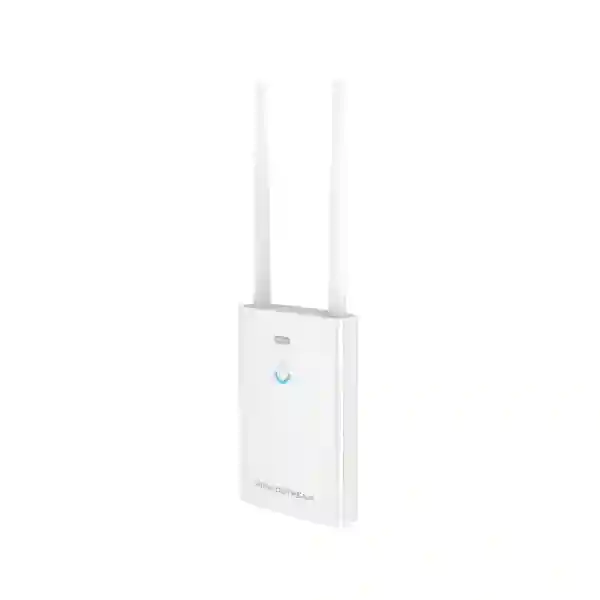
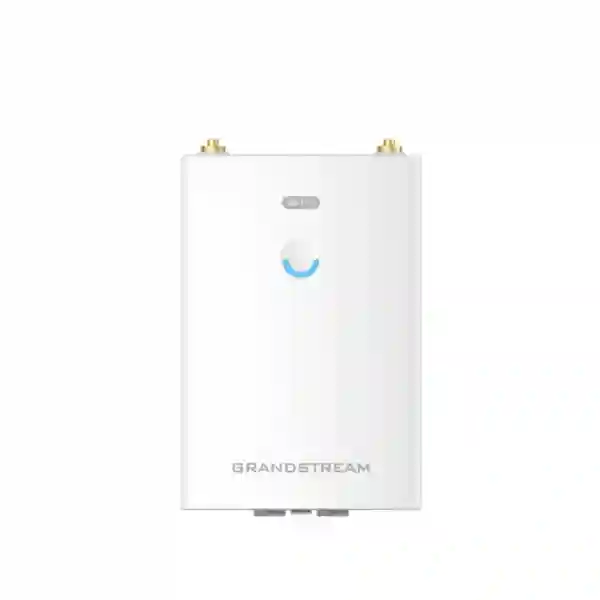
Grandstream GWN7660LR Tanzania
The Grandstream GWN7660LR is a long-range 802.11ax Wi‑Fi 6 access point engineered for organizations that need dependable wireless coverage across outdoor spaces, semi-exposed operational areas and demanding business environments. Grandstream specifies up to 1.77Gbps aggregate wireless throughput, dual-band 2×2:2 MU‑MIMO with DL/UL OFDMA, two autosensing Gigabit Ethernet ports, IEEE 802.3af/802.3at PoE, WPA3, an IP66 weatherproof rating when installed as directed and an advertised coverage range of up to 250 metres subject to environment. For Tanzania buyers, the practical value is not simply a longer range figure: it is the ability to combine weather resistance, Wi‑Fi 6 efficiency, centralized management, segmentation and business-grade deployment options in one access point platform.
Choose the GWN7660LR when the requirement calls for a weatherproof Wi‑Fi 6 access point with long-range coverage, PoE power, enterprise SSIDs/VLANs, centralized management and support for dense client environments. Final quantity and placement should be based on RF conditions, client density, application demand, interference, mounting height and wired backhaul rather than distance alone.
Grandstream-stated aggregate wireless throughput across 2.4GHz and 5GHz radios.
Advertised coverage range; actual coverage varies with environment, obstacles, interference and client capability.
Weatherproof capability when installed vertically according to Grandstream guidance.
Two autosensing 10/100/1000 Base‑T Ethernet interfaces for wired connectivity.
What the Grandstream GWN7660LR solves
Outdoor business Wi‑Fi is difficult because the wireless design must solve several problems at once. The access point has to survive exposure, reach users over useful distances, share airtime efficiently when many devices are active, connect to a reliable wired network, receive adequate power and remain manageable after installation. The GWN7660LR addresses that combination with a weatherproof enclosure, Wi‑Fi 6 radio features, dual Gigabit interfaces, PoE/PoE+ support, flexible antennas and three practical management approaches. An embedded controller can manage a local group of GWN access points, while Grandstream also provides cloud and on-premise management options for larger or distributed deployments.
This makes the model relevant to hotels, lodges, schools, hospitals, warehouses, industrial compounds, parks, multi-building offices, campuses, logistics areas and customer-facing outdoor spaces. The access point also supports mesh networking, captive portals, QoS, multiple SSIDs and VLAN-aware design. Those functions are valuable when employee traffic, guest access, voice devices, operational systems and other wireless endpoints must be kept logically separated even when they share the same physical radio infrastructure.
A long-range access point is not a substitute for RF planning. A client may be able to hear the access point while still lacking enough transmit power to communicate reliably in the opposite direction. Concrete, metal roofs, racks, trees, water, vehicles, nearby WLANs and mounting position can all change performance. For that reason, FourTeck recommends treating the 250-metre figure as a vendor maximum under suitable conditions, not as a universal spacing rule. Buyers can review the broader FourTeck Tanzania integrated technology approach for context on how Wi‑Fi, switching, firewalls, cabling, voice and other systems should be designed together.
Verified GWN7660LR technical highlights
Management, security and network integration
Embedded controller
The GWN7660LR includes an embedded controller architecture. Grandstream states that a local GWN controller can manage up to 50 local GWN APs. This is useful for sites that want centralized configuration without a separate hardware controller, provided the intended topology and current firmware are validated before rollout.
Cloud and on-premise options
Grandstream offers GDMS Networking/GWN cloud management and GWN Manager for organizations that need broader centralized visibility. Cloud management can be attractive for distributed branches, while on-premise management can suit teams that want local control. The management choice should be documented before deployment so provisioning and operational ownership are clear.
Segmentation and QoS
Multiple SSIDs, VLAN support and QoS help separate business roles and prioritize latency-sensitive traffic. For voice-over-Wi‑Fi, collaboration, scanners or other operational endpoints, configuration should be coordinated with the switch and firewall. Browse the FourTeck Tanzania business technology shop for related switching, firewall, telephony and infrastructure planning context.
Installation and outdoor deployment guidance
Outdoor wireless performance depends as much on installation quality as on access-point specifications. The GWN7660LR supports wall or pole mounting, and Grandstream’s installation guidance includes vertical installation for the stated IP66 weatherproof capability. Installers should also consider cable routing, drip loops, grounding, lightning protection, surge protection, mounting rigidity, service accessibility and separation from high-interference sources. Ethernet cable entering an outdoor enclosure can create a path for electrical surges, so protection should be part of the site design rather than added after an incident.
For a new project, identify the target coverage zones, important roaming paths, expected users and client types before choosing mounting points. High mounting can improve line of sight but may also create coverage geometry that is poor for nearby users. Directional placement and antenna orientation matter. For multi-AP deployments, channel reuse and transmit power should be planned so access points complement rather than overpower one another. FourTeck’s Tanzania technology services page explains the wider design, installation, configuration and support context that can accompany product procurement.
Related wireless and network options on FourTeck Tanzania
FortiAP F Series Tanzania
A Wi‑Fi 6 alternative for organizations standardizing on Fortinet wireless and FortiGate-managed security architecture.
FortiAP FAP-231F Tanzania
A specific indoor Fortinet Wi‑Fi 6 model to compare when the project is primarily indoor and requires Fortinet integration.
FortiAP FAP-221K Tanzania
A newer-generation Wi‑Fi 7 option for buyers comparing lifecycle, client compatibility and infrastructure requirements beyond Wi‑Fi 6.
FortiAP FAP-222KL Tanzania
An outdoor Wi‑Fi 7 comparison point where a project requires a newer radio generation and Fortinet ecosystem alignment.
Grandstream GWN7660LR Tanzania
For organizations sourcing the Grandstream GWN7660LR in Tanzania, the main buying question is whether the access point fits the physical site and the operational load, not simply whether its headline range looks sufficient. Tanzania projects can include corporate compounds, schools, warehouses, hotels, lodges, healthcare facilities, logistics yards, campuses and branch networks, each with different wall materials, outdoor exposure, user movement and interference. The GWN7660LR is attractive where a site needs weatherproof Wi‑Fi 6 coverage and wants management flexibility without committing to a separate hardware WLAN controller. Its dual-band Wi‑Fi 6 radios, 2×2:2 architecture, OFDMA, MU‑MIMO and multiple SSIDs support a modern business WLAN, while dual Gigabit interfaces and PoE simplify connection to the wired network.
A Tanzania bill of materials should include more than the access point count. Confirm compatible PoE switching, total PoE budget, outdoor-rated structured cabling where required, surge and lightning protection, mounting hardware, firewall or gateway policy, VLAN design and any UPS protection for the network switch. If the WLAN will carry voice, video meetings, guest access and operational traffic simultaneously, define which applications are business critical and how they will be prioritized. A visible SSID does not prove adequate service; the design should account for usable signal, client return power, airtime contention and backhaul capacity during peak periods.
For organizations with several Tanzania sites, centralized management can reduce repetitive configuration. SSID naming, authentication, VLAN mapping and device naming can be standardized, while channel and transmit-power settings remain site-specific. The GWN7660LR’s embedded controller may be appropriate for a local deployment, while cloud or on-premise management may suit larger estates. Procurement teams should record the chosen management platform, administrator ownership, firmware process, configuration backup method and support handover before deployment.
FourTeck Tanzania can use a requirement brief to help shape a current quotation without implying stock or delivery before confirmation. Include city, site type, floor plans or outdoor map if available, user count, existing network equipment, internet links, current AP locations, problem areas and desired service scope. The FourTeck Tanzania contact and quotation page is the appropriate starting point for model confirmation, current commercial terms and deployment discussion.
Grandstream GWN7660LR Dar es Salaam
Dar es Salaam businesses often combine dense office environments with outdoor courtyards, parking areas, hospitality spaces, warehouses, compounds and customer-facing zones. In these mixed settings, the GWN7660LR can be considered as the outdoor component of a broader WLAN rather than as a single access point expected to cover every indoor and outdoor area. Dense neighboring wireless networks can increase contention, and reinforced concrete, metal roofs, glass and building geometry can sharply change propagation. A design for a commercial building in the city should therefore distinguish between indoor capacity zones and outdoor long-range zones, using the most appropriate AP type in each location.
For a Dar es Salaam office compound, common requirements include employee Wi‑Fi, guest internet, IP phones or Wi‑Fi handsets, collaboration traffic, CCTV administration and operational devices. These groups should not automatically share one unrestricted network. The GWN platform supports multiple SSIDs and VLAN-oriented design, allowing the wireless network to align with firewall rules and switch segmentation. Guest access can be isolated from internal systems, while trusted users and managed devices receive only the resources they need. Where real-time voice or video matters, QoS should be coordinated from the WLAN through the switch and gateway rather than configured only on the access point.
Outdoor installation deserves special attention in coastal conditions. Weatherproof equipment still needs correct mounting, protected cable entry, grounding, surge protection and appropriate installation practice. Salt, moisture and heat can influence connectors and supporting infrastructure over time, so periodic inspection is sensible. PoE switching should have adequate power budget and UPS protection when continuity is important. If APs serve loading zones, yards or parking areas, test coverage when vehicles, containers or other large objects are present because temporary obstructions can change the RF environment.
For a quotation, provide the Dar es Salaam site type, approximate coverage map, mounting options, number of concurrent clients, critical applications, current switches and firewall, required SSIDs and whether installation or RF validation is expected. That information is more useful than a simple request for “one long-range access point” because it allows the access point, PoE, cabling and policy requirements to be evaluated together.
Grandstream GWN7660LR Mwanza
Mwanza organizations evaluating the GWN7660LR may include schools, clinics, hotels, professional offices, warehouses and branch operations where wireless coverage must extend beyond a conventional indoor ceiling-mounted AP. A long-range outdoor AP can help connect users in courtyards, between nearby structures, along exterior work areas or in large open spaces, but the project should be designed around service objectives. A school may prioritize student density and content access, a clinic may prioritize reliable staff mobility, and a warehouse may prioritize handheld devices and operational systems. Each workload changes the acceptable signal level, roaming requirement and capacity target.
The GWN7660LR’s Wi‑Fi 6 OFDMA and MU‑MIMO capabilities are valuable when many compatible endpoints share airtime, yet RF efficiency cannot compensate for poor placement or an overloaded internet connection. Before purchase, map the busiest areas, identify walls and metal structures, record existing interference and estimate how many clients will be active at the same time. If the site already has indoor APs, decide whether the outdoor unit should share the same SSIDs and authentication or use a separate operational WLAN. Roaming-sensitive applications benefit from consistent security settings and planned overlap, but excessive overlap can create sticky-client or interference problems.
Mwanza buyers should also inspect the wired access layer. The AP requires suitable PoE and Gigabit connectivity, so the switch location, uplink capacity, cable distance and protection against surges are part of the design. Outdoor copper runs should be planned carefully, and fiber can be considered where building-to-building distance, lightning exposure or electrical separation makes it appropriate. A UPS-backed PoE switch may be important where brief power interruptions would otherwise disable the entire wireless zone.
For procurement, include existing network diagrams if available, current SSIDs, user groups, expected growth, mounting locations and any branch standard that must be followed. Multi-site organizations can standardize GWN configuration templates and naming conventions across Mwanza and other Tanzania locations while keeping radio channels and power levels specific to each building. This gives administrators consistency without pretending that different sites have identical RF conditions.
Grandstream GWN7660LR Arusha
Arusha has many use cases where outdoor wireless planning is operationally important, including hospitality, travel and tourism businesses, education, professional services, NGOs, compounds and multi-building properties. The GWN7660LR can fit environments that need Wi‑Fi 6 connectivity across gardens, pool areas, courtyards, external meeting areas, service zones or links between nearby occupied spaces. Hospitality projects in particular should plan guest and operational traffic separately. A strong guest signal is useful, but guest devices should not gain unnecessary access to management, back-office, CCTV or point-of-service systems.
Capacity varies greatly by zone. A lodge may have low client density around most of the property but concentrated demand near reception, dining areas or conference spaces. An evenly spaced AP plan can therefore waste capacity in quiet locations while underserving busy ones. The GWN7660LR’s advertised range provides a useful starting reference, but actual deployment should account for terrain, vegetation, structures, room construction and user movement. Where clients roam between indoor and outdoor APs, channel planning and signal overlap should be validated with the client devices that matter most.
Management choice is also relevant to Arusha properties with limited on-site IT staff. Central cloud management can make remote monitoring and configuration easier across several APs or properties, while the embedded controller can simplify a local GWN installation. The final choice should consider who owns day-to-day administration, how firmware is updated, who receives alerts and how configuration changes are recorded. A WLAN that works well on installation day but lacks operational ownership can become difficult to support months later.
For quotation preparation, provide the property type, outdoor map or floor plan, guest capacity, staff device count, busy event areas, existing switches, internet bandwidth, firewall platform and cabling routes. If outdoor access points are part of a larger technology refresh, the project can also be coordinated with structured cabling, PoE switching, guest security and voice requirements. The goal is a complete wireless service, not only a weatherproof access point mounted on a wall.
Grandstream GWN7660LR Dodoma
Dodoma organizations considering the Grandstream GWN7660LR may include administrative offices, educational institutions, campuses, healthcare environments, warehouses, professional organizations and distributed branches. Outdoor Wi‑Fi in these settings is often less about public internet access and more about extending a controlled business network into courtyards, external workspaces, walkways, security posts or adjacent buildings. The GWN7660LR supports the segmentation and management features needed for a structured enterprise WLAN, but the design should begin with user roles and operational requirements rather than only physical coverage.
A practical Dodoma WLAN plan can define separate profiles for corporate users, visitors, voice endpoints and operational or IoT devices. Each profile can map to an SSID and VLAN policy, with access controlled by the firewall. The 32-SSID capability provides flexibility, but creating too many SSIDs can consume airtime through beacon overhead. The objective is not to use every available SSID; it is to create the smallest number that clearly represents the required trust and service groups. Authentication, guest onboarding and password rotation should be decided before deployment so users experience a predictable process from day one.
The physical installation should account for heat, dust exposure, mounting stability, grounding and cable protection. Grandstream specifies an operating range up to 60°C and IP66 weatherproof capability when installed according to guidance, but supporting components must also suit the environment. Outdoor Ethernet and PoE design should not leave indoor-rated connectors exposed. Where wireless service supports critical functions, administrators should document switch ports, cable identifiers, AP names, management credentials, VLANs and firmware versions so troubleshooting is systematic.
A Dodoma quote request is stronger when it includes site drawings, user estimates, critical coverage zones, existing network hardware and growth plans. If the project will expand to more branches, state that early so the management platform and naming standards can scale. The GWN7660LR can then be assessed as part of a repeatable wireless architecture rather than a one-off outdoor device.
Grandstream GWN7660LR UAE
UAE buyers evaluating the GWN7660LR should treat regulatory model selection, environmental exposure and lifecycle planning as part of procurement. Outdoor access points may be deployed around warehouses, hospitality properties, schools, logistics yards, compounds and commercial campuses where heat, solar exposure and dense neighboring WLANs influence performance. The GWN7660LR’s weatherproof enclosure and published operating-temperature range make it relevant to demanding outdoor applications, but installation position, enclosure exposure, cabling and electrical protection still require site-specific assessment.
Wi‑Fi frequency rules and allowed transmit power vary by country, so the exact regional unit and configuration must comply with local regulation. Procurement teams should avoid assuming that equipment sourced for one market can be installed unchanged in another. This is especially important for organizations coordinating UAE and Tanzania sites. Security policy, SSID naming and management processes can be standardized across countries, while radio settings and regulatory domains remain local. A well-managed regional deployment documents model variants, firmware, country settings and configuration ownership for every site.
The UAE often has high-density commercial environments where the limiting factor is not raw signal strength but airtime contention and neighboring networks. Conference spaces, staff accommodations, warehouse handhelds and guest areas should be modeled separately. Wi‑Fi 6 technologies improve scheduling efficiency, but wired uplink, internet capacity and firewall policy must also support the expected workload. For outdoor voice or collaboration use, verify roaming and QoS end to end rather than relying on the AP feature list alone.
Organizations coordinating regional infrastructure can visit FourTeck UAE for UAE technology requirements while using FourTeck Tanzania for Tanzania deployments. A complete request should identify country, site type, quantity estimate, existing switch and firewall infrastructure, required management method and installation scope. Current availability, regional SKU and commercial terms should be confirmed during quotation.
Grandstream GWN7660LR Uganda
Uganda organizations can evaluate the GWN7660LR for outdoor and mixed-environment Wi‑Fi across offices, schools, healthcare sites, warehouses, hospitality properties and multi-building compounds. The device is particularly relevant when a site needs weatherproof Wi‑Fi 6 coverage but wants centralized management without adding a dedicated controller appliance. A branch network can use the same GWN management approach across several locations, helping IT teams maintain consistent SSIDs, security settings and firmware policy while still tuning radio channels and transmit power individually for each building.
Ugandan projects should define whether the main requirement is coverage, capacity or both. A yard with a small number of mobile workers has a different design from a school courtyard with hundreds of active devices during breaks. The GWN7660LR’s published 500+ client figure describes platform capacity under vendor conditions; it should not be interpreted as a guarantee that hundreds of clients will all receive the same application performance through one radio cell. Application mix, client capabilities, airtime usage and upstream internet bandwidth matter. High-density areas may need more APs operating at controlled power rather than one AP attempting maximum range.
Outdoor cabling and power should be planned as carefully as wireless. Confirm PoE capability, switch power budget, cable distance, earthing, surge protection and any requirement for fiber between buildings. If the project covers remote branches, administrators should decide how access points are monitored when local technical staff are not available. Cloud management can simplify visibility, but alerting, escalation and configuration ownership should still be defined.
For Uganda-focused coordination, visit FourTeck Uganda. Provide the exact city, building type, current network, expected clients, internet services and deployment scope. This supports a more accurate bill of materials than requesting only an AP unit price and discovering later that switching, cabling or protection components were omitted.
Grandstream GWN7660LR Kampala
Kampala offices, education environments, hospitality sites and commercial compounds can have a challenging wireless mix: many neighboring networks, dense user populations, multi-floor buildings and busy outdoor spaces. The GWN7660LR can extend business Wi‑Fi into courtyards, parking areas, outdoor seating, service zones or connecting paths, while indoor GWN access points serve office interiors. Using specialized indoor and outdoor models usually creates a more predictable design than trying to cover an entire property from a single long-range outdoor unit.
A Kampala WLAN should be designed around peak demand. A conference room, training area or guest event may create a short period with far more active devices than the daily average. If the AP count is based only on total floor area, these demand spikes can be overlooked. Wi‑Fi 6 OFDMA helps schedule transmissions efficiently among compatible clients, but radio time remains finite. Application requirements such as voice, video, cloud systems and large file transfers should be documented so the design can prioritize critical traffic and distribute clients across appropriate cells.
Security is equally important. A business may need employee, guest, contractor and device networks with different policies. VLANs and firewall rules should enforce those distinctions, and guest access should not provide accidental routes into internal resources. Central management makes it easier to push consistent SSID profiles, but configuration changes should be controlled to avoid affecting all sites at once. Backup, staged firmware upgrades and a basic change log are useful operational disciplines.
Kampala quotations should identify whether outdoor coverage is an extension of an existing WLAN or a new deployment. Include existing AP brand and model, switch and PoE capability, firewall, current VLANs, authentication method, floor plans and problem zones. If the site is part of a regional rollout, specify the desired standard so configuration can be aligned with Tanzania or other branch offices without copying unsuitable RF settings from another country.
Grandstream GWN7660LR Arua
Arua businesses, NGOs, education facilities, clinics and branch offices can benefit from an outdoor wireless design that is simple to operate remotely. The GWN7660LR is relevant when a site requires weatherproof Wi‑Fi 6 and centralized management, particularly where technical support may be coordinated from another city. A successful remote-site deployment should minimize hidden dependencies. AP naming, switch ports, VLAN IDs, IP addressing, SSID profiles and administrator ownership should be documented so troubleshooting does not depend on one person remembering how the system was configured.
Coverage planning in Arua still needs a local view. Walls, roof materials, trees, terrain and open areas can change propagation significantly. If the wireless service supports a clinic workflow, school administration or operational devices, define the minimum usable coverage area rather than aiming for the widest possible signal. Long-range design should balance transmit power with client capability because phones and handhelds usually transmit at lower power than enterprise access points. A two-way link budget is therefore more meaningful than access-point range alone.
Power resilience can also matter. If a remote branch loses power, PoE access points go offline with the switch. UPS protection for the network rack can keep the WLAN available through short interruptions and provide safer shutdown during longer events. Surge protection, grounding and outdoor cable routing should be included in the installation scope. Where the AP is mounted on a pole or exposed structure, lightning protection and safe service access become essential planning items.
For a quotation, provide the Arua site type, expected users, coverage zones, internet connection, power conditions, existing switch and firewall, and whether remote management is preferred. If an organization operates branches in Kampala, Tanzania or elsewhere, identify the common configuration standards that should be repeated. This allows the GWN7660LR to become part of a maintainable branch template while retaining site-specific channel and placement decisions.
Grandstream GWN7660LR Mbarara
Mbarara organizations planning Wi‑Fi upgrades may be replacing consumer access points, extending coverage outdoors or standardizing several locations onto one manageable platform. The GWN7660LR can support that transition by combining Wi‑Fi 6, weather protection, PoE and centralized management. The migration should begin with an inventory of existing SSIDs, authentication, VLANs, known dead zones and user complaints. These observations help distinguish wireless coverage problems from internet congestion, overloaded switching or poorly configured security policy.
A replacement project should avoid automatically mounting the new AP where the old one was installed. Previous locations may have been chosen because cabling was easy, not because RF conditions were ideal. The GWN7660LR’s external antennas and long-range design allow different deployment possibilities, but placement should consider the users the AP must serve. Outdoor seating, warehouse yards, school grounds and inter-building paths can have different traffic patterns. A short validation survey after installation can reveal whether power, channels or mounting need adjustment.
Mbarara procurement teams should also check compatibility with existing PoE switches. An available PoE port is not enough if the total power budget is already heavily used by cameras, phones or other APs. Document the switch model, spare power capacity, uplink speed and VLAN support. If the switch is unmanaged, the project may need a managed replacement to achieve proper segmentation and centralized troubleshooting. The firewall should be reviewed at the same time to ensure guest isolation and any inter-VLAN access rules are intentional.
For multi-site organizations, GWN cloud or on-premise management can give IT teams a common view across Mbarara, Kampala and other branches. Standardize firmware cadence, SSID names, authentication and device naming, but do not blindly replicate radio channels. The RF environment is local. A complete quote request should therefore include both the corporate standard and the specific Mbarara site conditions.
Grandstream GWN7660LR Gulu
Gulu businesses, NGOs, schools, healthcare environments and branches can evaluate the GWN7660LR where outdoor or semi-outdoor business Wi‑Fi must be centrally manageable and resilient. Distributed organizations often want the same wireless experience across sites, but the best way to achieve consistency is through standards rather than identical hardware placement. Define common SSID names, authentication methods, VLAN purposes, firmware policy and documentation. Then let each Gulu building receive its own RF design based on walls, outdoor spaces, client density and interference.
Operational applications should influence coverage targets. Voice-over-Wi‑Fi and video collaboration are less tolerant of packet loss, latency and roaming gaps than basic browsing. Handheld scanners or field tablets may have different antenna performance from laptops. If those devices are important, include them in testing. The GWN7660LR supports advanced QoS and is positioned by Grandstream for low-latency applications, but QoS must be coordinated across the complete path. A congested WAN or misconfigured switch can still create poor application experience even when the radio link is strong.
Outdoor reliability should include physical protection. Pole and wall mounts need to remain secure through weather, cables should be protected from water and accidental damage, and grounding/surge protection should be considered. The AP’s IP66 rating applies to the unit when installed correctly; connectors, cable joints and network equipment elsewhere in the path still need suitable protection. Maintenance plans can include inspection of mounts, cables and antenna connections together with firmware and configuration review.
For Gulu procurement, provide the location type, user count, applications, desired outdoor zones, existing APs and network topology. If centralized management will be handled by a regional IT team, specify how the site reaches the management platform and who has administrative access. This produces a supportable deployment rather than a one-time installation with unclear operational ownership.
Grandstream GWN7660LR Kenya
Kenyan organizations can consider the GWN7660LR for hospitality properties, schools, warehouses, offices, compounds and other sites requiring long-range outdoor Wi‑Fi 6. In cities with dense commercial WLAN activity, interference can reduce the practical advantage of maximum transmit power, so careful channel planning is important. In less congested sites, terrain, vegetation and building materials may be the dominant factors. Either way, range should be validated against the client devices and applications that matter instead of assuming the vendor maximum will apply uniformly.
Companies operating across Kenya and Tanzania may benefit from a shared Grandstream management framework. Common SSIDs, authentication, VLAN naming and security policy can reduce administrative variation, while local radio settings, regulatory configuration and AP quantities remain specific to each country and building. This approach is especially useful for businesses with branch offices that want staff devices to connect predictably at different locations. It also simplifies documentation and support because administrators can recognize the same naming conventions across sites.
Kenya projects should include the wired layer in the budget. Wi‑Fi 6 performance depends on reliable Gigabit Ethernet, enough PoE capacity, suitable uplinks and a firewall that can handle the intended internet and security load. Outdoor APs also require safe cable routes, weather protection and surge mitigation. Where buildings are separated, fiber may be preferable to long copper runs because it can provide electrical isolation and higher distance tolerance, though the final design depends on the site.
For Kenya regional coordination, visit FourTeck Kenya. A useful quotation request should state city, building type, coverage zones, expected concurrent clients, existing network, management preference and installation requirements. Current regional availability and model details should be confirmed at quotation time rather than inferred from listings in another market.
Grandstream GWN7660LR Kuwait
Kuwait deployments of the GWN7660LR may include warehouses, hospitality sites, education facilities, compounds and commercial outdoor areas where high heat, solar exposure and dust make installation planning important. The access point’s published environmental specification and IP66 protection make it a candidate for outdoor work, but equipment should be positioned to minimize unnecessary heat load where possible and installed with appropriate weatherproof cabling, connectors, grounding and surge protection. Outdoor equipment is part of a system, and the weakest unprotected component can undermine overall reliability.
Country-specific frequency rules should be verified during procurement and configuration. A unit intended for a different regulatory region should not be assumed suitable. This matters for multinational organizations buying equipment centrally. A regional architecture can standardize logical policy while local teams confirm the correct model, channels and transmit power. Documentation should identify country settings and hardware variants so future replacement units are ordered correctly.
Kuwait businesses should also evaluate lifecycle requirements. Wi‑Fi 6 remains widely used, but projects with a long replacement cycle may compare Wi‑Fi 6E or Wi‑Fi 7 alternatives where client devices, spectrum and infrastructure justify them. The GWN7660LR remains compelling when long-range outdoor Wi‑Fi 6, dual Gigabit Ethernet, PoE and GWN management match the requirement. The decision should be based on application need, client fleet, budget and expected network lifetime rather than choosing the newest standard automatically.
For Kuwait project coordination, visit FourTeck Kuwait. Include expected client count, outdoor area, mounting conditions, switch and firewall details, required SSIDs and any cross-border standard that must align with Tanzania or UAE sites. This allows technical and commercial scope to be clarified together.
Grandstream GWN7660LR Ghana
Ghanaian offices, schools, hospitality sites, clinics, warehouses and compounds can evaluate the GWN7660LR where enterprise Wi‑Fi needs to extend outdoors or across large open spaces. The access point combines long-range design with Wi‑Fi 6 efficiency and management choices that can suit both standalone locations and multi-site estates. A successful design should define coverage, capacity, security and operations separately. Coverage asks where users need service; capacity asks how many active devices and applications share each cell; security defines who may access what; operations defines how the network will be monitored and maintained.
Outdoor hospitality and education environments often have uneven demand. A reception area, event space or classroom cluster may need far more capacity than surrounding walkways. Placing one AP for maximum range can produce a strong signal while leaving too much airtime contention in busy zones. Multiple APs at sensible power, planned channels and wired backhaul may provide better service. Conversely, low-density compounds may benefit from the GWN7660LR’s extended reach when client numbers are modest and line-of-sight conditions are favorable.
Ghana projects should include switch PoE budget, outdoor cable protection and firewall segmentation in the bill of materials. Employee and guest networks should remain logically separated, and operational devices can receive restricted access rather than joining the same unrestricted WLAN. Cloud management can simplify administration across branches, but administrator accounts, role permissions and change processes should be controlled so a configuration mistake does not affect every site.
For Ghana-specific technology coordination, visit FourTeck Ghana. Procurement requests should identify city, site count, building type, client density, current network equipment, required management platform and service scope. The final quotation should confirm exact model, regional configuration and current availability rather than relying on international marketplace listings.
Grandstream GWN7660LR Nigeria
Nigeria deployments can range from compact offices to large campuses, schools, warehouses, hospitality properties and multi-site corporate estates. The GWN7660LR can be useful where outdoor Wi‑Fi 6 needs centralized management and weather protection, but the scale of Nigerian sites makes capacity planning particularly important. A large property should be divided into service zones with estimates for concurrent users, applications and roaming requirements. This avoids the common mistake of selecting AP count from maximum coverage distance without considering how much traffic each area must carry.
For high-density environments, Wi‑Fi 6 OFDMA and MU‑MIMO improve efficiency, yet the wired network must keep up. Verify switch uplinks, PoE, VLANs and internet capacity. If many users consume cloud applications or video, the WAN may become the limiting factor before the wireless radio does. If the WLAN carries voice, confirm end-to-end QoS and roaming behavior. If guest access is offered, isolate it from corporate and operational networks through firewall policy rather than depending only on different Wi‑Fi passwords.
Multi-site Nigerian businesses may value GWN cloud or on-premise management for standard templates, monitoring and firmware. A phased deployment can reduce risk: install a representative area, validate performance and user experience, refine channels and power, then extend the configuration to similar zones. This is especially useful when replacing an older vendor because existing AP locations and authentication systems may not map directly to the new platform.
For Nigeria regional coordination, visit FourTeck Nigeria. Provide site maps, quantity estimates, current switch/firewall inventory, critical applications and preferred service scope. This helps procurement distinguish hardware cost from the supporting cabling, PoE, management and deployment work required to produce a dependable WLAN.
Grandstream GWN7660LR Seychelles
Seychelles businesses, especially hospitality properties and distributed professional environments, can have a strong need for outdoor wireless around guest areas, paths, pools, reception zones and service facilities. The GWN7660LR’s IP66 weatherproof design and long-range positioning make it relevant, but island conditions increase the importance of corrosion awareness, weatherproof installation and complete procurement. A missing surge protector, outdoor cable, mount or PoE component can create disproportionate delay when replacement logistics are more complex than in a major mainland city.
Hospitality WLAN design should balance guest convenience with operational security. Guest networks may need captive portal functionality and internet-only access, while staff devices, point-of-service systems and property-management equipment require different permissions. The GWN platform supports multiple SSIDs and centralized management, but those tools should be used with a clear segmentation plan. Creating many SSIDs without purpose can increase overhead and administrative complexity. A smaller set of well-defined networks is usually easier to operate.
Roaming is especially important on properties where guests and staff move between indoor and outdoor spaces. Outdoor AP placement should complement indoor cells, with sensible overlap and channel planning. The 250-metre vendor coverage figure should not become an assumption that one AP can serve an entire resort. Structures, terrain, vegetation and client transmit power alter effective coverage. Surveying representative guest devices and operational handhelds provides more useful evidence than testing only with a high-performance laptop.
A Seychelles quotation request should include a property map, building materials, guest and staff counts, busy common areas, current network equipment, management preference and all required installation accessories. Confirm regional model, freight scope and commercial availability during quotation. A complete bill of materials and deployment plan reduces the risk of discovering an overlooked component after equipment arrives on site.
Buying and sizing guide
Mark where usable Wi‑Fi is actually required rather than attempting to blanket every outdoor square metre.
Use concurrent active devices in busy zones, not the total number of users registered to the organization.
Voice, video, scanners, cloud apps and guest browsing have different latency and throughput expectations.
Confirm Gigabit switching, PoE budget, VLAN capability, uplinks, firewall capacity and internet bandwidth.
Include mounting, outdoor cabling, grounding, surge protection and safe maintenance access.
Decide between embedded local control, cloud management or on-premise management before provisioning begins.
Frequently asked questions
Is the GWN7660LR an outdoor Wi‑Fi 6 access point?
Yes. Grandstream positions the GWN7660LR as a long-range 802.11ax Wi‑Fi 6 access point for indoor and outdoor environments. Its enclosure is rated IP66 for weatherproof capability when installed according to the manufacturer’s guidance.
How far can the GWN7660LR reach?
Grandstream publishes a coverage range of up to 250 metres. Actual range varies with line of sight, obstacles, interference, antenna orientation, client-device transmit power and regulatory transmit limits. Use the figure as a maximum reference rather than a guaranteed radius.
Does the GWN7660LR support PoE?
Yes. Grandstream specifies IEEE 802.3af and 802.3at PoE/PoE+ support. Confirm the chosen switch has a suitable per-port standard and sufficient total PoE budget for all powered devices.
How many clients does the GWN7660LR support?
Grandstream’s current product page and datasheet state support for 500+ concurrent Wi‑Fi client devices, while some older comparison and installation materials show lower figures. This page follows the current vendor technical material. In practice, application performance depends on airtime, signal quality, client mix and upstream capacity, so client-count planning should be conservative.
Can the GWN7660LR be centrally managed?
Yes. Grandstream provides an embedded controller for local GWN access points and also supports cloud and on-premise management platforms. The best option depends on site count, administrator workflow and whether the organization prefers hosted or local management.
Does the GWN7660LR support WPA3?
Yes. Grandstream lists WPA3 among the supported wireless security options. The final authentication design should be matched to the client fleet, identity system and security policy.
Can I use one GWN7660LR for an entire hotel or campus?
That should not be assumed. A large property normally needs multiple cells designed around user density, building construction, roaming and applications. Long range does not remove airtime limits or obstacles. Use a site survey or predictive design for important deployments.
What should I send for a GWN7660LR quotation?
Provide country and city, site type, floor plan or outdoor map, expected users, critical applications, existing switches and firewall, PoE availability, internet bandwidth, desired management method, number of sites and whether installation, configuration or RF validation is required.
Quotation checklist
To prepare a useful GWN7660LR proposal, send enough information to distinguish a hardware request from a complete wireless project. The following details reduce assumptions and help identify supporting equipment before installation.
Decision recap
The Grandstream GWN7660LR is a strong fit when a business needs a weatherproof, long-range Wi‑Fi 6 access point with dual-band 2×2:2 MU‑MIMO/OFDMA, dual Gigabit Ethernet, PoE, multiple SSIDs, WPA3 and centralized management choices. Its most useful applications are not defined by distance alone; they are environments where outdoor wireless must be integrated with switching, VLANs, firewall policy, power and operational management.
Compare it against indoor or newer-generation alternatives when the project is primarily indoor, requires higher radio capacity, needs Wi‑Fi 6E/7 features or belongs to another vendor ecosystem. FourTeck Tanzania’s company and solution overview explains the integrated approach to networking and related IT infrastructure.
Regional consultation and connected FourTeck network
Organizations coordinating GWN7660LR or related WLAN projects across several markets can use the broader FourTeck network for regional technology discussions. Alongside Tanzania, relevant country resources include FourTeck UAE, FourTeck Kenya, FourTeck Uganda, FourTeck Ghana, FourTeck Nigeria and FourTeck Kuwait. These regional links are useful when procurement teams want a consistent architecture while still confirming country-specific radio regulations, model variants, commercial terms and site conditions.
For Tanzania, send the intended location, coverage objective, current network information and deployment scope through the verified contact page. FourTeck can then discuss product selection, supporting PoE and switching, segmentation, management and installation requirements as one solution. No stock, delivery time, warranty term or regional authorization should be assumed until it is confirmed in the current quotation.




Reviews
There are no reviews yet.