
Cisco Meraki CW9162I-MR Tanzania
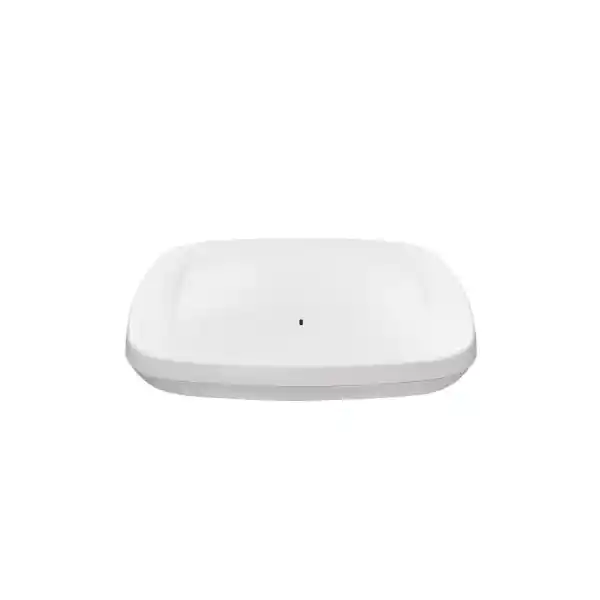
Cisco Meraki CW9162I-MR is the Meraki-managed Cisco Catalyst 9162I Wi-Fi 6E access point, designed for organizations that want modern tri-band wireless and centralized cloud operations in a compact indoor platform. It combines 2.4 GHz, 5 GHz and 6 GHz radios, 2×2:2 MIMO on all three bands, a 2.5G multigigabit Ethernet uplink, integrated antennas and Meraki Dashboard management. For Tanzania buyers, the strongest purchasing process is not to judge the device only by headline wireless speed; it is to verify client mix, building layout, PoE capability, wired uplinks, licensing, local regulatory-domain approval and the wider switching and security architecture before ordering.
Direct answer: CW9162I-MR is a Wi-Fi 6E indoor AP with Meraki cloud management and a 2.5G uplink, aimed at general-purpose smaller-site deployments.
A Meraki license is required for the Meraki management mode, and 6 GHz availability must be confirmed for the intended country and regulatory domain.
What is Cisco Meraki CW9162I-MR?
The CW9162I-MR is the Cisco Catalyst 9162 Series access point supplied for Meraki management. Cisco positions the 9162 platform as a general-purpose Wi-Fi 6E access point for smaller site deployments. It is an indoor unit with integrated omnidirectional antennas, concurrent support for the 2.4 GHz, 5 GHz and 6 GHz bands, and 2×2 radio architecture across all three bands. For organizations moving from Wi-Fi 5 or early Wi-Fi 6, the 6 GHz radio creates a path to use cleaner spectrum with compatible Wi-Fi 6E clients, while 2.4 GHz and 5 GHz remain available for legacy and mainstream devices.
Its operational value is closely tied to Meraki cloud management. The Meraki Dashboard provides a central interface for configuration, monitoring and troubleshooting, which can be particularly useful for businesses running several branches or sites without a network engineer physically present at each location. Central administration does not eliminate the need for wireless design: access-point placement, channel planning, PoE budgeting, VLAN design, client capability, authentication and internet capacity still determine real user experience.
The model should therefore be evaluated as part of a network rather than as an isolated radio. A 2.5G uplink is valuable only when the switch, cabling and upstream network can support the required speed. PoE selection matters because lower-power operation can restrict radio capability. Meraki licensing must be included in lifecycle cost. Finally, Cisco states that regulatory approval and 6 GHz operation vary by country, so procurement should confirm the correct regulatory domain for the exact deployment country before shipment or activation.
Tri-band Wi-Fi 6E
Concurrent 2.4 GHz, 5 GHz and 6 GHz operation helps support mixed client estates while creating additional spectrum options for compatible Wi-Fi 6E devices.
2×2:2 radios
The CW9162 uses 2×2:2 MIMO on all three bands, making it a practical general-purpose model rather than a high-density 4×4 platform.
2.5G mGig uplink
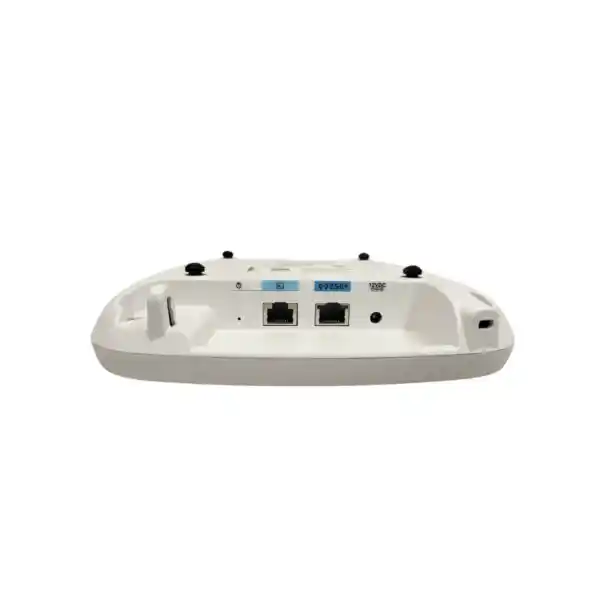
One 100M/1G/2.5G multigigabit RJ-45 interface supports higher wired backhaul capacity when paired with suitable switching and cabling.
Cloud operations
The -MR variant is built around Meraki Dashboard management, with licensing forming an essential part of procurement and lifecycle planning.
Cisco Meraki CW9162I-MR verified specifications
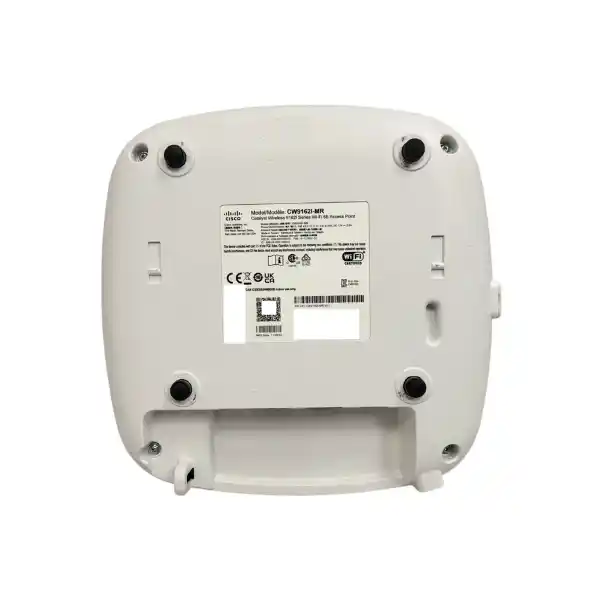
| Product | Cisco Catalyst 9162 Series, CW9162I-MR, Meraki-managed version |
| Wireless generation | Wi-Fi 6 / Wi-Fi 6E, IEEE 802.11ax with legacy 802.11a/b/g/n/ac interoperability |
| Radio bands | 2.4 GHz, 5 GHz and 6 GHz, subject to country-specific regulatory support |
| MIMO | 2×2 with two spatial streams per band; 802.11ax features include OFDMA, MU-MIMO, Target Wake Time and BSS coloring |
| Aggregate PHY rate | Up to 3.9 Gbps aggregate PHY data rate under supported channel and client conditions |
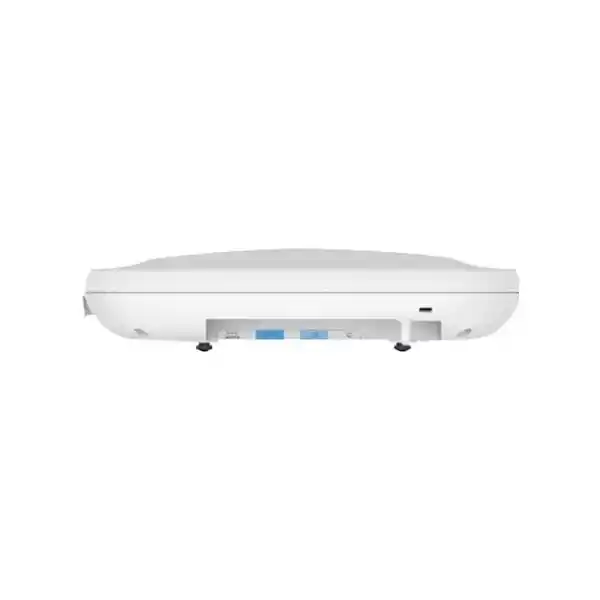
| Ethernet | 1× 100M/1000M/2.5G multigigabit RJ-45 |
| Antennas | Integrated internal omnidirectional antennas |
| Power | 802.3at PoE+, 802.3bt/UPOE or supported DC power; 802.3af operation imposes reduced radio capability |
| Dimensions | Approximately 200 × 200 × 44.45 mm without mounting brackets |
| Weight | Approximately 0.93 kg |
| Management | Meraki Dashboard for the -MR deployment mode; licensing required |
These figures describe the platform, not a performance guarantee for a specific building. Real throughput depends on spectrum conditions, client capabilities, channel width, distance, interference, wired backhaul, network policies and internet capacity. For 6 GHz specifically, verify country authorization before planning coverage around that band.
Deployment, PoE, switching and licensing guidance
A successful CW9162I-MR deployment begins with the wired network. Each access point should have a suitable Ethernet run back to a managed switch with enough PoE capacity. Although the AP can negotiate lower-power operation, Cisco documents reduced radio operation on 802.3af. For full radio capability, plan for the supported higher-power PoE options and check total switch PoE budget, not merely whether a port carries a PoE label. If several access points share the same switch, add their maximum expected power requirements and allow room for other powered devices such as phones and cameras.
The 2.5G uplink creates another design checkpoint. A business upgrading from older 1G access switches should determine whether multigigabit ports are available and whether the installed copper cabling is suitable. If the switching layer remains at 1G, the access point can still be useful, but the wired backhaul may constrain aggregate wireless traffic. Where several access points connect to one switch, uplinks from that switch to distribution or core infrastructure should also be reviewed so that a higher-capacity wireless edge does not feed a congested upstream link.
Licensing is part of the Meraki operating model. Procurement teams should request the hardware and the appropriate Meraki license term together, confirm the organization that will own the Dashboard network, and define who will hold administrator permissions. This avoids situations where hardware is delivered but cannot be operated as intended because licensing, claiming or organization ownership was not planned. Renewal responsibility should also be documented as part of the asset lifecycle.
For wider architecture planning, review FourTeck Tanzania’s technology services and network planning, where switching, wireless, security, cabling and lifecycle dependencies are considered together. The Tanzania business technology shop is also useful for framing adjacent hardware requirements before quotation.
Where the CW9162I-MR fits best
Branch and office Wi-Fi
General office floors, smaller branches, meeting areas and professional workspaces can benefit from the 9162 when client density and performance requirements fit a 2×2 platform. A site survey or at least a structured floor-plan review is recommended before deciding quantity and placement.
Cloud-managed multi-site networks
Organizations with several locations can standardize SSIDs, security policies, VLAN mapping and monitoring through Meraki Dashboard. The operational advantage is strongest when configuration standards, administrator roles and licensing are centrally governed.
Wi-Fi 6E client adoption
Sites introducing newer laptops and mobile devices can prepare for 6 GHz connectivity while retaining 2.4 GHz and 5 GHz support. Country approval and the client device’s own 6 GHz support must be verified before expecting the band to be usable.
Related Cisco Meraki solutions on FourTeck Tanzania
Wireless performance and security depend on the rest of the network, so buyers often evaluate Meraki access points alongside WAN security, SD-WAN and branch connectivity. These verified Tanzania FourTeck pages provide useful adjacent context:
Cloud-managed security and SD-WAN for branch and campus edge design.Cisco Meraki MX67 Tanzania
Compact branch security appliance context for smaller Meraki networks.Cisco Meraki MX67C Tanzania
Branch security with integrated cellular capabilities for resilience planning.Cisco Meraki MX67W Tanzania
Wireless security appliance option for small branch scenarios.Cisco Meraki MX68 Tanzania
A branch security platform to consider when designing an end-to-end Meraki stack.Cisco Meraki MX68CW Tanzania
Integrated wireless and cellular branch option for specific distributed-site needs.Cisco Meraki MX68W Tanzania
Another Meraki edge option for coordinated security, routing and branch planning.
Regional procurement and deployment guidance
Cisco Meraki CW9162I-MR Tanzania
Organizations evaluating Cisco Meraki CW9162I-MR in Tanzania should begin with a practical wireless requirement rather than a device count. The 9162 is a general-purpose Wi-Fi 6E access point, but the right quantity depends on floor layout, wall construction, user density, application traffic and the client devices in use. An office with light email and web traffic can have a very different capacity profile from a training center, hotel common area, call operation or collaboration-heavy workplace. Procurement should therefore document the number of users, the number of concurrently connected devices, the applications that matter, guest-network requirements, security policies and any areas where stable roaming is important.
Tanzania projects should also verify country-specific regulatory approval. Cisco explicitly notes that regulatory domains and 6 GHz availability differ by market. Buyers should not assume that a 6 GHz radio shown on an international datasheet can automatically be enabled in every country. The exact regulatory domain, software support and current local authorization should be checked before the design depends on 6 GHz. This is especially important when equipment is sourced through regional procurement channels or moved between countries.
On the wired side, each CW9162I-MR needs suitable Ethernet and power. For full capability, the PoE environment should be assessed against Cisco’s supported higher-power modes; relying on 802.3af can result in restricted radio operation. Managed switches should also be checked for 2.5G multigigabit ports if the goal is to take full advantage of the AP’s uplink. For a broader network review, FourTeck Tanzania can align wireless design with switching, VLANs, firewall policy, structured cabling, UPS protection and internet capacity. A quotation request should include site plans where possible, AP quantity estimates, existing switch models, PoE budget, cable category, required license term, existing Meraki organization details and the cities or sites involved. This produces a more useful proposal than requesting hardware only.
Cisco Meraki CW9162I-MR Dar es Salaam
Dar es Salaam deployments often combine corporate offices, customer-facing environments, warehouses, professional-service spaces, hospitality facilities and multi-floor commercial buildings. For the CW9162I-MR, the central design question is whether a general-purpose 2×2 Wi-Fi 6E access point provides sufficient capacity for each zone. Open office areas may require fewer APs than dense meeting suites, training rooms or areas where many users join video calls at the same time. Concrete walls, lifts, service cores, metal partitions and neighboring wireless networks can influence RF behavior, so placement should be based on the real building rather than a simple equal-distance grid.
A Dar es Salaam head office may also act as the IT hub for branches elsewhere in Tanzania. In that case, Meraki Dashboard management can give a central team visibility across several wireless networks, but configuration standards should be prepared before rollout. SSID naming, VLAN assignment, authentication, guest access, administrator roles, alerting and firmware policy should be consistent where business requirements are similar. Local exceptions should be documented rather than improvised.
The access layer should be reviewed alongside the AP. Confirm whether existing switches provide 802.3at PoE+ or better, whether their total PoE budget is sufficient and whether multigigabit access ports are available. If a floor has multiple Wi-Fi 6E APs but only a congested 1G uplink back to the core, the network can still bottleneck. Internet service and firewall throughput must also match expected cloud, video and SaaS traffic. Before requesting a Dar es Salaam quotation, buyers should provide the building type, floor count, approximate area, user density, existing switch and firewall models, desired guest-network model, licensing preference and any requirement to integrate the APs with a wider Meraki security stack.
Cisco Meraki CW9162I-MR Mwanza
For Mwanza businesses, the CW9162I-MR can suit branch offices, education spaces, professional workplaces, retail administration, hospitality operations and other indoor environments that need centrally manageable Wi-Fi. Branch sites often benefit from cloud administration because configuration and troubleshooting can be handled by a central IT team, reducing dependence on specialist staff at every location. That advantage is strongest when the branch network is documented: access points should have clear names, switch ports should be mapped, VLANs should be standardized and local internet handoffs should be recorded.
Wireless planning should separate coverage from capacity. A signal can appear strong while users still experience poor performance if too many devices compete for the same radio resources. Meeting rooms, reception areas and staff workspaces may have very different concurrent-device counts. The 2.4 GHz band is often important for older or IoT devices, 5 GHz remains a primary band for mainstream clients, and 6 GHz can add cleaner spectrum for Wi-Fi 6E devices where locally permitted. Because client support varies, the design should not move all capacity assumptions to 6 GHz until the device mix is understood.
Mwanza procurement should also consider WAN resilience and power conditions as part of the user experience. Cloud-managed Wi-Fi still depends on reliable switching, gateway services and internet access for normal business operations. UPS-backed network racks can help maintain core connectivity through short power interruptions when sized appropriately. If the Mwanza site connects securely to another office, coordinate the wireless VLAN design with the firewall and VPN architecture. When asking for a quotation, include expected user count, number of rooms or floors, critical applications, current PoE switches, cabling, internet speeds and the Meraki license term. This allows the hardware quantity and supporting infrastructure to be evaluated together.
Cisco Meraki CW9162I-MR Arusha
Arusha has business environments where Wi-Fi performance can be shaped by a mixture of staff, guests, mobile devices and operational systems. Hospitality, tourism-related operations, offices, training centers and professional facilities may all require separate wireless experiences for employees and visitors. The CW9162I-MR supports modern Wi-Fi 6E capabilities, but effective design depends on how these user groups are separated and prioritized. A guest SSID should normally be isolated from internal business resources, while staff authentication and VLAN access should reflect the organization’s security policy.
Hospitality and customer-facing locations should pay particular attention to capacity variation. Occupancy can change sharply throughout the day, and guest traffic can include high-bandwidth video that competes with reservation systems, cloud applications, VoIP or operational services. Access-point placement, channel planning and internet bandwidth must therefore be assessed together. If an area is expected to host a large number of concurrent users, a higher-capacity access point model may be more appropriate than simply increasing transmit power or placing one CW9162I-MR in the center of the room.
For Arusha projects, buyers should also verify the country’s current 6 GHz regulatory position and the exact Cisco regulatory domain. This is a compliance and planning issue, not just a feature checkbox. Wired infrastructure matters equally: each AP should have a suitable Ethernet run, correct PoE class and enough upstream bandwidth. If the site uses Meraki security appliances, the wireless network can be coordinated with branch firewall, SD-WAN and segmentation policies. A useful quotation request lists room types, user density, guest requirements, floor plans, existing network hardware, intended authentication method, license duration and any areas requiring seamless roaming. That information helps avoid under-sizing or unnecessary overdeployment.
Cisco Meraki CW9162I-MR Dodoma
Dodoma organizations, institutions and distributed-office environments may value the CW9162I-MR for centrally managed indoor wireless, especially when IT administration is coordinated from another location or across several sites. The Meraki Dashboard can simplify monitoring and policy management, but the benefit depends on disciplined configuration. Administrators should define standard SSIDs, security settings, VLANs, naming conventions and administrator permissions so a new site can be added without creating inconsistent local practices.
In office and institutional environments, user density often changes by room. Corridors and private offices may be coverage-led, while meeting rooms, training halls and event spaces can be capacity-led. The CW9162I-MR’s 2×2 architecture is well suited to general-purpose use, but high-density areas should be validated carefully. Device types also matter: older laptops may remain on 5 GHz, IoT equipment may depend on 2.4 GHz, and Wi-Fi 6E-capable devices can use 6 GHz only where the band is approved and enabled. A good design balances all three bands instead of assuming every user will connect to the newest one.
The wired edge should be part of the same procurement conversation. Confirm switch port speed, total PoE budget, VLAN support and uplink capacity. If wireless traffic needs to pass through a central firewall or VPN, ensure that those devices are also sized for peak demand. Power protection can be particularly relevant for sites where business continuity matters, because an access point is only useful while the switch, gateway and upstream internet path remain available. For a Dodoma quotation, include the number of proposed APs, building layout, existing switches, internet service, security architecture, Meraki organization ownership and required license term. That allows the proposal to include dependencies rather than treating the AP as a standalone purchase.
Cisco Meraki CW9162I-MR UAE
Organizations operating in both Tanzania and the UAE can use CW9162I-MR as part of a standardized Meraki wireless architecture, but regulatory approval must be checked independently for each country. Hardware and radio rules are market specific, so a device sourced in one region should not automatically be assumed suitable for deployment in another. Procurement teams should verify the correct Cisco regulatory domain and 6 GHz authorization for the UAE project and maintain clear asset records for each site.
UAE offices can have high-speed internet connections and dense device populations, which makes wired backhaul and capacity planning important. The AP’s 2.5G uplink is most useful when the access switch provides multigigabit ports and adequate PoE. In larger offices, several APs can create substantial aggregate traffic, so switch uplinks, firewall throughput and internet capacity should be considered together. For meeting-heavy environments, application traffic such as Microsoft Teams, Zoom, cloud productivity and voice should influence access-point placement and QoS policy.
Meraki Dashboard can help regional IT teams apply common standards across Tanzania and UAE locations. Consistent SSIDs, user authentication, VLAN numbering, guest policies and alerting reduce operational variation, while local settings can be adjusted for regulatory and building-specific needs. Regional buyers can also review FourTeck UAE technology solutions for UAE-side infrastructure context. A cross-region quotation should separate AP hardware, licenses, mounting and power accessories, switching, cabling and implementation scope. It should also define who owns the Meraki organization and administrator accounts so operational control remains clear after deployment.
Cisco Meraki CW9162I-MR Uganda
Uganda organizations planning cloud-managed Wi-Fi can use the CW9162I-MR for smaller and midsize indoor sites where 2×2 Wi-Fi 6E capacity matches the requirement. The first step is to define whether the site is a standalone office, a branch in a larger network, a hospitality property, an education environment or a mixed-use facility. Each has different traffic patterns. Branch users may rely heavily on cloud applications and VPN access, while hospitality or education sites can see large shifts in concurrent client count.
The Meraki cloud model is useful for dispersed sites because a central team can monitor APs without maintaining a controller at every branch. Still, local internet, switching and power must be reliable. Access-point health depends on the Ethernet path, PoE source, gateway and upstream connectivity. Where branch continuity matters, UPS protection and resilient WAN design can be considered alongside the wireless purchase. Segmentation should also be planned: staff devices, guests, cameras, phones and operational systems often need different VLANs and access rights.
Before relying on 6 GHz, confirm current Ugandan regulatory authorization and Cisco’s supported regulatory domain. The AP continues to support 2.4 GHz and 5 GHz, but the value of Wi-Fi 6E should be assessed against the actual client fleet. Uganda buyers can review FourTeck Uganda networking and IT solutions for regional planning context. A useful procurement request includes the number of branches, floor layouts, user and device counts, existing switches, required SSIDs, security model, WAN capacity and license duration. This makes it easier to standardize where appropriate while allowing each site to be sized according to its real load.
Cisco Meraki CW9162I-MR Kampala
Kampala can serve as a headquarters or regional hub for organizations with multiple Ugandan branches, which makes centralized wireless management particularly valuable. A head-office deployment should not be sized only from the number of desks. Meeting rooms, collaboration zones, visitor areas, training spaces and staff device counts can create concentrated wireless demand. The CW9162I-MR is a general-purpose access point, so capacity assumptions should be validated for any high-density rooms rather than applying the same AP spacing everywhere.
A Kampala network may also act as the operational center for remote sites. Meraki Dashboard can provide a single management plane for compatible Meraki access points, switches and security appliances. This creates opportunities for consistent naming, alerting and policy, but only if the organization establishes standards. Document SSIDs, VLAN IDs, authentication methods, guest isolation, DNS and DHCP design, administrator roles and firmware policy before scaling. A clear template reduces troubleshooting effort when new branches are added.
The switching layer deserves careful review. If the organization expects to use the AP’s 2.5G uplink, confirm that the access switch supports multigigabit Ethernet and sufficient PoE+. Check the switch’s total PoE budget across all APs, cameras and phones. Uplink bandwidth from access to core switches should also be sufficient for aggregate wireless traffic. Internet circuits and firewalls should be sized for the cloud and collaboration applications used by staff. For Kampala quotation planning, include floor plans, expected peak users, existing network models, guest requirements, authentication, license term and any branch-wide standardization goals. This allows the design to balance coverage, capacity and lifecycle management rather than simply matching an AP quantity to floor area.
Cisco Meraki CW9162I-MR Arua
Arua branch and institutional sites may benefit from a cloud-managed access point where routine monitoring and configuration are handled by a central IT team. The CW9162I-MR can fit general office, education, healthcare administration, NGO and business environments when user density is appropriate for a 2×2 platform. Cloud management can reduce the need for on-site controller infrastructure, but it does not remove the need for reliable local switching, cabling and power.
For sites outside a primary headquarters location, resilience can be as important as raw wireless speed. If the office relies on cloud applications, central servers or voice systems, the entire path from the client to the internet or VPN should be reviewed. A strong Wi-Fi signal cannot compensate for an unstable WAN link or underpowered switch. Consider whether the network rack needs UPS protection and whether the branch should have backup connectivity. Wireless guest traffic should also be separated from internal systems so visitors do not share the same trust level as business endpoints.
Arua planners should verify Uganda-specific regulatory support for the 6 GHz band and the exact Cisco regulatory domain before placing an order. Client capability should be inventoried too: many existing devices may remain on 2.4 GHz or 5 GHz, so those bands still need sound channel and capacity planning. A quotation should include the number of rooms, expected users, high-demand applications, switch model, available PoE, cable infrastructure, internet speeds, security gateway, Meraki license term and any need for centralized configuration templates. With those inputs, the AP count and supporting infrastructure can be designed for stable day-to-day operation rather than selected only from catalog specifications.
Cisco Meraki CW9162I-MR Mbarara
Mbarara organizations assessing the CW9162I-MR should focus on the mix of coverage, user density and centralized manageability. An office with standard productivity applications may use the access point differently from a campus, retail operation or hospitality site with many transient users. The Wi-Fi 6E platform adds 6 GHz capability for compatible clients, but 2.4 GHz and 5 GHz remain essential for a mixed device estate. The design should therefore identify which clients can use each band and which applications are sensitive to latency, packet loss or congestion.
Cloud management can be particularly helpful when Mbarara is one site in a wider Uganda or East Africa network. Administrators can view AP status and apply consistent policies from Meraki Dashboard, while local branch staff do not need to perform advanced wireless configuration. The organization should still document who owns Dashboard administrator access, how MFA is managed, when firmware changes are approved and how alerts are handled. Operational governance is part of the solution, not a separate afterthought.
At installation time, confirm the PoE source and Ethernet uplink. 802.3af can impose reduced operation, so full capability should be planned around the supported higher-power modes. If a 2.5G link is desired, the switch port and cabling must support it. The branch firewall and WAN service should also be checked so wireless traffic is not constrained upstream. For quotation accuracy, provide floor plans or dimensions, wall types, number of staff and guests, existing switch and firewall models, required SSIDs, authentication method, license duration and future expansion expectations. Those details help determine whether CW9162I-MR is the right model throughout the site or whether some zones need a different access-point class.
Cisco Meraki CW9162I-MR Gulu
Gulu businesses and institutions can evaluate CW9162I-MR as a centrally managed indoor wireless option where operational simplicity matters. For distributed organizations, the ability to monitor a branch through Meraki Dashboard can reduce the need to send technical staff on site for every configuration check. However, reliable Wi-Fi still depends on physical infrastructure: cable quality, switch configuration, PoE power, rack organization and upstream bandwidth must all support the access points.
Wireless quantity should be driven by how people use the building. A low-density administration area may be mainly a coverage problem, while a training room or event space can require much more capacity. Thick walls and building layout can create shadowed areas even when an AP appears close on a floor plan. Roaming requirements also matter when users move between rooms while using voice or collaboration applications. A design that places access points only by distance can create excessive overlap or insufficient capacity.
For Gulu procurement, verify the Ugandan regulatory position for 6 GHz and the correct Cisco regulatory domain. Check the client population before assigning significant capacity to 6 GHz, because only Wi-Fi 6E-capable devices can use it. Plan staff, guest and operational traffic as separate security groups where appropriate. If the branch connects to a central office over VPN, ensure the firewall and WAN link can support peak traffic. A good quotation request includes user and device counts, floor layout, application priorities, PoE switch details, current SSIDs, license term and desired branch-management model. This provides enough context to assess AP quantity, switching upgrades, cabling and power protection as one coordinated network requirement.
Cisco Meraki CW9162I-MR Kenya
Kenya deployments can use the CW9162I-MR as part of a standardized regional wireless platform, particularly for businesses that operate across Nairobi and other branches while also maintaining sites in Tanzania or Uganda. Meraki Dashboard can simplify centralized visibility, but the value of standardization should not override local RF and regulatory requirements. Every building must be assessed for wall construction, floor layout, client density and application demand, and the correct regulatory domain must be confirmed for Kenya.
In modern offices, Wi-Fi 6E can be attractive where newer laptops and mobile devices support 6 GHz. The additional spectrum can reduce contention, but the actual benefit depends on client capability and local authorization. Organizations should maintain 2.4 GHz and 5 GHz capacity for older devices, IoT and general users. If the office has collaboration-heavy rooms or high-density training areas, consider whether the 2×2 CW9162I-MR provides enough capacity or whether a higher-performance model is justified in those zones.
Wired infrastructure should be reviewed at the same time. The access switch should offer the right PoE class and, where required, 2.5G multigigabit ports. Core uplinks, firewall throughput and internet capacity must handle the combined traffic from all APs. Regional buyers can reference FourTeck Kenya IT and networking solutions for neighboring-market context. A cross-border rollout should standardize naming, VLANs, authentication, administrator roles and license management while documenting country-specific radio rules and site-specific exceptions. Procurement requests should include hardware quantity, site addresses, floor plans, existing switching, license term and any implementation or support scope required.
Cisco Meraki CW9162I-MR Kuwait
Kuwait organizations evaluating CW9162I-MR should treat Wi-Fi 6E as part of a full indoor network design rather than a standalone speed upgrade. Office floors, meeting spaces, retail administration and service environments can have very different client densities. The access point’s 2×2 design is intended for general-purpose deployments, so dense collaboration zones or large gathering areas may need additional capacity planning or another model class.
Country-specific approval is especially important when sourcing equipment through regional channels. Cisco states that customers are responsible for confirming regulatory approval and the appropriate regulatory domain. Before relying on the 6 GHz band, verify current Kuwait authorization and device support. Client inventory is equally important because only compatible devices can use 6 GHz. The 5 GHz and 2.4 GHz bands remain necessary for mainstream and legacy endpoints.
The AP’s 2.5G Ethernet interface should be matched with suitable switching if the deployment is intended to support high aggregate wireless traffic. Confirm PoE+, total switch power budget, multigigabit access ports and upstream capacity. Network segmentation should separate staff, guest, voice, surveillance and operational devices according to policy. Meraki Dashboard can simplify administration across several offices when templates and naming conventions are well designed. For regional infrastructure information, buyers can review FourTeck Kuwait technology solutions. A quotation request should state the building type, users, client devices, required SSIDs, existing switch models, internet bandwidth, license term and any need for site survey, installation or configuration assistance.
Cisco Meraki CW9162I-MR Ghana
Ghana businesses considering CW9162I-MR can use its Meraki cloud management to simplify wireless operations across offices and branches, provided the radio platform matches capacity needs. A branch may prioritize predictable staff Wi-Fi and simple remote administration, while a larger office can have dense meeting rooms and visitor areas that need separate capacity planning. Treating every room identically can lead to poor placement, excessive overlap or unexpected congestion.
Regulatory verification is required before planning around 6 GHz. Cisco notes that availability differs by country and regulatory domain, so the deployment team should check the exact Ghana support position at quotation time. Even when 6 GHz is available, the actual client fleet determines how much traffic can use it. Older devices will continue to use 2.4 GHz or 5 GHz, so those bands must be engineered properly rather than regarded as legacy leftovers.
Infrastructure readiness is another buying criterion. The AP supports a 2.5G uplink, but that capability depends on compatible switching and cabling. Power should be delivered through an appropriate PoE standard to avoid restricted operation. If several APs share a switch, calculate total PoE demand and review the switch’s uplinks. Guest and internal traffic should be separated through VLANs and firewall policy according to business requirements. Ghana buyers can use FourTeck Ghana IT product and networking resources for regional solution context. Include floor layout, user density, switch models, internet capacity, license term and security requirements in the quotation request so the wireless hardware can be matched with the rest of the network.
Cisco Meraki CW9162I-MR Nigeria
Nigeria organizations with multiple branches can benefit from centralized Meraki wireless management because configuration, monitoring and troubleshooting can be coordinated from one team. The CW9162I-MR fits general-purpose smaller and midsize indoor deployments, but branch standardization should still allow for site-specific density and building construction. A compact office and a high-traffic training center should not receive the same AP count simply because their floor area is similar.
Network resilience is often a wider consideration than Wi-Fi alone. Cloud applications, VoIP, video meetings and remote systems depend on internet quality and gateway capacity after traffic leaves the access point. If the organization uses multiple WAN links or branch VPN, coordinate the wireless design with the firewall and SD-WAN policy. Segment guest users, staff, surveillance and other devices so they receive only the network access they need. The Meraki operating model can make these policies easier to standardize across sites when naming and VLAN conventions are established centrally.
Before ordering, verify the correct Nigerian regulatory domain and the current 6 GHz authorization applicable to the device. Confirm that the switch provides appropriate PoE and enough total power for all APs. A 2.5G access port can be valuable where client demand justifies it, but upstream switching and internet services must also be capable. For regional support context, review FourTeck Nigeria IT and network solutions. A useful quotation package includes site count, user density, floor plans, existing switches and firewalls, WAN speeds, required license terms and a list of business-critical applications. This supports a design decision rather than a simple unit-price comparison.
Cisco Meraki CW9162I-MR Seychelles
Seychelles deployments can include hospitality, professional offices, resorts, retail operations and distributed business sites where guest and staff wireless requirements differ substantially. The CW9162I-MR can serve general-purpose indoor areas, but the wireless plan should be adapted to the building and user profile. Guest spaces may experience sharp peaks in concurrent devices, while back-office areas can have lower density but more business-critical application traffic. These zones should not automatically share the same SSID policies or AP density.
Wi-Fi 6E introduces 6 GHz capability for compatible clients, but the band must be legally available and supported in the country. Verify Seychelles regulatory approval and the correct Cisco regulatory domain before purchasing or designing around 6 GHz. Client capability should be checked too; many devices may remain on 5 GHz or 2.4 GHz. In hospitality, guest isolation and bandwidth policy can protect internal applications from unnecessary exposure and congestion, while staff devices may need secure access to operational systems.
Infrastructure planning should include PoE switches, cabling, rack power and internet backhaul. The 2.5G AP uplink can support higher traffic where the switch provides multigigabit Ethernet, but a slow WAN connection or congested core can still dominate user experience. Sites spread across separate buildings may require a broader campus design rather than assuming a single indoor AP model solves every area. A procurement request should identify property layout, indoor zones, expected guests and staff, application priorities, existing network hardware, internet links, license term and any requirement for centralized management across properties. Regional buyers can also consult FourTeck Africa technology solutions for broader multi-country infrastructure context.
Cisco Meraki CW9162I-MR FAQs
Is CW9162I-MR Wi-Fi 6E?
Yes. The Catalyst 9162 platform supports Wi-Fi 6E with 2.4 GHz, 5 GHz and 6 GHz radios. Actual 6 GHz operation is country dependent, so regulatory approval must be confirmed for the deployment market.
Does CW9162I-MR require a Meraki license?
Yes. The -MR version is intended for Meraki Dashboard management, and Meraki licensing is part of the operating model. Quote the required license tier and term with the hardware rather than treating licensing as an optional afterthought.
What Ethernet speed does the AP support?
It provides one 100M/1G/2.5G multigigabit RJ-45 interface. To use 2.5G, the connected switch port and cabling must support the desired rate.
Can I power it with standard PoE?
Cisco documents 802.3at PoE+, 802.3bt/UPOE and supported DC power for full configurations. 802.3af can operate in a restricted mode with reduced radio capability, so switch power should be verified before deployment.
How many CW9162I-MR access points do I need?
There is no safe universal number per square meter. Quantity depends on floor layout, materials, client density, application demand, channel design, interference and roaming requirements. A site survey or structured floor-plan assessment is preferable to a generic coverage estimate.
Is this model suitable for high-density halls?
It is positioned as a general-purpose 2×2 platform for smaller site deployments. Very dense rooms should be evaluated carefully; a higher-capacity model or a different AP layout may be more appropriate depending on user and application demand.
Quotation checklist
For a more accurate CW9162I-MR quotation, provide:
- Number of sites, floors and approximate coverage areas
- Expected peak users and devices
- Important applications and roaming requirements
- Existing switch models, PoE budget and uplink speeds
- Cabling type and rack locations
- Guest, staff and IoT SSID requirements
- Authentication and VLAN requirements
- Meraki organization status and desired license term
- Country and final deployment location for regulatory verification
Decision recap
Choose CW9162I-MR when you need a general-purpose indoor Wi-Fi 6E access point with Meraki cloud management, integrated antennas and a 2.5G uplink, and when 2×2 radio capacity is appropriate for the target area.
Validate three things before purchase: the regulatory domain and 6 GHz availability, the Meraki license, and the wired infrastructure required to power and backhaul the AP correctly.
Plan the complete wireless requirement
FourTeck Tanzania can help structure a CW9162I-MR requirement around AP quantity, PoE switching, VLANs, guest access, firewall policy, cabling, licensing and multi-site management. The goal is to quote a workable wireless solution rather than a disconnected hardware line item.


Reviews
There are no reviews yet.